
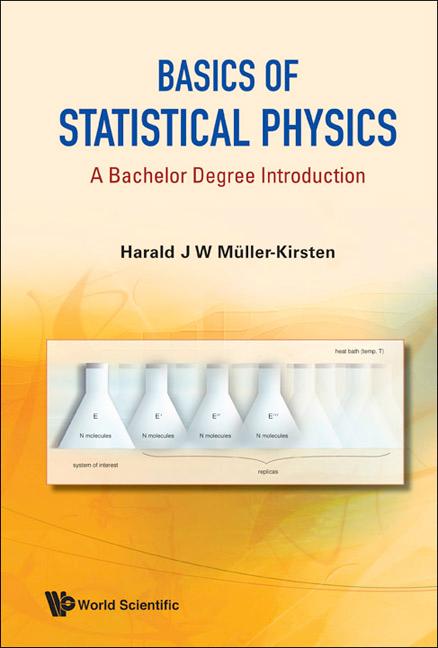
Statistics links microscopic and macroscopic phenomena, and requires for this reason a large number of microscopic elements like atoms. The results are values of maximum probability or of averaging. This introduction to statistical physics concentrates on the basic principles, and attempts to explain these in simple terms supplemented by numerous examples. The basic principles concentrated on are the difference between classical and quantum statistics, the a priori probabilities as related to degeneracies, the vital aspect of indistinguishability as compared with distinguishability in classical physics, the differences between conserved and nonconserved elements (the latter including photons and phonons), the different ways of counting arrangements in the three statistics (Maxwell–Boltzmann, Fermi–Dirac, Bose–Einstein), the difference between maximization of the number of arrangements of elements in these and averaging in the Darwin–Fowler method. Significant applications to solids, radiation and to electrons in metals are treated in separate chapters. Finally the Bose–Einstein distribution is rederived under condensation conditions. Each chapter concludes with examples and exercises.
Betal nemt med kort, Klarna, Apple Pay eller Google Pay. Ikke tilfreds? Du har altid 14 dages fortrydelsesret. Læs mere i vores vilkår. Har du spørgsmål, så send os en mail på hello@memmo.org.
Memmo gør det nemmere at studere – uanset hvor du er i verden. Hos os samler du dine kursusbøger og smarte studieværktøjer ét sted: resuméer, quizzer, podcasts og flashcards. Og så er der Ted, din studieven, der svarer på alt, du undrer dig over. Over 50 000 studerende studerer allerede her – bygget til at hjælpe dig med at lære hurtigere og stresse mindre.