
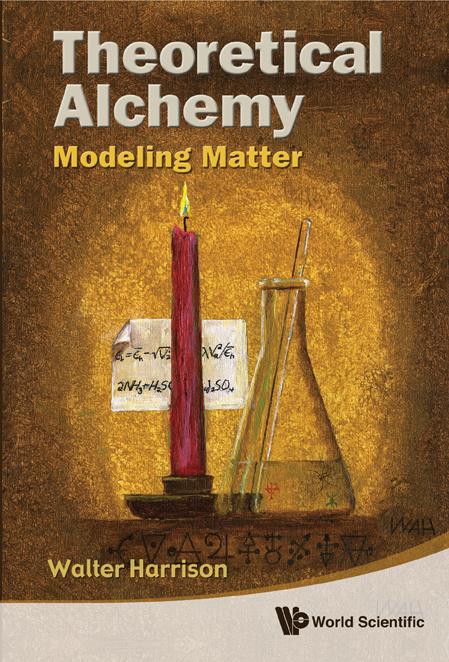
The best way to understand chemical bonding may be to take a view appropriate to each individual system, a view which may be quite different for various systems. Sometimes two very different views are appropriate for the same system, and then the combination may even give the parameters needed to estimate the bonding energy by hand. Density Functional Theory, on the other hand, generally tries to take one view as applicable to all systems, and proceeds computationally.
In contrast to the author's two previous well-known textbooks, Electronic Structure and the Properties of Solids (1989) and Elementary Electronic Structure (1999), in this book he tries to distill the essence of the representation of electronic structure in a much briefer description. It is shortened by focusing primarily on the bonding energies, the energy gained in assembling atoms as a molecule or a solid, or as a solid with a surface. A central point is that the same description of the electronic structure which gives this cohesion, can also be used to understand all of the other properties, though those other properties are not emphasized here. The effort is characterized by the title, which combines the modern word “theory” with the ancient effort of “alchemy” to make sense of the material world.
Betal nemt med kort, Klarna, Apple Pay eller Google Pay. Ikke tilfreds? Du har altid 14 dages fortrydelsesret. Læs mere i vores vilkår. Har du spørgsmål, så send os en mail på hello@memmo.org.
Memmo gør det nemmere at studere – uanset hvor du er i verden. Hos os samler du dine kursusbøger og smarte studieværktøjer ét sted: resuméer, quizzer, podcasts og flashcards. Og så er der Ted, din studieven, der svarer på alt, du undrer dig over. Over 50 000 studerende studerer allerede her – bygget til at hjælpe dig med at lære hurtigere og stresse mindre.