
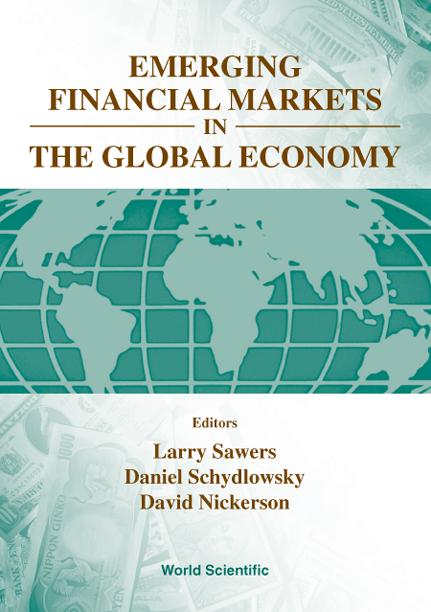
The rapid emergence of active financial markets in a number of developing and transition countries during the 1990s is a momentous phenomenon. Until recently, most developing countries severely manipulated and repressed their financial markets. The dramatic increase in the influence of neo-liberal thinking and laissez-faire governance in developing countries has recently led to serious capital market reform in scores of countries. Most countries without financial market reform are anxiously studying their successful neighbors in order to adopt policies, programs, and regulations that have a proven track record.This collection of papers addresses many of the important issues raised by these dramatic changes, including restructuring pension systems, organizing new equity markets, designing financial systems to deal with systemic risk, dealing with the overhang and bad debts, and attracting foreign direct investments. Several papers deal with informal credit markets, examining the effect of informal finance on economic development and the exponential growth in microfinance by private financial institutions in Latin America and in the United States.The book is intended for policy makers and scholars interested in capital markets in developing and transition economies. It is also suitable for use as a supplementary text in upper level undergraduate and graduate courses in development finance.
Betal nemt med kort, Klarna, Apple Pay eller Google Pay. Ikke tilfreds? Du har altid 14 dages fortrydelsesret. Læs mere i vores vilkår. Har du spørgsmål, så send os en mail på hello@memmo.org.
Memmo gør det nemmere at studere – uanset hvor du er i verden. Hos os samler du dine kursusbøger og smarte studieværktøjer ét sted: resuméer, quizzer, podcasts og flashcards. Og så er der Ted, din studieven, der svarer på alt, du undrer dig over. Over 50 000 studerende studerer allerede her – bygget til at hjælpe dig med at lære hurtigere og stresse mindre.
Du kan måske også lide
Køb bogen0