
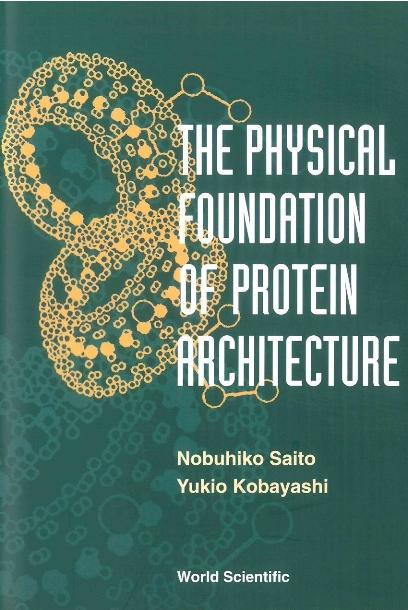
A protein requires its own three-dimensional structure for its biological activity. If a chemical agent is added, the biological activity is lost, and the three dimensional structure is destroyed to become a random coil state. But when the chemical agent is removed, the biological activity is recovered, implying that the random coil state turns back into the original complex structure spontaneously. This is an astonishing event. The Physical Foundation of Protein Architecture is intended to solve this mystery from the physicochemical basis by elucidating the mechanism of various processes in protein folding. The main features of protein folding are shown to be described by the island model with long range hydrophobic interaction which is capable of finding the specific residue, and the lampshade criterion for disulfide bonding. Various proteins with known structure are refolded, with the purpose of uncovering the mechanism of protein folding. In addition, ab initio method for predicting protein structure from its amino acid sequence is proposed.
Betal nemt med kort, Klarna, Apple Pay eller Google Pay. Ikke tilfreds? Du har altid 14 dages fortrydelsesret. Læs mere i vores vilkår. Har du spørgsmål, så send os en mail på hello@memmo.org.
Memmo gør det nemmere at studere – uanset hvor du er i verden. Hos os samler du dine kursusbøger og smarte studieværktøjer ét sted: resuméer, quizzer, podcasts og flashcards. Og så er der Ted, din studieven, der svarer på alt, du undrer dig over. Over 50 000 studerende studerer allerede her – bygget til at hjælpe dig med at lære hurtigere og stresse mindre.
Du kan måske også lide
Køb bogen0