
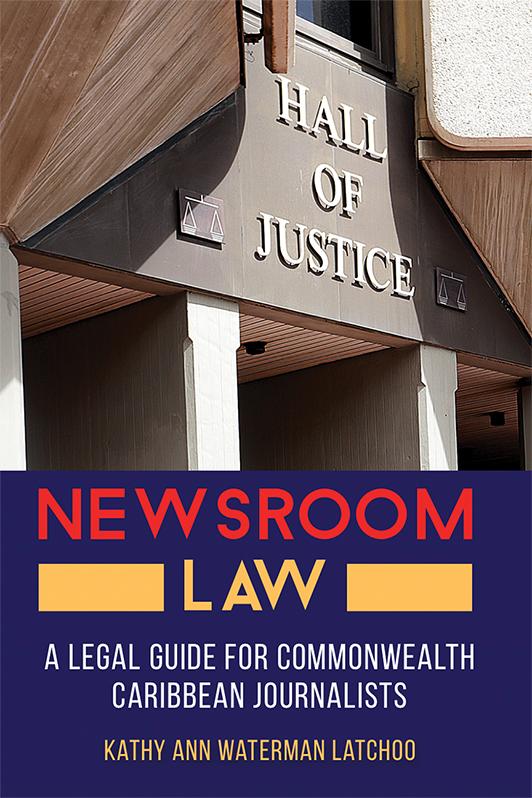
This book is meant to guide, comfort and support journalists. While they may chafe against the many legal restrictions, they should know that there is a lot they can do and say within the law. With a better understanding of their legal rights, journalists can go about their business with greater confidence, knowing when to yield and when to stand firm.
Kathy Ann Waterman Latchoo begins by placing journalism in a constitutional context and ends with an overview on damages for defamation and a glossary of legal terms. She describes our legal systems and the hierarchy of courts, which every journalist should strive to understand, whether or not assigned to the court beat. In Newsroom Law, she seeks to demystify libel law, including the Reynolds public interest defence, which has put fresh emphasis on what constitutes “responsible journalism”. Other chapters alert journalists to the legal pitfalls in covering parliamentary affairs, elections and court cases. Cyber-libel, copyright and freedom of information are also included and the chapter on investigative journalism seeks to answer common questions such as whether photographers may use telephoto lenses to capture people in private; whether journalists may record conversations covertly; and whether it is ever permissible to break the law to expose evil.
Betal nemt med kort, Klarna, Apple Pay eller Google Pay. Ikke tilfreds? Du har altid 14 dages fortrydelsesret. Læs mere i vores vilkår. Har du spørgsmål, så send os en mail på hello@memmo.org.
Memmo gør det nemmere at studere – uanset hvor du er i verden. Hos os samler du dine kursusbøger og smarte studieværktøjer ét sted: resuméer, quizzer, podcasts og flashcards. Og så er der Ted, din studieven, der svarer på alt, du undrer dig over. Over 50 000 studerende studerer allerede her – bygget til at hjælpe dig med at lære hurtigere og stresse mindre.