
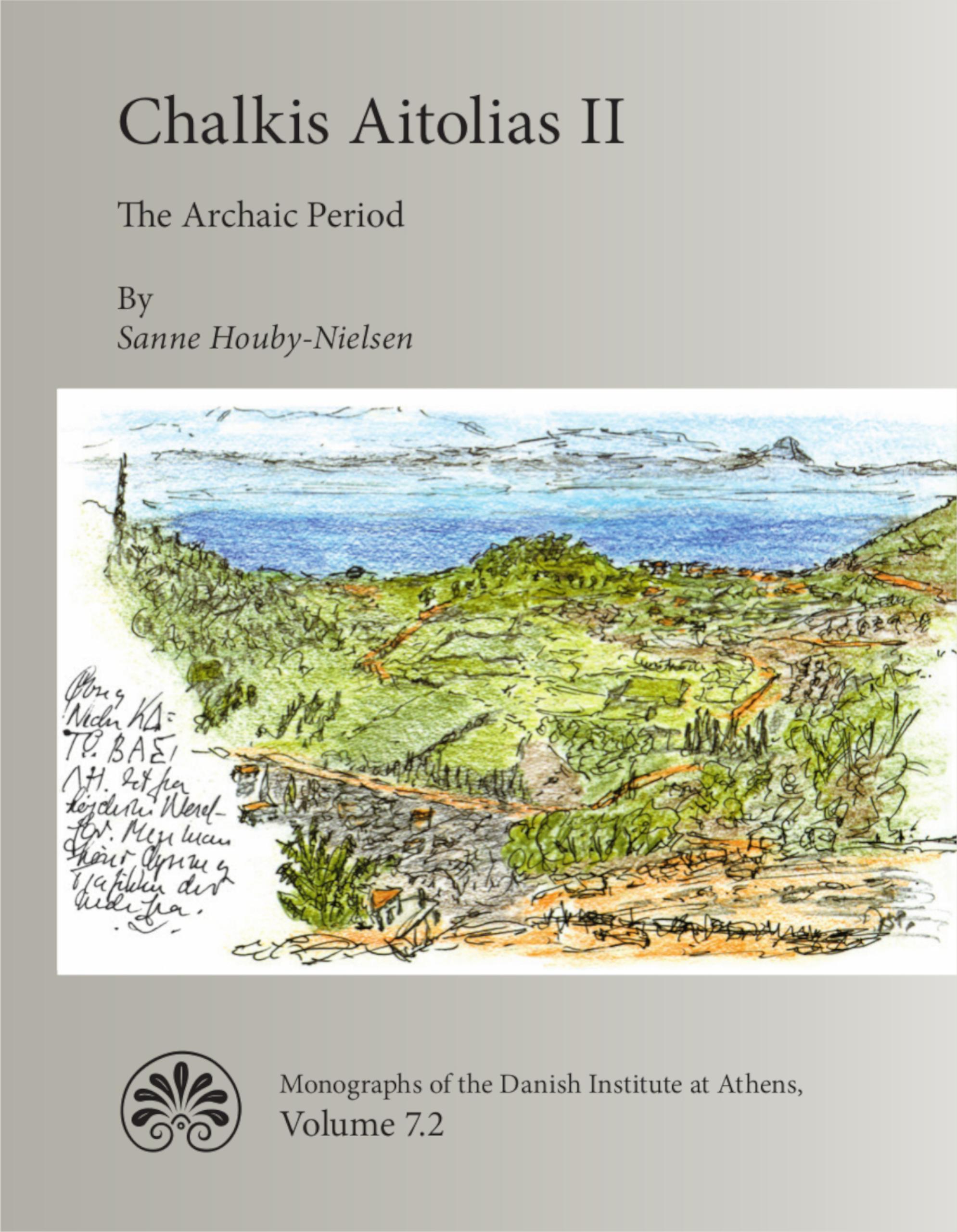
Homeric Chalkis is situated on the coast of Aetolia at the very ‘gateway’ of the Gulf of Patras. The foundation occurred during an important period in early Greek history when trade and movement of peoples along the Gulf intensified with a resulting strong pull to the coast. Well-preserved stratigraphies date the foundation to the early seventh century BC and testify to a flourishing settlement in the sixth century lasting till the early fifth century BC when the site was temporarily given up. Walls and roads follow a rectilinear layout. A broad spectre of pottery shapes and wares attest to innovative local and regional workshops already from the onset of the settlement. Alongside the pottery, tools for complex textile manufacture were found in all houses, among which were many small, pyramidal loom weights and spools. These findings indicated a high degree of experimental weaving techniques and demonstrated how the courtyard house, as a new house model, was particularly well suited to accommodate this manufacture, probably mantels. The results therefore offer important new evidence on relations between gender behaviour and Greek houses.
The catalogue is richly illustrated with profile drawings, plans, black-and- white and colour photos and accompanied by discussions of the material.
Betal nemt med kort, Klarna, Apple Pay eller Google Pay. Ikke tilfreds? Du har altid 14 dages fortrydelsesret. Læs mere i vores vilkår. Har du spørgsmål, så send os en mail på hello@memmo.org.
Memmo gør det nemmere at studere – uanset hvor du er i verden. Hos os samler du dine kursusbøger og smarte studieværktøjer ét sted: resuméer, quizzer, podcasts og flashcards. Og så er der Ted, din studieven, der svarer på alt, du undrer dig over. Over 50 000 studerende studerer allerede her – bygget til at hjælpe dig med at lære hurtigere og stresse mindre.
Du kan måske også lide
Køb bogen0