
As the state-of-the-art imaging technologies became more and more advanced, yielding scientific data at unprecedented detail and volume, the need to process and interpret all the data has made image processing and computer vision increasingly important. Sources of data that have to be routinely dealt with today's applications include video transmission, wireless communication, automatic fingerprint processing, massive databanks, non-weary and accurate automatic airport screening, robust night vision, just to name a few. Multidisciplinary inputs from other disciplines such as physics, computational neuroscience, cognitive science, mathematics, and biology will have a fundamental impact in the progress of imaging and vision sciences. One of the advantages of the study of biological organisms is to devise very different type of computational paradigms by implementing a neural network with a high degree of local connectivity.
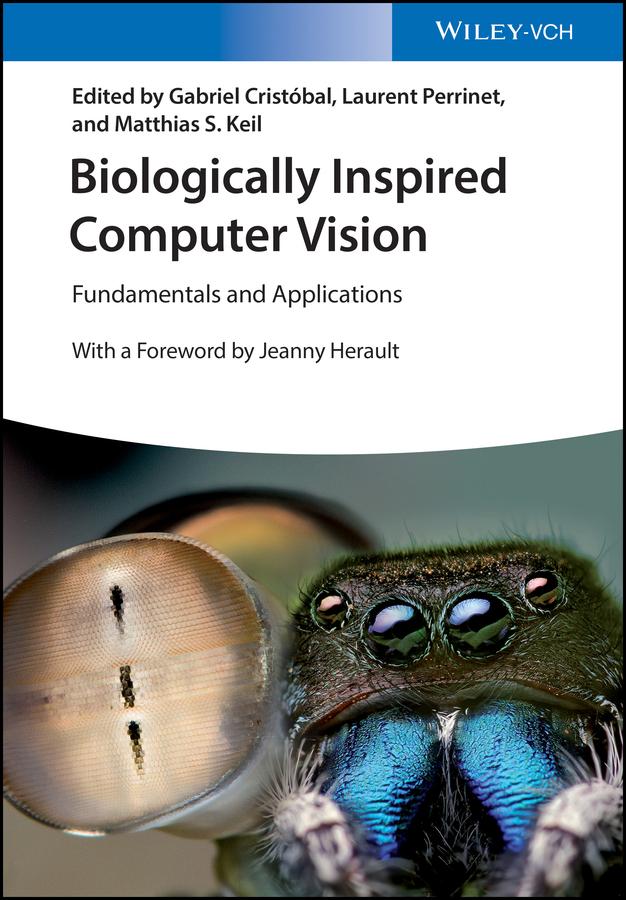
This is a comprehensive and rigorous reference in the area of biologically motivated vision sensors. The study of biologically visual systems can be considered as a two way avenue. On the one hand, biological organisms can provide a source of inspiration for new computational efficient and robust vision models and on the other hand machine vision approaches can provide new insights for understanding biological visual systems. Along the different chapters, this book covers a wide range of topics from fundamental to more specialized topics, including visual analysis based on a computational level, hardware implementation, and the design of new more advanced vision sensors. The last two sections of the book provide an overview of a few representative applications and current state of the art of the research in this area. This makes it a valuable book for graduate, Master, PhD students and also researchers in the field.
This is a comprehensive and rigorous reference in the area of biologically motivated vision sensors. The study of biologically visual systems can be considered as a two way avenue. On the one hand, biological organisms can provide a source of inspiration for new computational efficient and robust vision models and on the other hand machine vision approaches can provide new insights for understanding biological visual systems. Along the different chapters, this book covers a wide range of topics from fundamental to more specialized topics, including visual analysis based on a computational level, hardware implementation, and the design of new more advanced vision sensors. The last two sections of the book provide an overview of a few representative applications and current state of the art of the research in this area. This makes it a valuable book for graduate, Master, PhD students and also researchers in the field.
Betal nemt med kort, Klarna, Apple Pay eller Google Pay. Ikke tilfreds? Du har altid 14 dages fortrydelsesret. Læs mere i vores vilkår. Har du spørgsmål, så send os en mail på hello@memmo.org.
Memmo gør det nemmere at studere – uanset hvor du er i verden. Hos os samler du dine kursusbøger og smarte studieværktøjer ét sted: resuméer, quizzer, podcasts og flashcards. Og så er der Ted, din studieven, der svarer på alt, du undrer dig over. Over 50 000 studerende studerer allerede her – bygget til at hjælpe dig med at lære hurtigere og stresse mindre.