
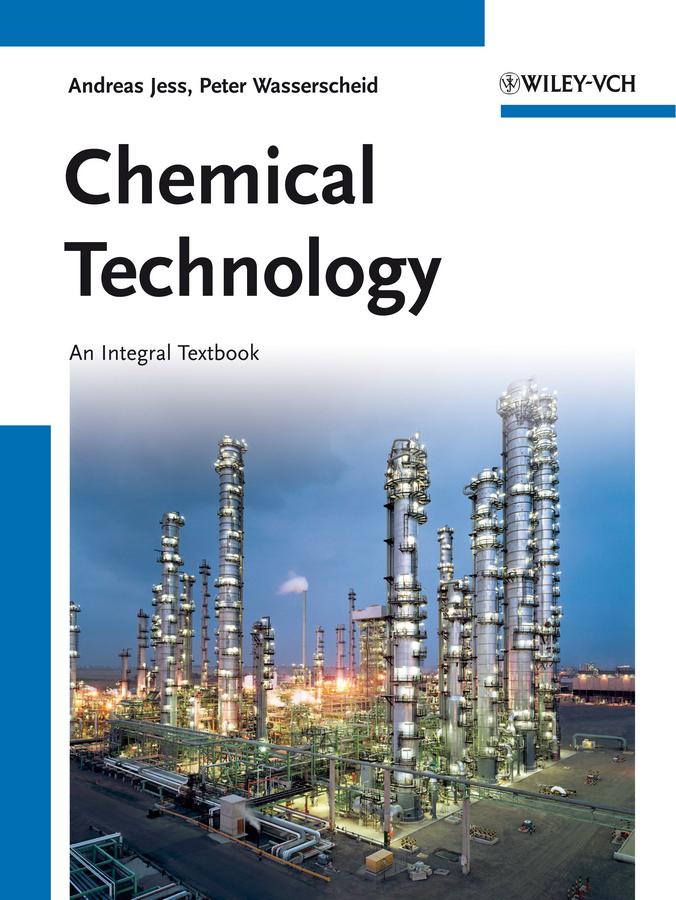
This textbook provides an integral and integrated treatment of industrial-relevant problems for students of both chemistry and chemical engineering.
As such, this work combines the four disciplines of chemical technology - chemistry, thermal and mechanical unit operations, chemical reaction engineering and general chemical technology - and is organized into two main parts. The first covers the fundamentals, as well as the analysis and design of industrial processes, while the second section presents 20 concrete processes, exemplifying the inherent applied nature of chemical technology. These are selected so that they all differ with respect to at least one important aspect, such as the type and design of the reactor, the chemistry involved or the separation process used. As a result, readers will recapitulate, deepen and exercise the chemical and engineering principles and their interplay, as well as being able to apply them to industrial practice.
Instructive figures, rules of thumb for swift but reliable estimating of parameters, data of chemical media, and examples utilizing data from industrial processes facilitate and enhance the study process. A small general survey of selected modern trends, such as multifunctional and micro reactors, or new solvents for homogeneous catalysis, such as ionic liquids, point out to the reader that this is not a concluded discipline,
but a developing field with many challenges waiting to be solved.
As such, this work combines the four disciplines of chemical technology - chemistry, thermal and mechanical unit operations, chemical reaction engineering and general chemical technology - and is organized into two main parts. The first covers the fundamentals, as well as the analysis and design of industrial processes, while the second section presents 20 concrete processes, exemplifying the inherent applied nature of chemical technology. These are selected so that they all differ with respect to at least one important aspect, such as the type and design of the reactor, the chemistry involved or the separation process used. As a result, readers will recapitulate, deepen and exercise the chemical and engineering principles and their interplay, as well as being able to apply them to industrial practice.
Instructive figures, rules of thumb for swift but reliable estimating of parameters, data of chemical media, and examples utilizing data from industrial processes facilitate and enhance the study process. A small general survey of selected modern trends, such as multifunctional and micro reactors, or new solvents for homogeneous catalysis, such as ionic liquids, point out to the reader that this is not a concluded discipline,
but a developing field with many challenges waiting to be solved.
Betal nemt med kort, Klarna, Apple Pay eller Google Pay. Ikke tilfreds? Du har altid 14 dages fortrydelsesret. Læs mere i vores vilkår. Har du spørgsmål, så send os en mail på hello@memmo.org.
Memmo gør det nemmere at studere – uanset hvor du er i verden. Hos os samler du dine kursusbøger og smarte studieværktøjer ét sted: resuméer, quizzer, podcasts og flashcards. Og så er der Ted, din studieven, der svarer på alt, du undrer dig over. Over 50 000 studerende studerer allerede her – bygget til at hjælpe dig med at lære hurtigere og stresse mindre.