
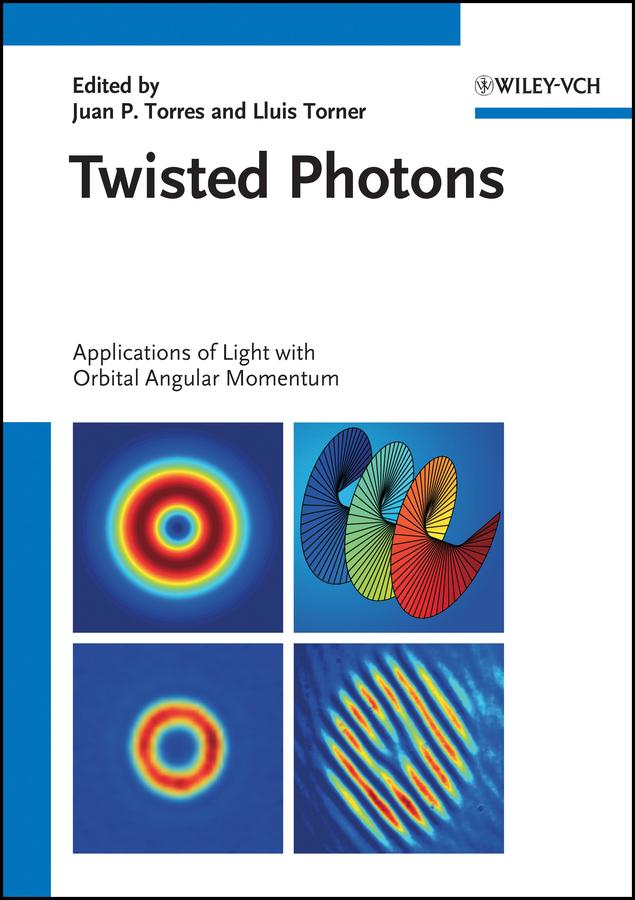
This book deals with applications in several areas of science and technology that make use of light which carries orbital angular momentum. In most practical scenarios, the angular momentum can be decomposed into two independent contributions: the spin angular momentum and the orbital angular momentum. The orbital contribution affords a fundamentally new degree of freedom, with fascinating and wide-spread applications. Unlike spin angular momentum, which is associated with the polarization of light, the orbital angular momentum arises as a consequence of the spatial distribution of the intensity and phase of an optical field, even down to the single photon limit. Researchers have begun to appreciate its implications for our understanding of the ways in which light and matter can interact, and its practical potential in different areas of science and technology.
Betal nemt med kort, Klarna, Apple Pay eller Google Pay. Ikke tilfreds? Du har altid 14 dages fortrydelsesret. Læs mere i vores vilkår. Har du spørgsmål, så send os en mail på hello@memmo.org.
Memmo gør det nemmere at studere – uanset hvor du er i verden. Hos os samler du dine kursusbøger og smarte studieværktøjer ét sted: resuméer, quizzer, podcasts og flashcards. Og så er der Ted, din studieven, der svarer på alt, du undrer dig over. Over 50 000 studerende studerer allerede her – bygget til at hjælpe dig med at lære hurtigere og stresse mindre.