
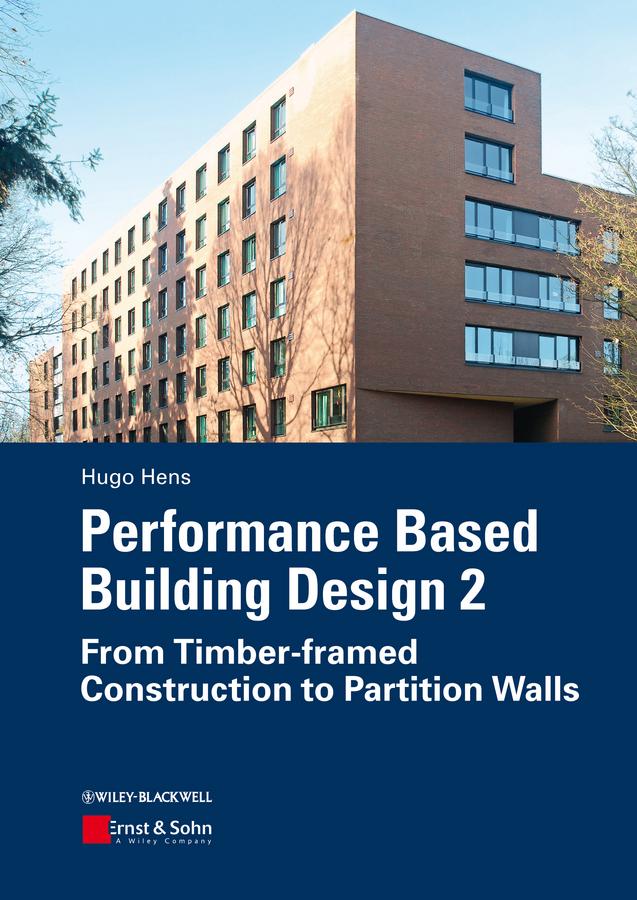
Just like building physics, performance based building design was hardly an issue before the energy crises of the 1970ies. With the need to upgrade energy efficiency, the interest in overall building performance grew. The term "performance" encompasses all building-related physical properties and qualities that are predictable during the design stage and controllable during and after construction. The term "predictable" demands calculation tools and physical models that allow evaluating a design, whereas "controllable" presumes the existence of measuring methods available on site. The basis for a system of performance arrays are the functional demands, the needs for accessibility, safety, well-being, durability, energy efficiency and sustainability and the requirements imposed by the usage of a building.
In continuation of Vol. 1 this second volume discusses light-weight construction with wooden and metal elements, roofing systems, facades, and ends with finishes and the overall risk analysis. Most chapters build on a same scheme: overview, overall performance evaluation, design and construction.
The work is absolutely recommended to undergraduates and graduates in architectural and building engineering, though also building engineers, who want to refresh their knowledge, may benefit. The level of discussion assumes the reader has a sound knowledge of building physics, along with a background in structural engineering, building materials and building construction. Where and when needed, input and literature from over the world was used, reason why each chapter ends listing references and literature.
In continuation of Vol. 1 this second volume discusses light-weight construction with wooden and metal elements, roofing systems, facades, and ends with finishes and the overall risk analysis. Most chapters build on a same scheme: overview, overall performance evaluation, design and construction.
The work is absolutely recommended to undergraduates and graduates in architectural and building engineering, though also building engineers, who want to refresh their knowledge, may benefit. The level of discussion assumes the reader has a sound knowledge of building physics, along with a background in structural engineering, building materials and building construction. Where and when needed, input and literature from over the world was used, reason why each chapter ends listing references and literature.
Sider: 292
Kategori: Ingenjörsvetenskap
e-ISBN: 9783433602492
Forsendelsesvægt: 1.2 kg
Sendes inden for: 1-2 dage
Betal nemt med kort, Klarna, Apple Pay eller Google Pay. Ikke tilfreds? Du har altid 14 dages fortrydelsesret. Læs mere i vores vilkår. Har du spørgsmål, så send os en mail på hello@memmo.org.
Memmo gør det nemmere at studere – uanset hvor du er i verden. Hos os samler du dine kursusbøger og smarte studieværktøjer ét sted: resuméer, quizzer, podcasts og flashcards. Og så er der Ted, din studieven, der svarer på alt, du undrer dig over. Over 50 000 studerende studerer allerede her – bygget til at hjælpe dig med at lære hurtigere og stresse mindre.