
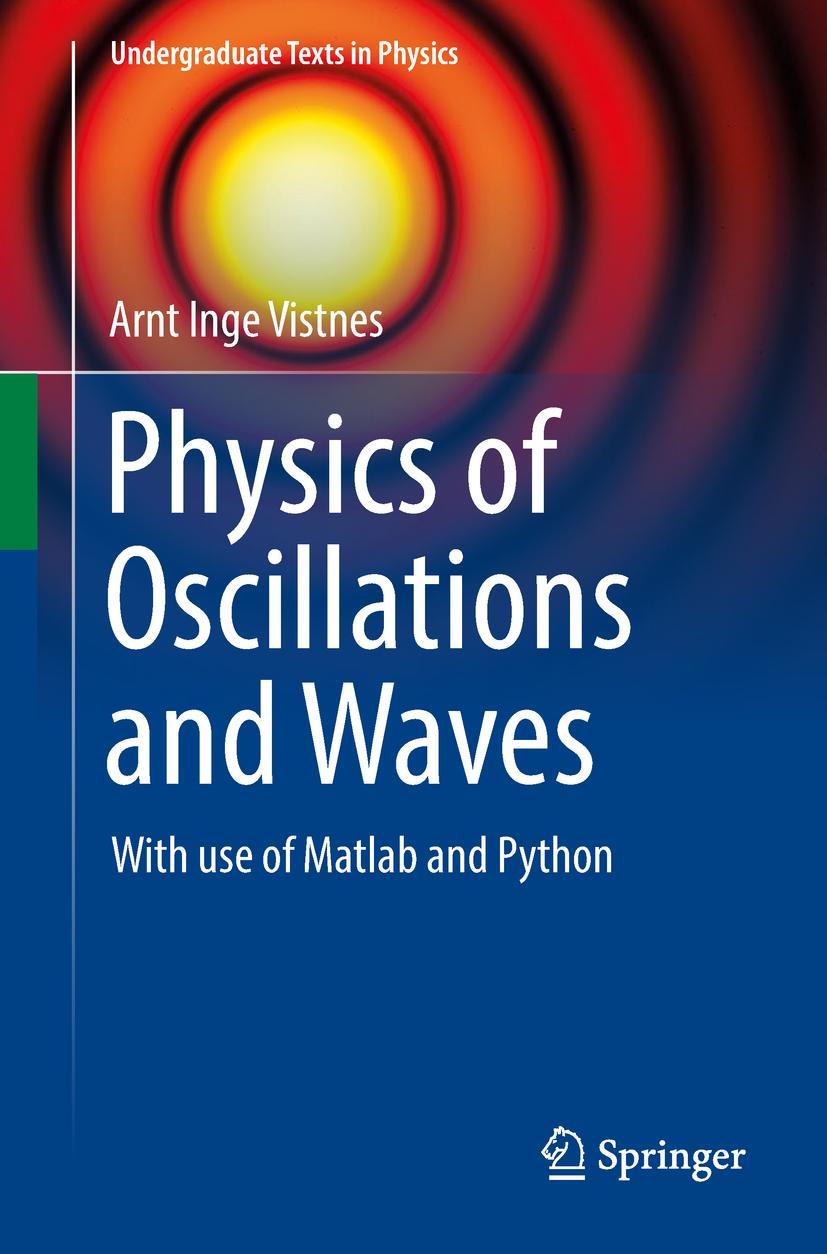
In this textbook a combination of standard mathematics and modern numerical methods is used to describe a wide range of natural wave phenomena, such as sound, light and water waves, particularly in specific popular contexts, e.g. colors or the acoustics of musical instruments. It introduces the reader to the basic physical principles that allow the description of the oscillatory motion of matter and classical fields, as well as resulting concepts including interference, diffraction, and coherence. Numerical methods offer new scientific insights and make it possible to handle interesting cases that can’t readily be addressed using analytical mathematics; this holds true not only for problem solving but also for the description of phenomena. Essential physical parameters are brought more into focus, rather than concentrating on the details of which mathematical trick should be used to obtain a certain solution. Readers will learn how time-resolved frequency analysis offers a deeper understanding of the interplay between frequency and time, which is relevant to many phenomena involving oscillations and waves. Attention is also drawn to common misconceptions resulting from uncritical use of the Fourier transform. The book offers an ideal guide for upper-level undergraduate physics students and will also benefit physics instructors. Program codes in Matlab and Python, together with interesting files for use in the problems, are provided as free supplementary material.
Betal nemt med kort, Klarna, Apple Pay eller Google Pay. Ikke tilfreds? Du har altid 14 dages fortrydelsesret. Læs mere i vores vilkår. Har du spørgsmål, så send os en mail på hello@memmo.org.
Memmo gør det nemmere at studere – uanset hvor du er i verden. Hos os samler du dine kursusbøger og smarte studieværktøjer ét sted: resuméer, quizzer, podcasts og flashcards. Og så er der Ted, din studieven, der svarer på alt, du undrer dig over. Over 50 000 studerende studerer allerede her – bygget til at hjælpe dig med at lære hurtigere og stresse mindre.