
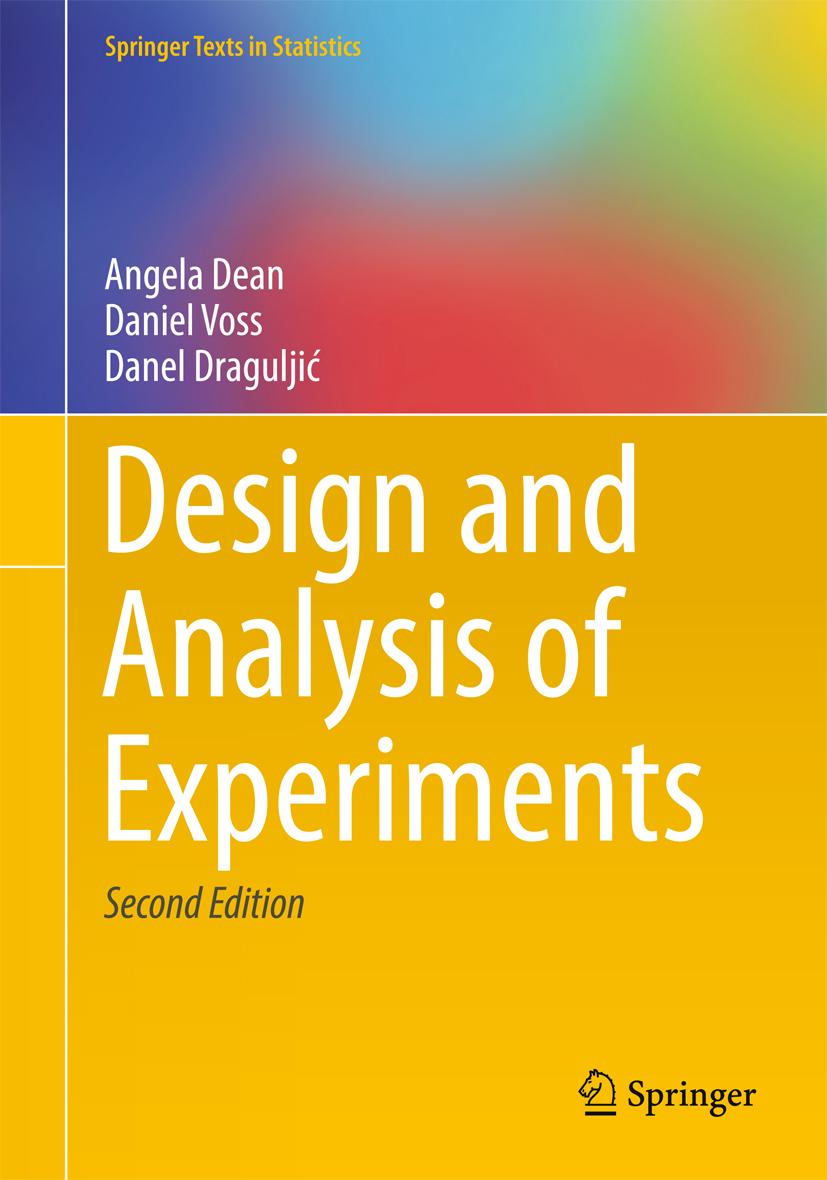
This textbook takes a strategic approach to the broad-reaching subject of experimental design by identifying the objectives behind an experiment and teaching practical considerations that govern design and implementation, concepts that serve as the basis for the analytical techniques covered. Rather than a collection of miscellaneous approaches, chapters build on the planning, running, and analyzing of simple experiments in an approach that results from decades of teaching the subject. In most experiments, the procedures can be reproduced by readers, thus giving them a broad exposure to experiments that are simple enough to be followed through their entire course. Outlines of student and published experiments appear throughout the text and as exercises at the end of the chapters. The authors develop the theory of estimable functions and analysis of variance with detail, but at a mathematical level that is simultaneously approachable. Throughout the book, statistical aspects of analysiscomplement practical aspects of design.
This new, second edition includes
- an additional chapter on computer experiments
- additional "Using R” sections at the end of each chapter to illustrate R code and output
- updated output for all SAS programs and use of SAS Proc Mixed
- new material on screening experiments and analysis of mixed models
Betal nemt med kort, Klarna, Apple Pay eller Google Pay. Ikke tilfreds? Du har altid 14 dages fortrydelsesret. Læs mere i vores vilkår. Har du spørgsmål, så send os en mail på hello@memmo.org.
Memmo gør det nemmere at studere – uanset hvor du er i verden. Hos os samler du dine kursusbøger og smarte studieværktøjer ét sted: resuméer, quizzer, podcasts og flashcards. Og så er der Ted, din studieven, der svarer på alt, du undrer dig over. Over 50 000 studerende studerer allerede her – bygget til at hjælpe dig med at lære hurtigere og stresse mindre.