
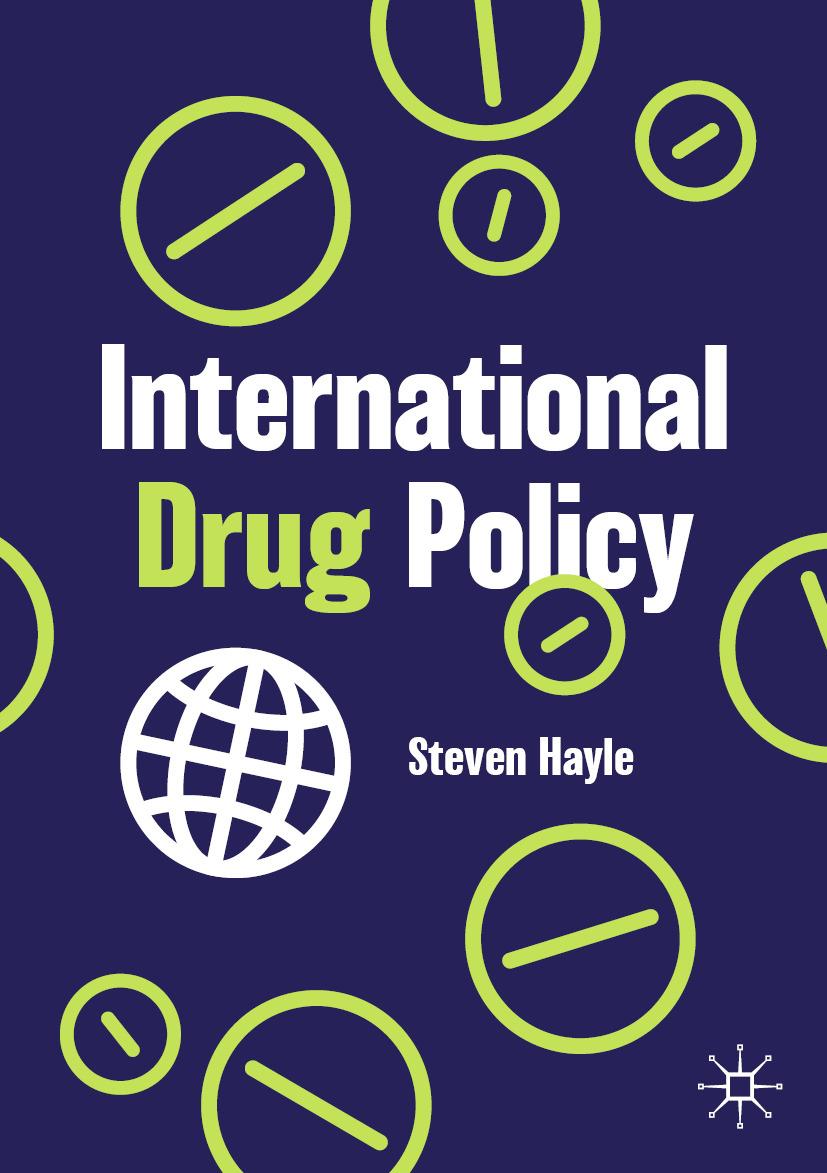
This textbook provides an overview of international drug policy using a comparative framework to explore contemporary drug issues. Using a topical approach, each chapter examines a different topic pertaining to drug policy to illustrate the range of contrasting approaches adopted including: decriminalisation, prohibition, legalisation, and harm reduction. In this way, it speaks to students in the field of criminology and justice and beyond with a focus on criminal laws and the administration of criminal justice. It draws on global examples from over 30 countries throughout to discuss and compare drug policies. The book includes a host of pedagogic features including case studies, exercises, study questions, web resources and chapter summaries. It starts by providing an overview of the psychoactive and pharmacological effects of illicit drugs, discusses how to compare policies across many countries, and provides a history of the global drug prohibition regime and how it is evolving internationally. Many of the chapter topics that follow relate to “drug control regimes” which are different forms of regulatory strategies found operating in many countries around the world. It also discusses the global movement toward the decriminalization of all drugs.
It incorporates multidisciplinary, theoretical and methodological approaches drawing on the work of a wide range of scholars including historians, political scientists, sociologists, psychologists, economists, and lawyers.
Betal nemt med kort, Klarna, Apple Pay eller Google Pay. Ikke tilfreds? Du har altid 14 dages fortrydelsesret. Læs mere i vores vilkår. Har du spørgsmål, så send os en mail på hello@memmo.org.
Memmo gør det nemmere at studere – uanset hvor du er i verden. Hos os samler du dine kursusbøger og smarte studieværktøjer ét sted: resuméer, quizzer, podcasts og flashcards. Og så er der Ted, din studieven, der svarer på alt, du undrer dig over. Over 50 000 studerende studerer allerede her – bygget til at hjælpe dig med at lære hurtigere og stresse mindre.