
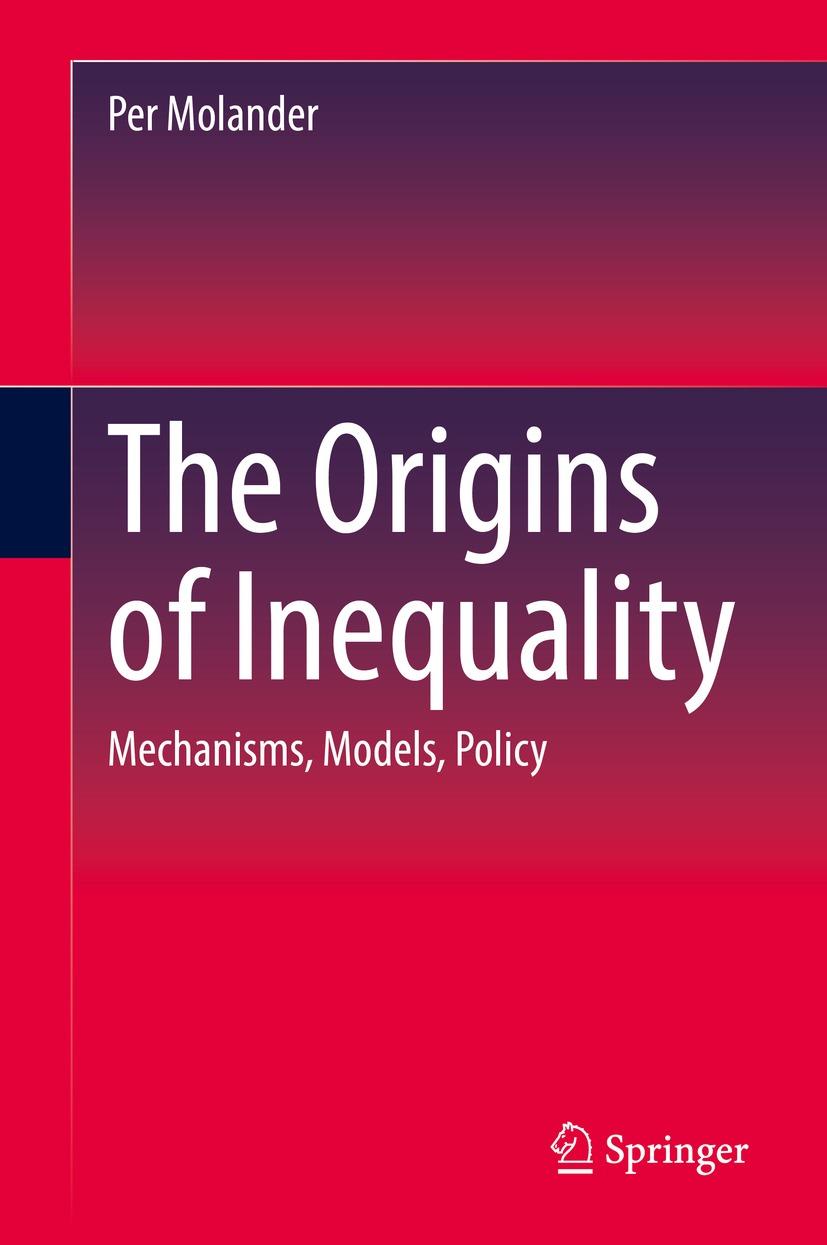
This book presents a unified approach to the problem of inequality, combining results from a variety of research fields – the human life cycle, group dynamics, networks, markets, and economic geography. Its main message is that inequality emerges as the natural result of mechanisms operating both in individual human development and in social interaction. It posits that inequality is not an anomalous deviation from a naturally egalitarian social structure; quite to the contrary, inequality is to be expected as part of the human condition. The author states that the growth of inequality, on the other hand, is not a natural law – the level and character of inequality can be affected by collective decisions. This perspective on human inequality has potentially far-reaching consequences both for the political philosophy of inequality and for public policy-making.
This book is of interest to a wide interdisciplinary social science readership, including public policy, decisionsciences, economic geography, and life course studies.
Betal nemt med kort, Klarna, Apple Pay eller Google Pay. Ikke tilfreds? Du har altid 14 dages fortrydelsesret. Læs mere i vores vilkår. Har du spørgsmål, så send os en mail på hello@memmo.org.
Memmo gør det nemmere at studere – uanset hvor du er i verden. Hos os samler du dine kursusbøger og smarte studieværktøjer ét sted: resuméer, quizzer, podcasts og flashcards. Og så er der Ted, din studieven, der svarer på alt, du undrer dig over. Over 50 000 studerende studerer allerede her – bygget til at hjælpe dig med at lære hurtigere og stresse mindre.