
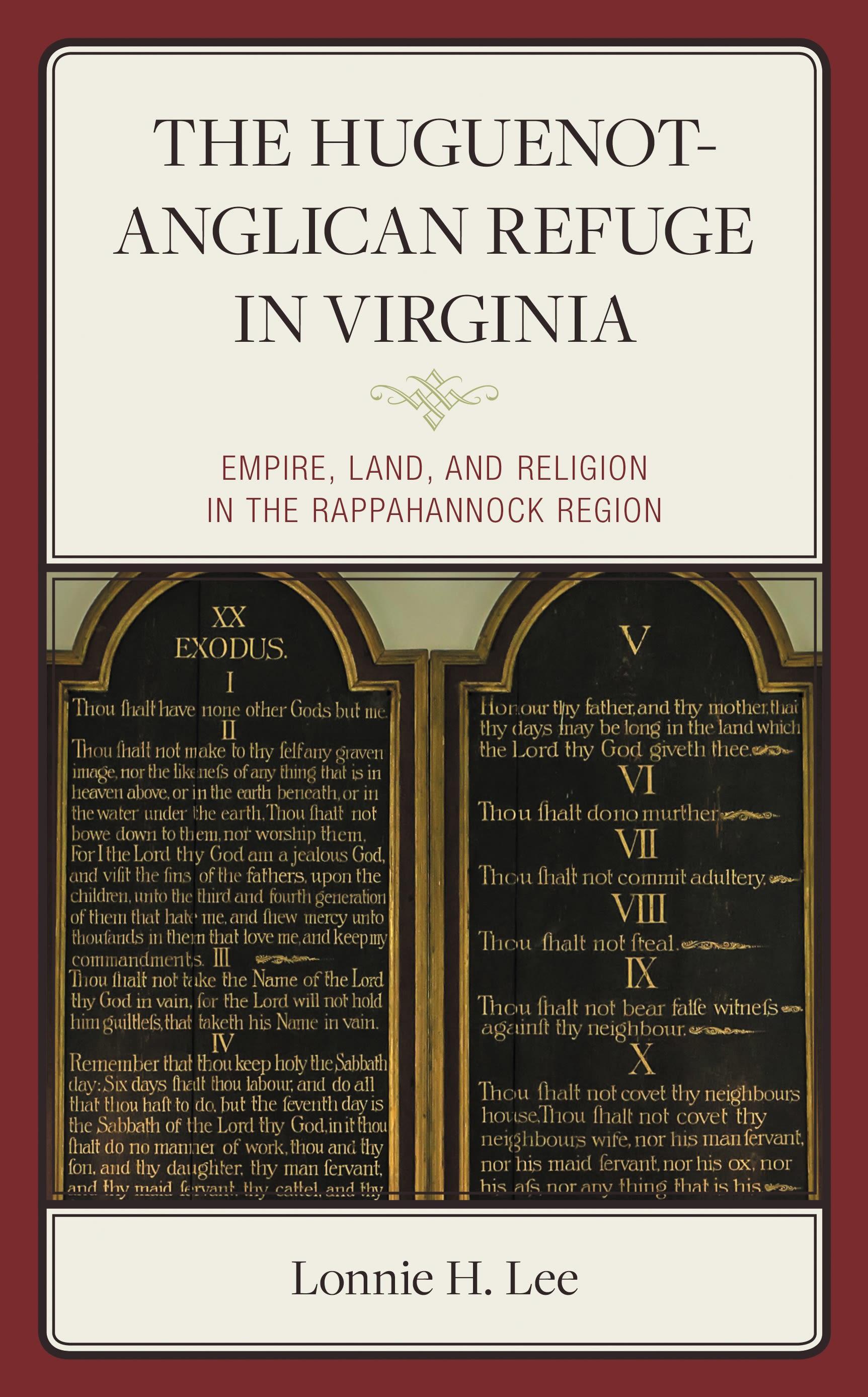
The Huguenot-Anglican Refuge in Virginia is the history of a Huguenot emigrant community established in eight counties along the Rappahannock River of Virginia in 1687, with the arrival of an Anglican-ordained Huguenot minister from Cozes, France named John Bertrand. This Huguenot community, effectively hidden to researchers for more than 300 years, comes to life through the examination of county court records cross-referenced with French Protestant records in England and France. The 261 households and fifty-three indentured servants documented in this study, including a significant group from Bertrand's hometown of Cozes, comprise a large Huguenot migration to English America and the only one to fully embrace Anglicanism from its inception. In July 1687 a French exile named Durand de Dauphiné published a tract at The Hague outlining the pattern and geography of this migration. The tract included a short list of inducements Virginia officials were offering to attract Huguenot settlers to Rappahannock County. These included access to French preaching by a Huguenot minister who would also serve an established Anglican parish, and the availability of inexpensive land. John Bertrand was the first of five French exile ministers performing this dual track ministry in the Rappahannock region between 1687 and 1767.
Betal nemt med kort, Klarna, Apple Pay eller Google Pay. Ikke tilfreds? Du har altid 14 dages fortrydelsesret. Læs mere i vores vilkår. Har du spørgsmål, så send os en mail på hello@memmo.org.
Memmo gør det nemmere at studere – uanset hvor du er i verden. Hos os samler du dine kursusbøger og smarte studieværktøjer ét sted: resuméer, quizzer, podcasts og flashcards. Og så er der Ted, din studieven, der svarer på alt, du undrer dig over. Over 50 000 studerende studerer allerede her – bygget til at hjælpe dig med at lære hurtigere og stresse mindre.