
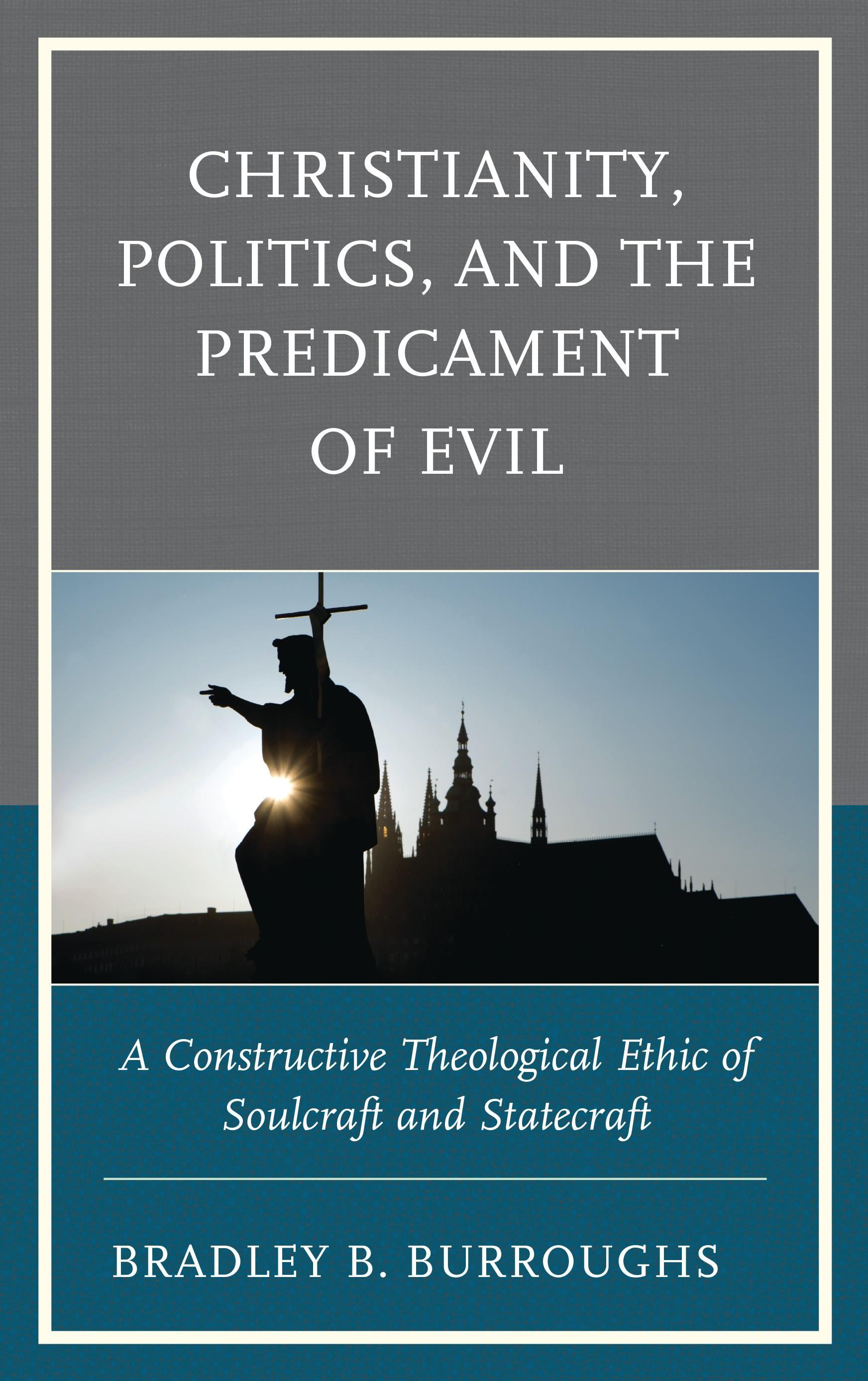
Christianity, Politics, and the Predicament of Evil overcomes a defining divide in contemporary Protestant political ethics created by two contrasting conceptions of politics. The first, exemplified in the work of Reinhold Niebuhr, construes politics as a matter of statecraft that utilizes the power of government to secure the greatest possible order and justice for society as a whole. The second, most prominently articulated by Stanley Hauerwas, maintains that politics concerns itself with the cultivation of virtue; consequently, it finds not the “well-ordered state” but the church to be the exemplar of politics.
Not only illuminating the divide between politics-as-statecraft and politics-as-soulcraft but also redeveloping the conceptual space between them, this book reconceives politics within a theological framework in which the eschatological City of God, rather than the well-ordered state or the faithful church, functions as the paradigm of political life. At the same time, it simultaneously recognizes that the existence of evil, which corrupts individual wills and social structures, inhibits human beings from building the City of God in this world. Analyzing, criticizing, and drawing resources from Niebuhr and Hauerwas, as well as looking beyond to Augustine, Martin Luther King, Jr., and others, this book specifies the respective roles of soulcraft and statecraft in a political ethic capable of guiding Christians as they witness to God’s eschatological intention to establish the City of God in a world currently mired in the predicament of evil.
Not only illuminating the divide between politics-as-statecraft and politics-as-soulcraft but also redeveloping the conceptual space between them, this book reconceives politics within a theological framework in which the eschatological City of God, rather than the well-ordered state or the faithful church, functions as the paradigm of political life. At the same time, it simultaneously recognizes that the existence of evil, which corrupts individual wills and social structures, inhibits human beings from building the City of God in this world. Analyzing, criticizing, and drawing resources from Niebuhr and Hauerwas, as well as looking beyond to Augustine, Martin Luther King, Jr., and others, this book specifies the respective roles of soulcraft and statecraft in a political ethic capable of guiding Christians as they witness to God’s eschatological intention to establish the City of God in a world currently mired in the predicament of evil.
Betal nemt med kort, Klarna, Apple Pay eller Google Pay. Ikke tilfreds? Du har altid 14 dages fortrydelsesret. Læs mere i vores vilkår. Har du spørgsmål, så send os en mail på hello@memmo.org.
Memmo gør det nemmere at studere – uanset hvor du er i verden. Hos os samler du dine kursusbøger og smarte studieværktøjer ét sted: resuméer, quizzer, podcasts og flashcards. Og så er der Ted, din studieven, der svarer på alt, du undrer dig over. Over 50 000 studerende studerer allerede her – bygget til at hjælpe dig med at lære hurtigere og stresse mindre.