
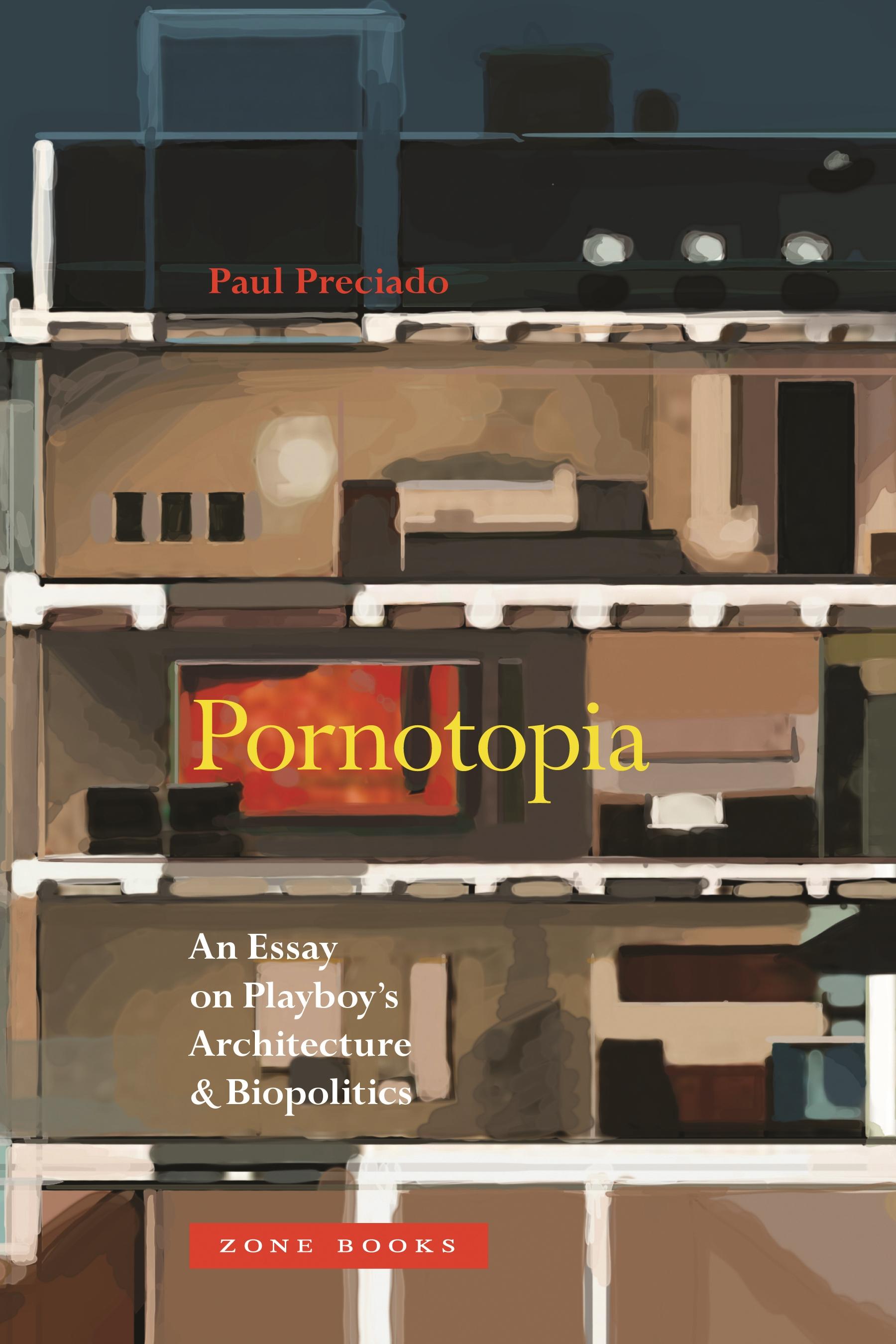
Published for the first time in 1953, Playboy was not only the first pornographic popular magazine in America; it also came to embody an entirely new lifestyle through the construction of a series of utopian multimedia spaces — from the Playboy Mansion and fictional Playboy’s Penthouse of 1959 to the Playboy Clubs and hotels appearing around the world in the 1960s. Simultaneously, the invention of the contraceptive pill provided access to a biochemical technique that separated (hetero) sexuality and reproduction.
Addressing these concurrent cultural shifts, Paul Preciado investigates the strategic relationships between space, gender, and sexuality in popular sites related to the production and consumption of pornography that have tended to reside at the margins of traditional histories of architecture: bachelor pads, multimedia rotating beds, and design objects, among others.
Combining historical perspectives with contemporary critical theory, gender and queer theory, porn studies, the history of technology, and a range of primary transdisciplinary sources — treatises on sexuality, medical and pharmaceutical handbooks, architecture journals, erotic magazines, building manuals, and novels — Pornotopia explores the use of architecture as a biopolitical technique for governing sexual relations and the production of gender in the postwar United States.
Betal nemt med kort, Klarna, Apple Pay eller Google Pay. Ikke tilfreds? Du har altid 14 dages fortrydelsesret. Læs mere i vores vilkår. Har du spørgsmål, så send os en mail på hello@memmo.org.
Memmo gør det nemmere at studere – uanset hvor du er i verden. Hos os samler du dine kursusbøger og smarte studieværktøjer ét sted: resuméer, quizzer, podcasts og flashcards. Og så er der Ted, din studieven, der svarer på alt, du undrer dig over. Over 50 000 studerende studerer allerede her – bygget til at hjælpe dig med at lære hurtigere og stresse mindre.