
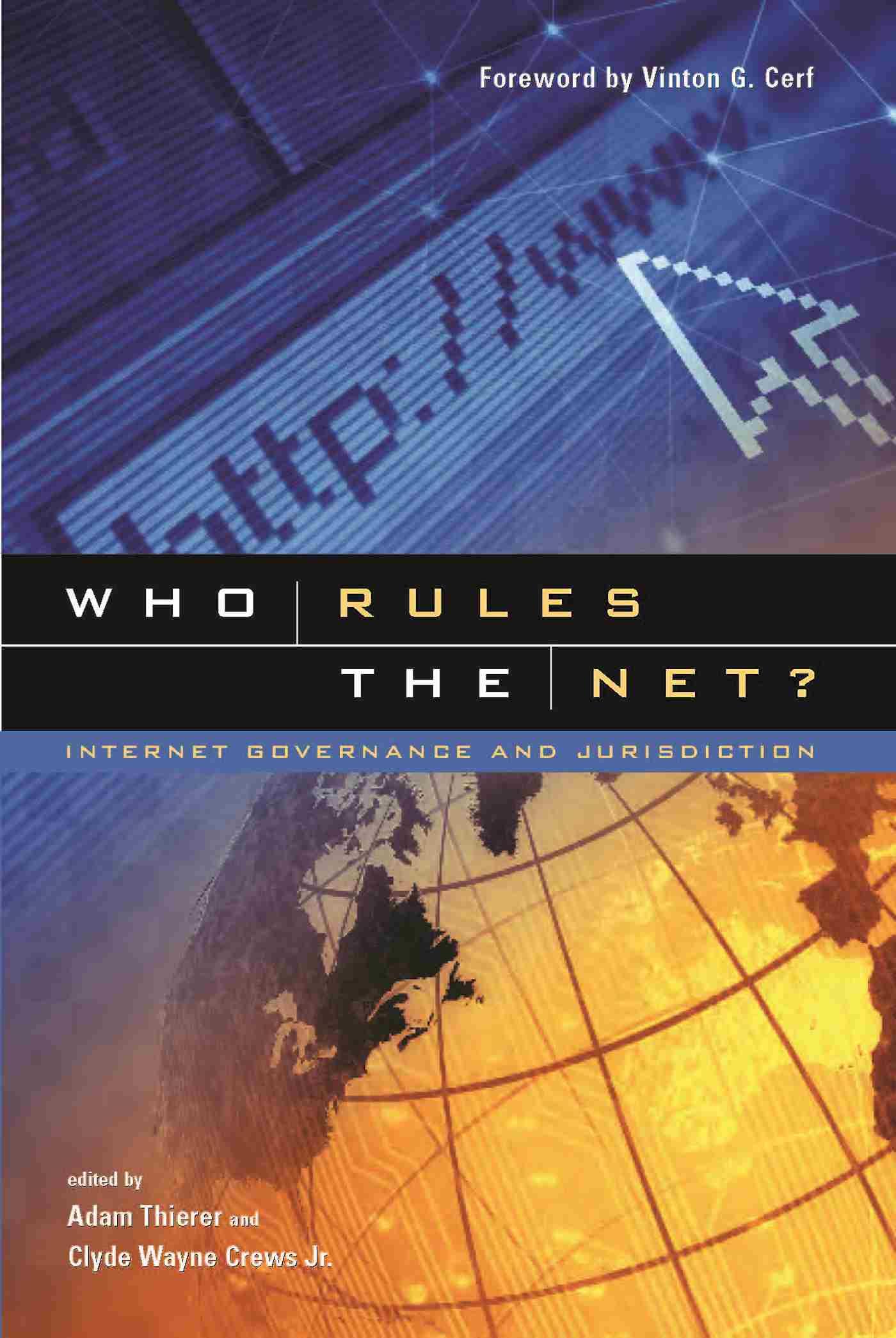
The rise of the Internet has challenged traditional concepts of jurisdiction, governance, and sovereignty. Many observers have praised the Internet for its ubiquitous and "borderless" nature and argued that this global medium is revolutionizing the nature of modern communications. Indeed, in the universe of cyberspace there are no passports and geography is often treated as a meaningless concept. But does that mean traditional concepts of jurisdiction and governance are obsolete? When legal disputes arise in cyberspace, or when governments attempt to apply their legal standards or cultural norms to the Internet, how are such matters to be adjudicated?
Cultural norms and regulatory approaches vary from country to country, as reflected in such policies as free speech and libel standards, privacy policies, intellectual property, antitrust law, domain name dispute resolution, and tax policy. In each of those areas, policymakers have for years enacted myriad laws and regulations for "realspace" that are now being directly challenged by the rise of the parallel electronic universe known as cyberspace. Who is responsible for setting the standards in cyberspace? Is a "U.N. for the Internet"or a multinational treaty appropriate? If not, who's standards should govern cross-border cyber disputes? Are different standards appropriate for cyberspace and "real" space? Those questions are being posed with increasing frequency in the emerging field of cyberspace law and constitute the guiding theme this book's collection of essays.
Betal nemt med kort, Klarna, Apple Pay eller Google Pay. Ikke tilfreds? Du har altid 14 dages fortrydelsesret. Læs mere i vores vilkår. Har du spørgsmål, så send os en mail på hello@memmo.org.
Memmo gør det nemmere at studere – uanset hvor du er i verden. Hos os samler du dine kursusbøger og smarte studieværktøjer ét sted: resuméer, quizzer, podcasts og flashcards. Og så er der Ted, din studieven, der svarer på alt, du undrer dig over. Over 50 000 studerende studerer allerede her – bygget til at hjælpe dig med at lære hurtigere og stresse mindre.