
'While identifying two types of activity, namely econ-art and econ-science, he demonstrates why economists should acknowledge their artistic impulses and develop a more scientific conduct.' ARTbibliographies Modern
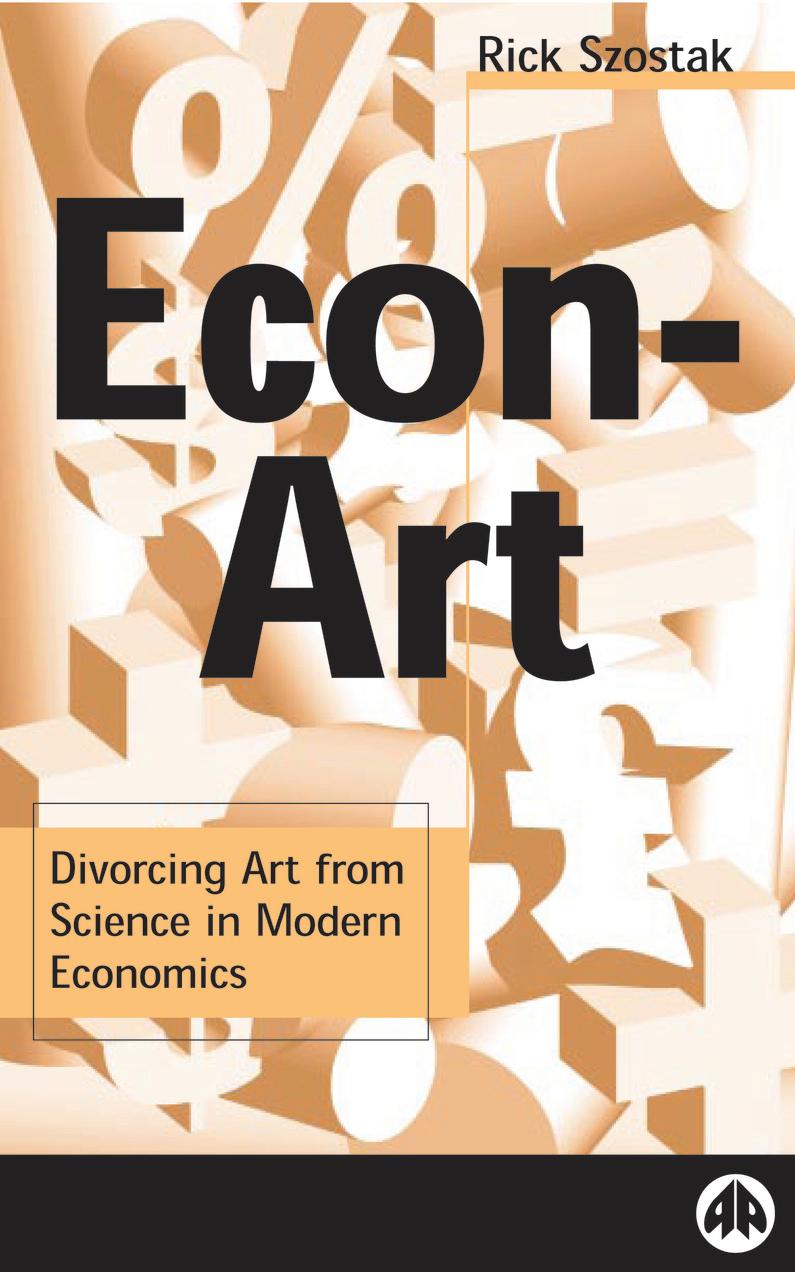
Historians of economic thought have long recognised the possibility that cultural influences might be important, but have never analysed them in any detail. In the first study of economics from the perspective of art history, Rick Szostak shows how the cultural influences identified by art historians have affected economic theory. He also reveals that not only has economic theory been informed by aesthetic considerations, but the very methods employed by economists are shown to serve primarily artistic goals.
Professor Szostak assesses the extent of these cultural and aesthetic effects through a wide-ranging study of the development of surrealism, cubism and abstract art, juxtaposed with examples drawn from virtually every field of economics. Two types of endeavour are identified, Econ-Art and Econ-Science. Szostak argues that the pursuit of econ-science would be much aided if economists first recognised their artistic impulses, and then developed more scientific standards of conduct. As the first economist to thoroughly address the question of whether Economics is Art, Professor Szostak raises some important philosophical issues with this volume. The result is a controversial and scholarly, yet accessible, examination of the influence of both culture and aesthetic considerations on economics.
Historians of economic thought have long recognised the possibility that cultural influences might be important, but have never analysed them in any detail. In the first study of economics from the perspective of art history, Rick Szostak shows how the cultural influences identified by art historians have affected economic theory. He also reveals that not only has economic theory been informed by aesthetic considerations, but the very methods employed by economists are shown to serve primarily artistic goals.
Professor Szostak assesses the extent of these cultural and aesthetic effects through a wide-ranging study of the development of surrealism, cubism and abstract art, juxtaposed with examples drawn from virtually every field of economics. Two types of endeavour are identified, Econ-Art and Econ-Science. Szostak argues that the pursuit of econ-science would be much aided if economists first recognised their artistic impulses, and then developed more scientific standards of conduct. As the first economist to thoroughly address the question of whether Economics is Art, Professor Szostak raises some important philosophical issues with this volume. The result is a controversial and scholarly, yet accessible, examination of the influence of both culture and aesthetic considerations on economics.
Betal nemt med kort, Klarna, Apple Pay eller Google Pay. Ikke tilfreds? Du har altid 14 dages fortrydelsesret. Læs mere i vores vilkår. Har du spørgsmål, så send os en mail på hello@memmo.org.
Memmo gør det nemmere at studere – uanset hvor du er i verden. Hos os samler du dine kursusbøger og smarte studieværktøjer ét sted: resuméer, quizzer, podcasts og flashcards. Og så er der Ted, din studieven, der svarer på alt, du undrer dig over. Over 50 000 studerende studerer allerede her – bygget til at hjælpe dig med at lære hurtigere og stresse mindre.
Du kan måske også lide
Køb bogen0