
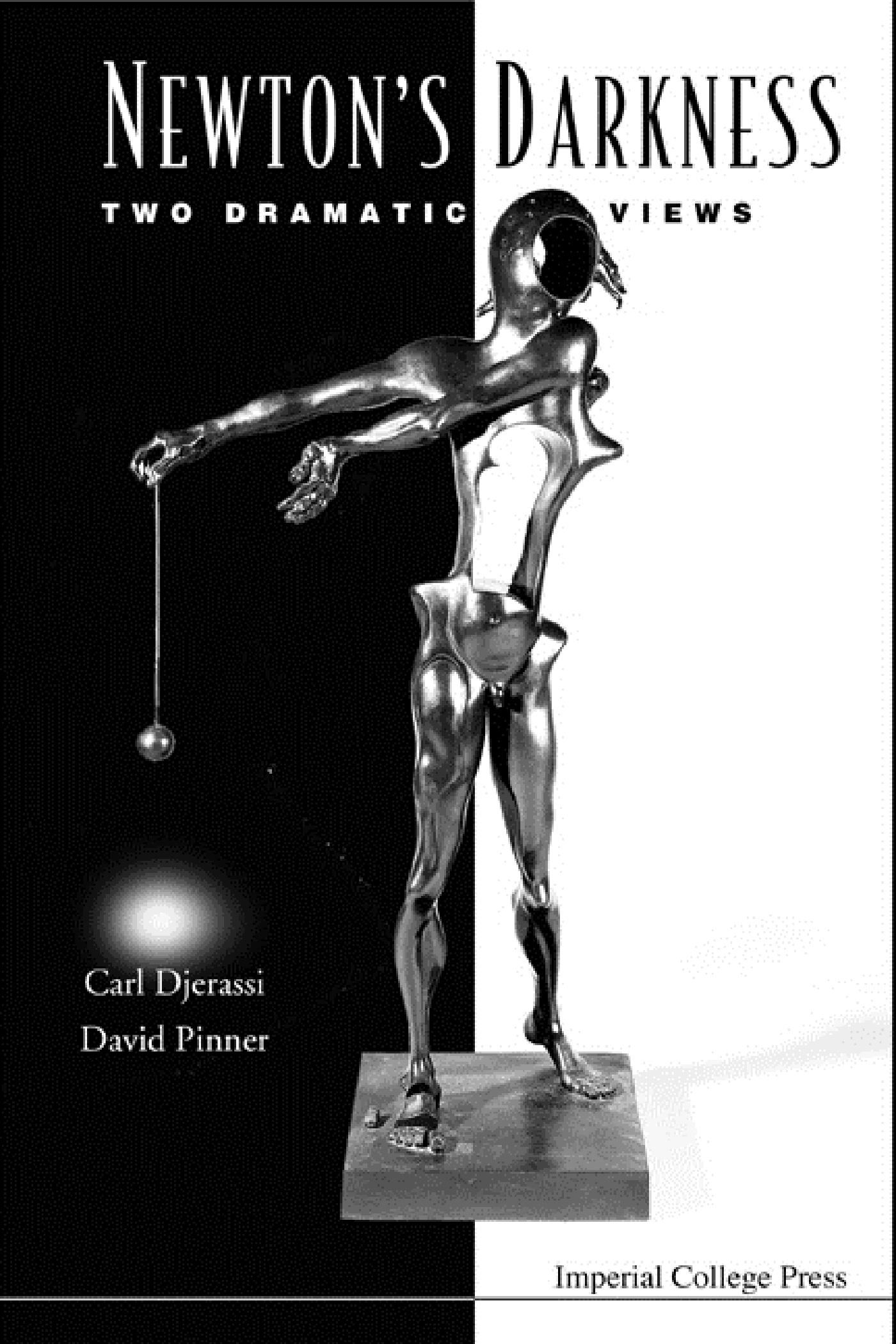
”What purpose is served by showing that England's greatest natural philosopher is flawed … like other mortals?” asks one of the characters in Newton's Darkness. “We need unsullied heroes!” But what if the hero is sullied? At stake is an issue that is as germane today as it was 300 years ago: a scientist's ethics must not be divorced from scientific accomplishments. There is probably no other scientist of whom so many biographies and other historical analyses have been published than Isaac Newton — all of them in the standard format of documentary prose because of their didactic purpose to transmit historical information. Newton's Darkness, however, illuminates the darker aspects of Newton's persona through two historically grounded plays dealing with two of the bitterest struggles in the history of science.The name of Isaac Newton appears in virtually every survey of the public's choice for the most important persons of the second millennium. Yet the term “darkness” can be applied to much of Newton's personality. Adjectives that have been used to describe facets of his personality include “remote”, “lonely”, “secretive”, “introverted”, “melancholic”, “humorless”, “puritanical”, “cruel”, “vindictive” and, perhaps worst of all, “unforgiving”. The trait most relevant to the present book is Newton's obsessively competitive nature, which was often out of proportion to the warranted facts, as demonstrated in three of Newton's best-known bitter conflicts: with the physicist Robert Hooke, the astronomer royal John Flamsteed, and a German contemporary of almost equal intellectual prowess, Gottfried Wilhelm Leibniz — the last fight eventually turning into an England vs Continental Europe competition. It is two of these three relentless drawn-out battles that are illuminated in Newton's Darkness in the form of historically grounded drama.After a summary of the historical evidence, the book starts with the Newton-Hooke struggle (Chapter 2), which was conducted mano a mano, and is then followed by little-known aspects of the Newton-Leibniz confrontation (Chapter 3), which was fought largely through surrogates — notably the infamous, anonymous committee of 11 Fellows of the Royal Society.
Betal nemt med kort, Klarna, Apple Pay eller Google Pay. Ikke tilfreds? Du har altid 14 dages fortrydelsesret. Læs mere i vores vilkår. Har du spørgsmål, så send os en mail på hello@memmo.org.
Memmo gør det nemmere at studere – uanset hvor du er i verden. Hos os samler du dine kursusbøger og smarte studieværktøjer ét sted: resuméer, quizzer, podcasts og flashcards. Og så er der Ted, din studieven, der svarer på alt, du undrer dig over. Over 50 000 studerende studerer allerede her – bygget til at hjælpe dig med at lære hurtigere og stresse mindre.
Du kan måske også lide
Køb bogen0