
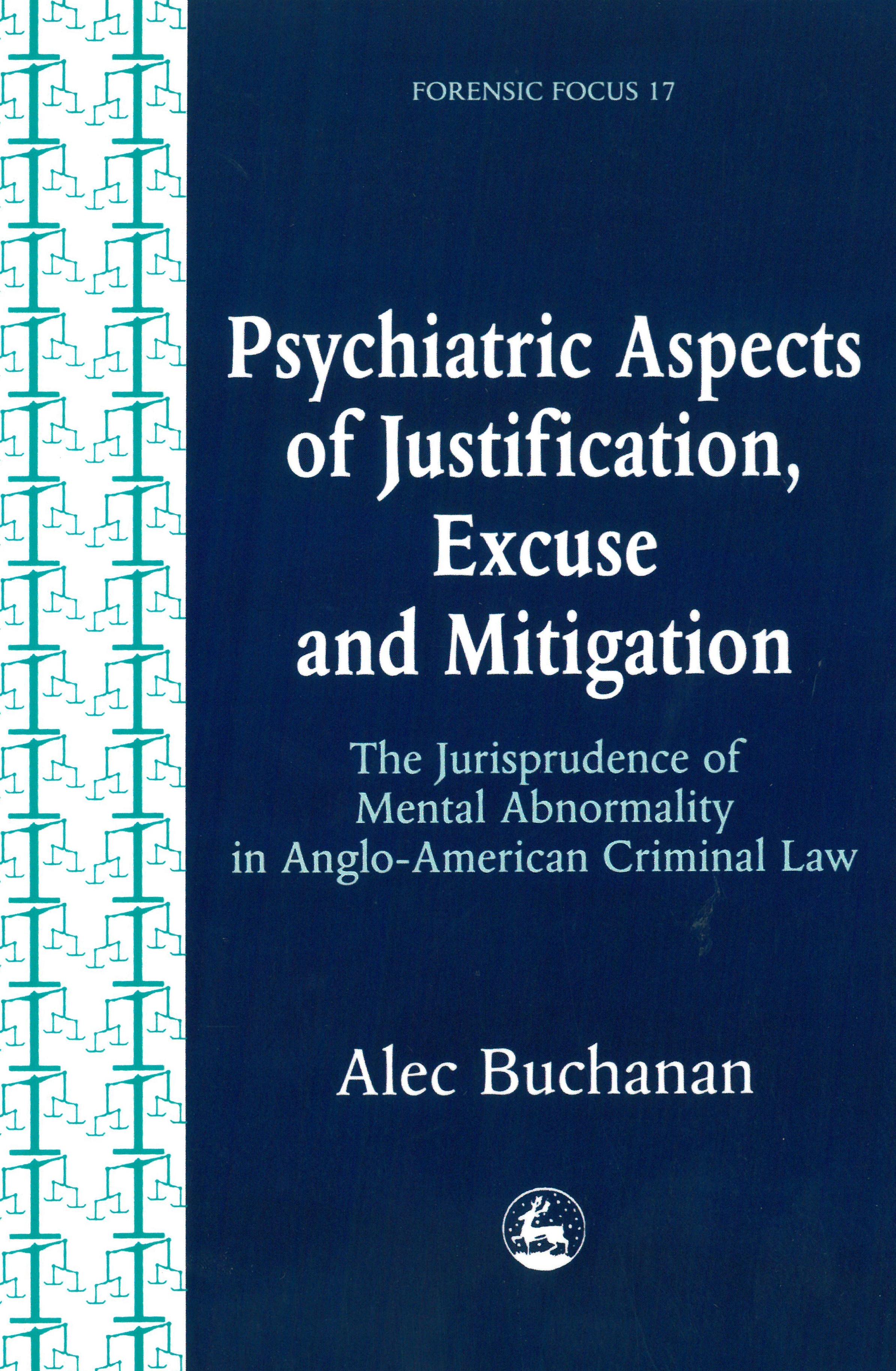
Violent crimes committed by the mentally disordered attract academic and public attention. They raise issues of moral responsibility and public protection. This study systematically analyses the principles underlying those legal and medical devices which enable the courts to make special arrangements for the mentally disordered.
Buchanan examines three fundamental precepts in criminal law: justification, excuse and mitigation. A defendant who has been proved guilty can usually have his or her sentence reduced only where one of these three principles applies. The way that the courts interpret notions of responsibility and choice may influence the outcome considerably. For mentally disordered offenders, the matter becomes even more complicated - this is where the psychological and psychiatric aspects of justification, excuse and mitigation come into play. The author combines a jurisprudential analysis of the above with a discussion of current legal provision for mentally disordered offenders in England and America. This thought-provoking book will be of particular interest to a wide range of professionals in the forensic field, as well as to academics specialising in mental health law and the philosophy of psychiatry.
Betal nemt med kort, Klarna, Apple Pay eller Google Pay. Ikke tilfreds? Du har altid 14 dages fortrydelsesret. Læs mere i vores vilkår. Har du spørgsmål, så send os en mail på hello@memmo.org.
Memmo gør det nemmere at studere – uanset hvor du er i verden. Hos os samler du dine kursusbøger og smarte studieværktøjer ét sted: resuméer, quizzer, podcasts og flashcards. Og så er der Ted, din studieven, der svarer på alt, du undrer dig over. Over 50 000 studerende studerer allerede her – bygget til at hjælpe dig med at lære hurtigere og stresse mindre.