
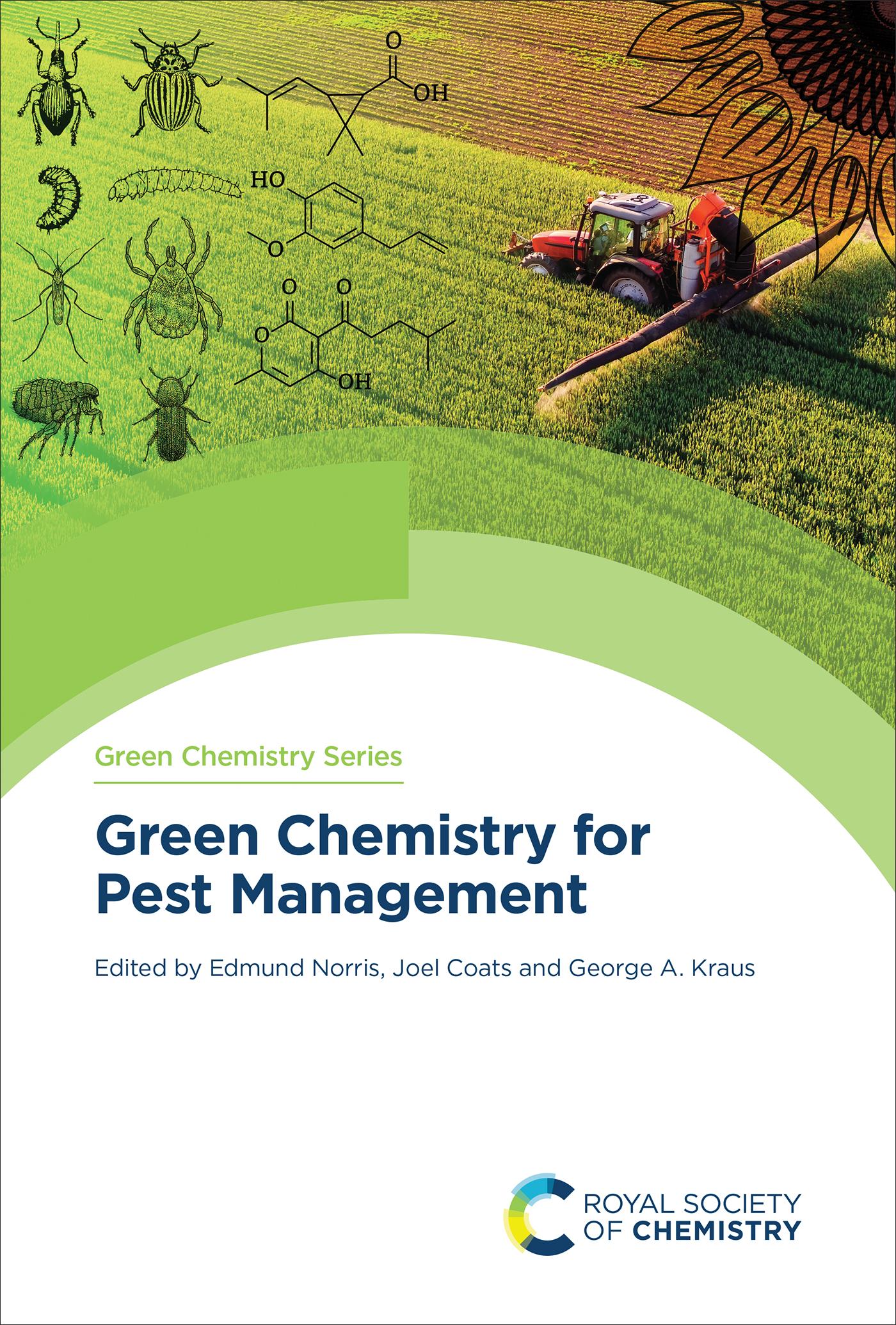
Crop losses due to insect pests can be economically devastating to farmers and lead to the risk of food shortages. Pest-vectored disease can cause significant economic shortfalls and decimate public health by causing significant morbidity and mortality, especially in economically disadvantaged populations and those in neglected, developing regions. Traditionally, synthetic pesticides have been utilized to reduce these grave agricultural and public health concerns. However, pesticide overuse and misuse have led to widespread pesticide resistance and select environmental impacts that limit their long-term utility. Therefore, it is necessary to find new control approaches and chemistries that can reduce pest pressure sustainably without adverse environmental impacts.
Green Chemistry for Pest Management addresses the known examples of utilizing natural chemistry and other non-traditional methods to control pest insects, plants and rodents. Natural pesticides from plant, microbiological and animal sources are discussed, as is the use of natural products as lead compounds for the synthesis of biorational and semisynthetic pesticides.
Betal nemt med kort, Klarna, Apple Pay eller Google Pay. Ikke tilfreds? Du har altid 14 dages fortrydelsesret. Læs mere i vores vilkår. Har du spørgsmål, så send os en mail på hello@memmo.org.
Memmo gør det nemmere at studere – uanset hvor du er i verden. Hos os samler du dine kursusbøger og smarte studieværktøjer ét sted: resuméer, quizzer, podcasts og flashcards. Og så er der Ted, din studieven, der svarer på alt, du undrer dig over. Over 50 000 studerende studerer allerede her – bygget til at hjælpe dig med at lære hurtigere og stresse mindre.