
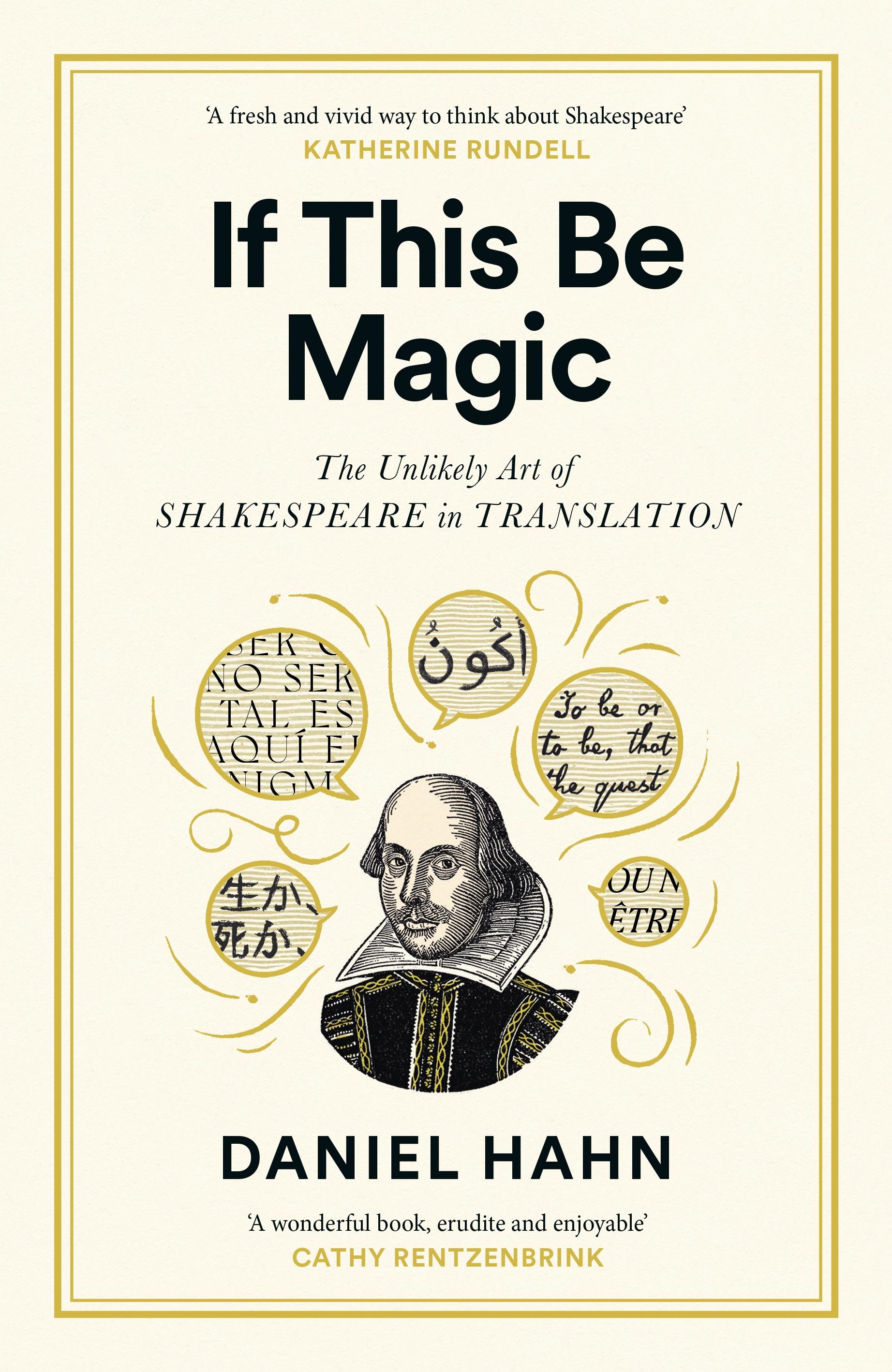
How do you rebuild a 400-year-old topical joke in a new culture and with none of the same words?
How does Romeo and Juliet’s first meeting unfold if they can’t mention pilgrims?
What does Taming of the Shrew sound like in a language where every noun has a gender?
Why might Hamlet be even longer in Japanese?
And why are Lady Macbeth’s pronouns such a problem?
What does it mean to translate Shakespeare? When we change all the poetry, all the wordplay, all the syntax – all the words! – is it still Shakespeare? And is it still any good?
Daniel Hahn, seasoned translator and Shakespeare fanatic, will change the way you think about language itself. Ranging widely across Shakespeare’s works, and across the world’s languages, this book explores what translators have done and what is possible.
No knowledge of any particular language is required, though a bit of patience for the nerdiest of close reading is desirable. This micro-attention to language will reveal some of the complexities of Shakespeare; and by using his work as its subject, with the extraordinary pressures that he puts on language, it will reveal even more about the craft of translation, and the power of words themselves.
Betal nemt med kort, Klarna, Apple Pay eller Google Pay. Ikke tilfreds? Du har altid 14 dages fortrydelsesret. Læs mere i vores vilkår. Har du spørgsmål, så send os en mail på hello@memmo.org.
Memmo gør det nemmere at studere – uanset hvor du er i verden. Hos os samler du dine kursusbøger og smarte studieværktøjer ét sted: resuméer, quizzer, podcasts og flashcards. Og så er der Ted, din studieven, der svarer på alt, du undrer dig over. Over 50 000 studerende studerer allerede her – bygget til at hjælpe dig med at lære hurtigere og stresse mindre.