
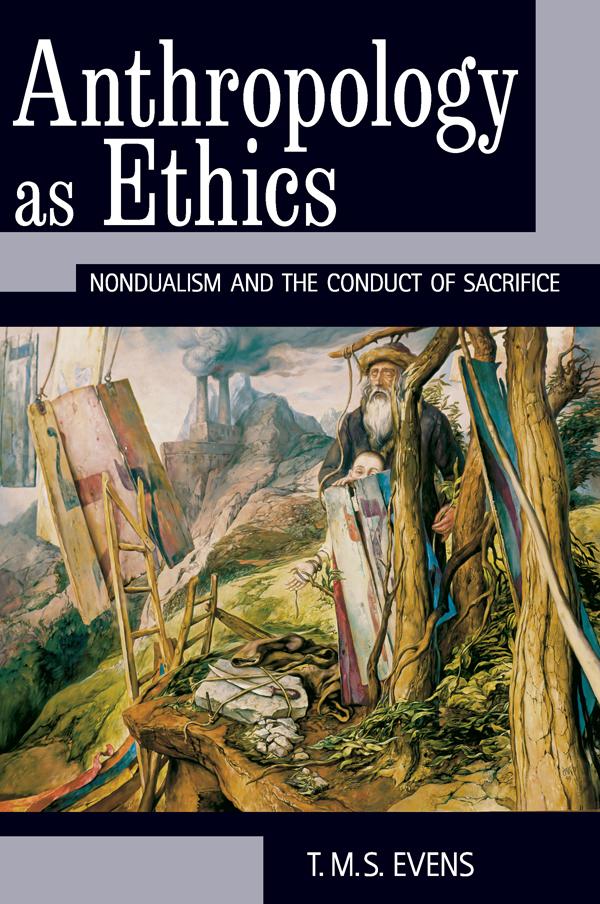
Anthropology as Ethics is concerned with rethinking anthropology by rethinking the nature of reality. It develops the ontological implications of a defining thesis of the Manchester School: that all social orders exhibit basically conflicting underlying principles. Drawing especially on Continental social thought, including Wittgenstein, Merleau-Ponty, Levinas, Dumont, Bourdieu and others, and on pre-modern sources such as the Hebrew bible, the Nuer, the Dinka, and the Azande, the book mounts a radical study of the ontology of self and other in relation to dualism and nondualism. It demonstrates how the self-other dichotomy disguises fundamental ambiguity or nondualism, thus obscuring the essentially ethical, dilemmatic, and sacrificial nature of all social life. It also proposes a reason other than dualist, nihilist, and instrumental, one in which logic is seen as both inimical to and continuous with value. Without embracing absolutism, the book makes ambiguity and paradox the foundation of an ethical response to the pervasive anti-foundationalism of much postmodern thought.
Betal nemt med kort, Klarna, Apple Pay eller Google Pay. Ikke tilfreds? Du har altid 14 dages fortrydelsesret. Læs mere i vores vilkår. Har du spørgsmål, så send os en mail på hello@memmo.org.
Memmo gør det nemmere at studere – uanset hvor du er i verden. Hos os samler du dine kursusbøger og smarte studieværktøjer ét sted: resuméer, quizzer, podcasts og flashcards. Og så er der Ted, din studieven, der svarer på alt, du undrer dig over. Over 50 000 studerende studerer allerede her – bygget til at hjælpe dig med at lære hurtigere og stresse mindre.