
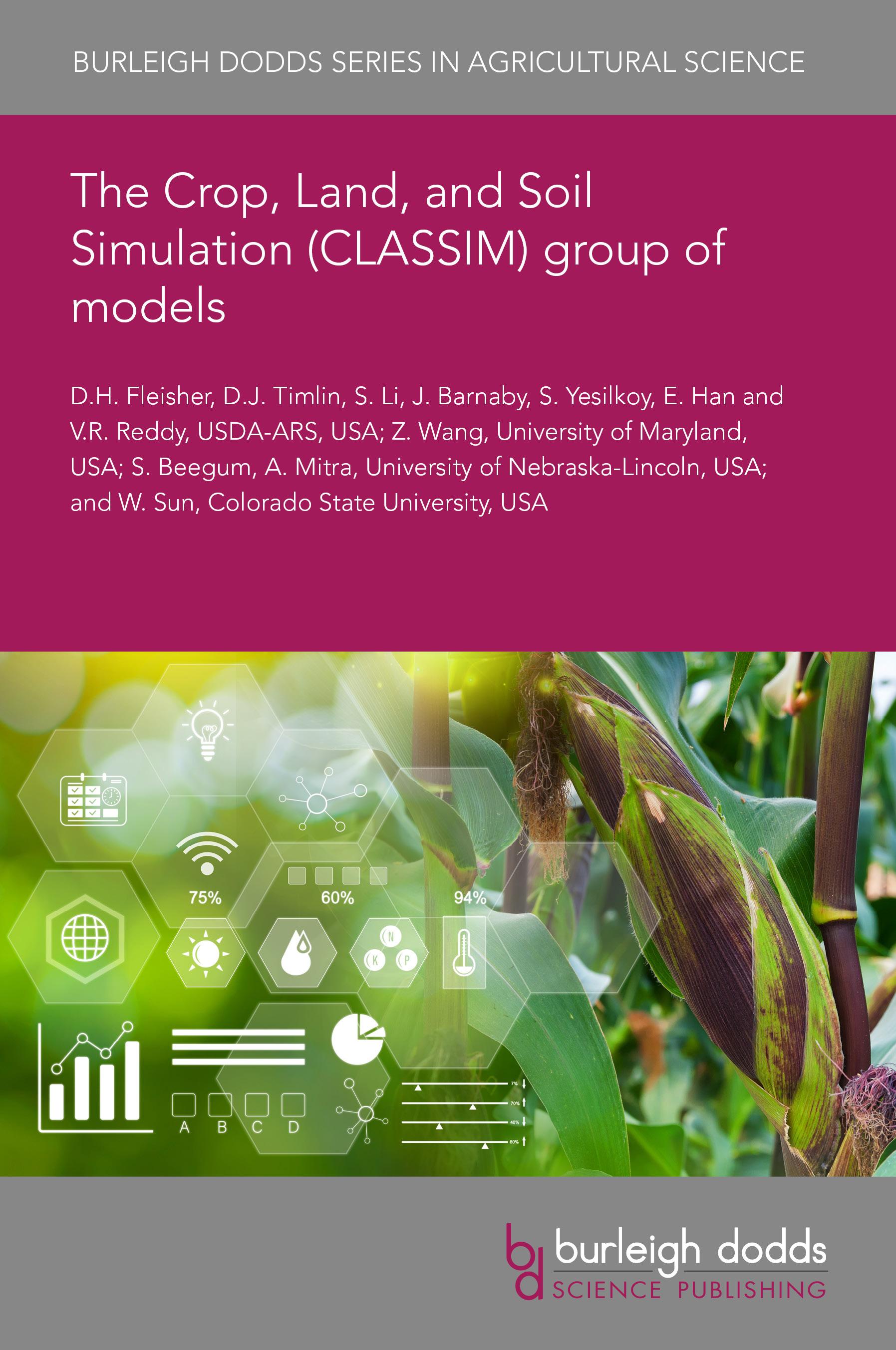
Process-level crop models integrate mathematical representations of the soil-plant-atmosphere with genetic, environment, and management factors. These tools support a range of needs including on-farm decision support, scientific inquiry, crop breeding, and climate impact assessments. The USDA-ARS Adaptive Cropping Systems Laboratory models include the current state of empirical knowledge and theories regarding crop and soil processes. These simulators incorporate mechanistic representations of gas exchange, energy balances, relationships between crop development and temperature, and responses to short- and long-term stresses. Unique sets of genetic coefficients account for phenotypic differences among crop varieties, accounting for responses to temperature, photoperiod, fertility and drought, as well as inherent growth rates. ACSL models are integrated with a two-dimensional soils module which allows representation of row topography and vertical / lateral movement of roots, water, solutes, gases, and heat through the soil profile. Recent improvements provide a broader, more accurate range of agricultural system assessments.
Betal nemt med kort, Klarna, Apple Pay eller Google Pay. Ikke tilfreds? Du har altid 14 dages fortrydelsesret. Læs mere i vores vilkår. Har du spørgsmål, så send os en mail på hello@memmo.org.
Memmo gør det nemmere at studere – uanset hvor du er i verden. Hos os samler du dine kursusbøger og smarte studieværktøjer ét sted: resuméer, quizzer, podcasts og flashcards. Og så er der Ted, din studieven, der svarer på alt, du undrer dig over. Over 50 000 studerende studerer allerede her – bygget til at hjælpe dig med at lære hurtigere og stresse mindre.