
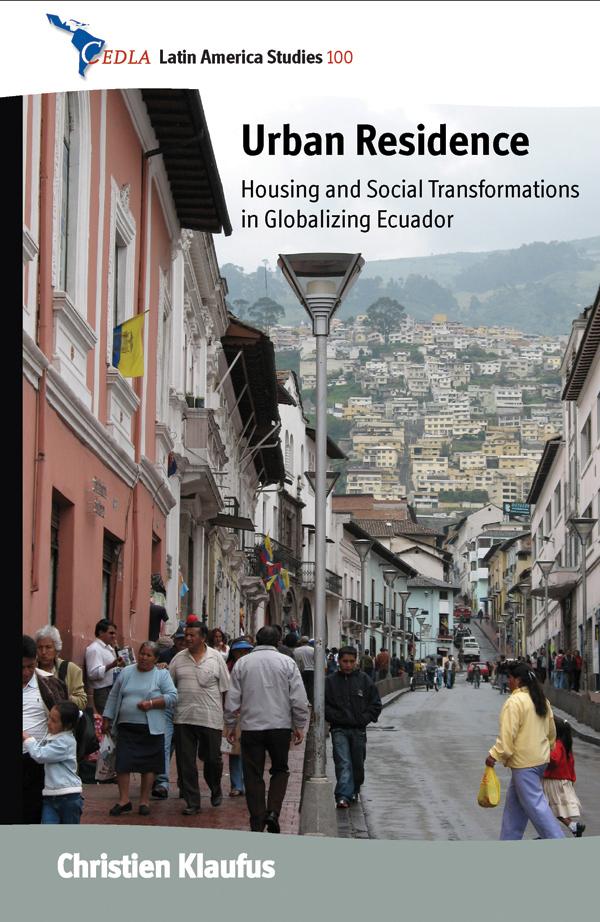
Riobamba and Cuenca, two intermediate cities in Ecuador, have become part of global networks through transnational migration, incoming remittances, tourism, and global economic connections. Their landscape is changing in several significant ways, a reflection of the social and urban transformations occurring in contemporary Ecuadorian society. Exploring the discourses and actions of two contrasting population groups, rarely studied in tandem, within these cities—popular-settlement residents and professionals in the planning and construction sector—this study analyzes how each is involved in house designs and neighborhood consolidation. Ideas, ambitions, and power relations come into play at every stage of the production and use of urban space, and as a result individual decisions about both house designs and the urban layout influence the development of the urban fabric. Knowledge about intermediate cities is crucial in order to understand current trends in the predominantly urban societies of Latin America, and this study is an example of needed interdisciplinary scholarship that contributes to the fields of urban studies, urban anthropology, sociology, and architecture.
Betal nemt med kort, Klarna, Apple Pay eller Google Pay. Ikke tilfreds? Du har altid 14 dages fortrydelsesret. Læs mere i vores vilkår. Har du spørgsmål, så send os en mail på hello@memmo.org.
Memmo gør det nemmere at studere – uanset hvor du er i verden. Hos os samler du dine kursusbøger og smarte studieværktøjer ét sted: resuméer, quizzer, podcasts og flashcards. Og så er der Ted, din studieven, der svarer på alt, du undrer dig over. Over 50 000 studerende studerer allerede her – bygget til at hjælpe dig med at lære hurtigere og stresse mindre.