
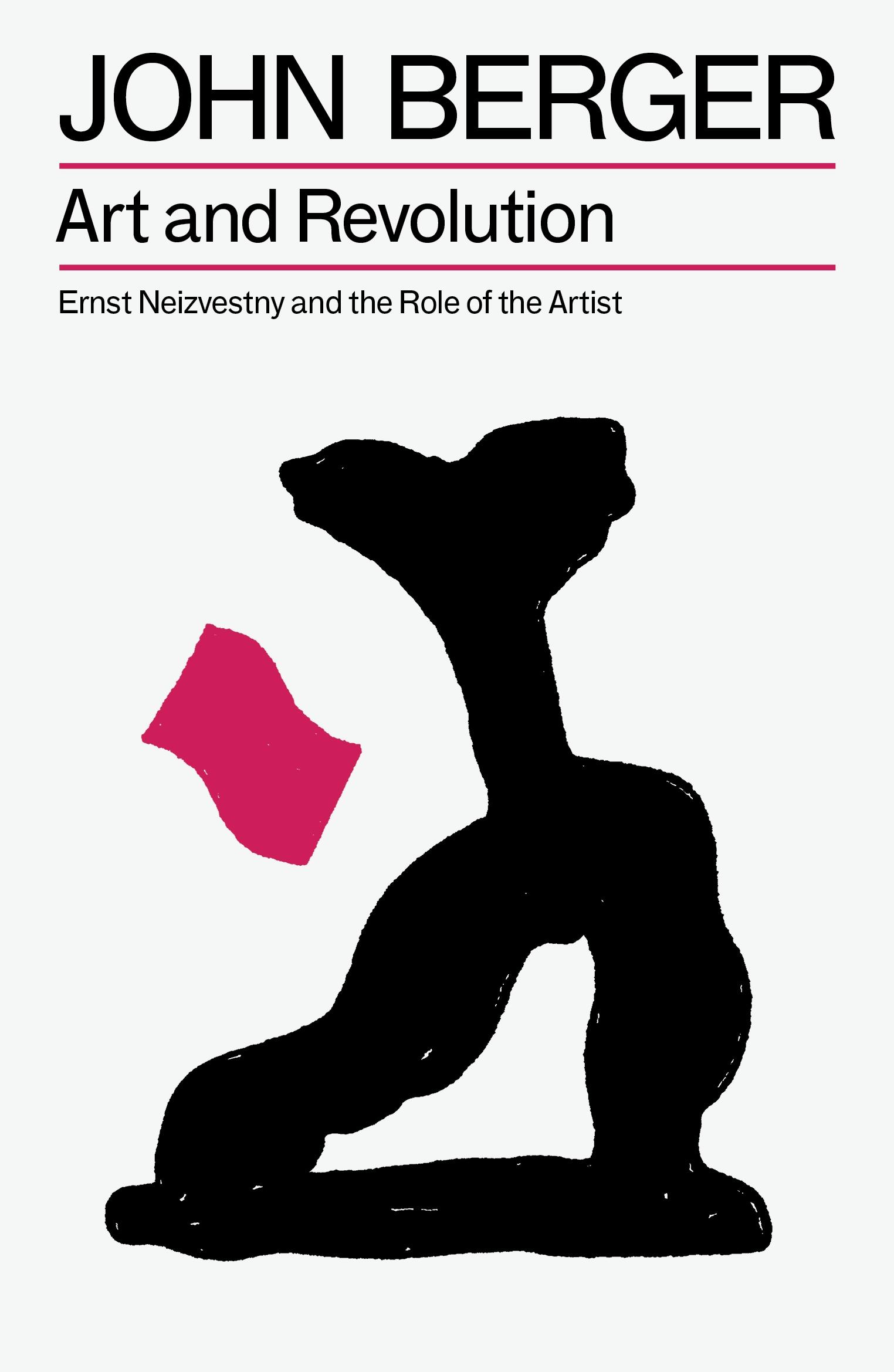
John Berger explores the life and work of Ernst Neizvestny, who, after clashing with Khrushchev, was excluded from the ranks of officially approved Soviet artists. Abandoned to obscurity, Neizvestny laboured to realize a monumental and very public vision of art. Exiled to the United States, he finally found recognition, returning to his homeland with the fall of the Berlin Wall.
Berger's account illuminates the very meaning of revolutionary art. In his struggle against official orthodoxy - which brought him into face-to-face conflict with Khrushchev himself - Neizvestny was fight-ing not for a merely personal or aesthetic vision, but for recognition of the social role of art. His sculptures earn a place in the world by reflecting the courage of a whole people, commemorating, in an age of mass suffering, the resistance and endurance of millions.
Berger's account illuminates the very meaning of revolutionary art. In his struggle against official orthodoxy - which brought him into face-to-face conflict with Khrushchev himself - Neizvestny was fight-ing not for a merely personal or aesthetic vision, but for recognition of the social role of art. His sculptures earn a place in the world by reflecting the courage of a whole people, commemorating, in an age of mass suffering, the resistance and endurance of millions.
Betal nemt med kort, Klarna, Apple Pay eller Google Pay. Ikke tilfreds? Du har altid 14 dages fortrydelsesret. Læs mere i vores vilkår. Har du spørgsmål, så send os en mail på hello@memmo.org.
Memmo gør det nemmere at studere – uanset hvor du er i verden. Hos os samler du dine kursusbøger og smarte studieværktøjer ét sted: resuméer, quizzer, podcasts og flashcards. Og så er der Ted, din studieven, der svarer på alt, du undrer dig over. Over 50 000 studerende studerer allerede her – bygget til at hjælpe dig med at lære hurtigere og stresse mindre.
Du kan måske også lide
Køb bogen0