
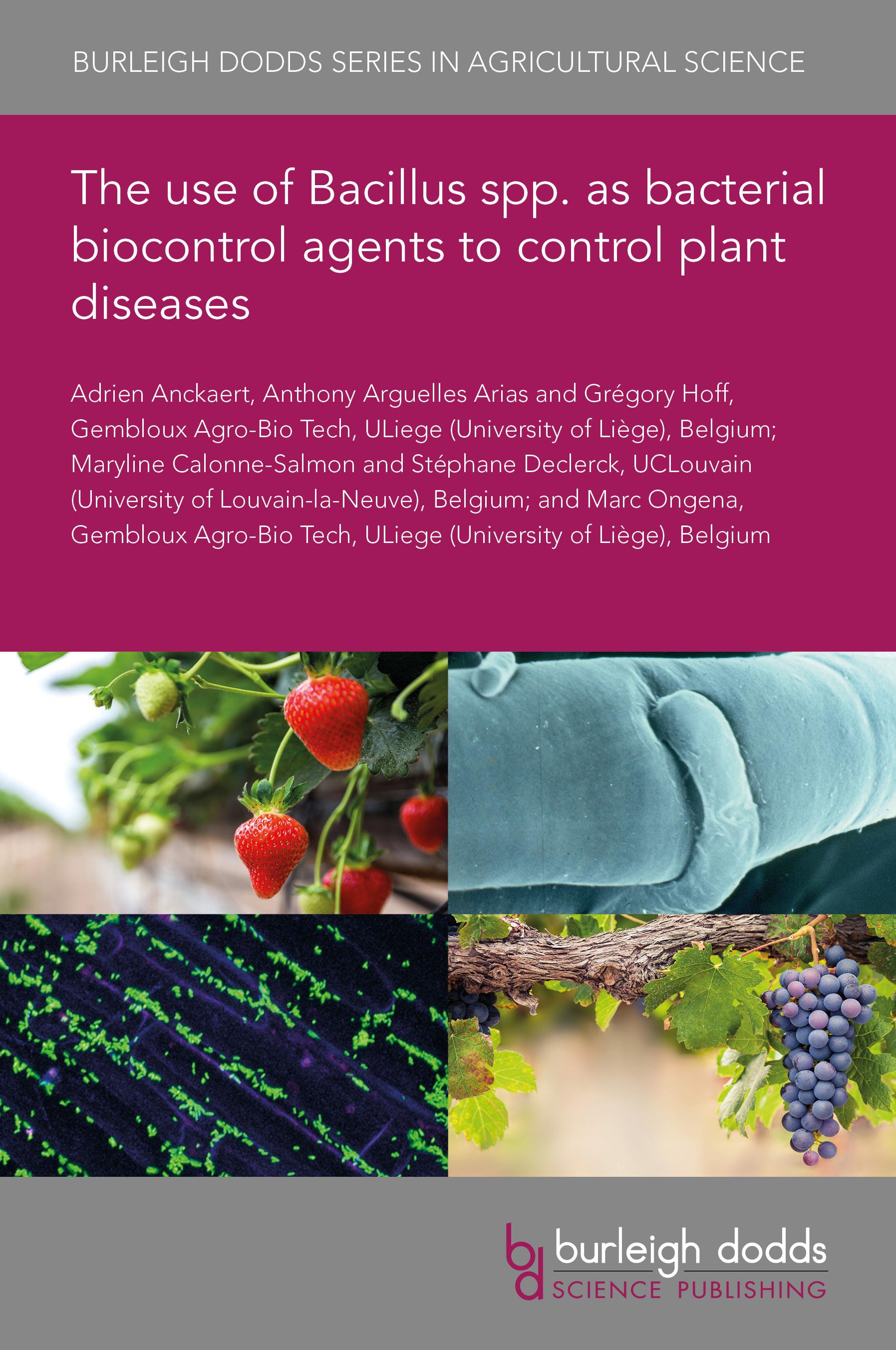
The use of Bacillus spp. as bacterial biocontrol agents to control plant diseases
Biocontrol agents (BCAs) based on plant growth promoting rhizobacteria have recently been developed as alternatives to chemical pesticides. Among those beneficial bacteria, Bacillus spp. are one of the most promising BCAs. A wide range of bioactive secondary metabolites (BSMs) are involved in biocontrol via antibiosis to phytopathogens and/or via elicitation of systemic resistance in their host plants. This chapter illustrates the diversity of pathosystems in which BCA based on Bacillus spp. have proved effective. It describes the mechanisms underpinning this biocontrol activity via production of a wide range of enzymes, proteins and small-size BSMs. As these BSMs are clearly involved in pathogen control, we emphasise the importance of understanding the ecological factors influencing their production. In the last part of the chapter, we highlight the potential interactions between Bacillus spp. and other soil microorganisms in developing consortia of biocontrol agents combining species with synergistic activities for plant health improvement.
Betal nemt med kort, Klarna, Apple Pay eller Google Pay. Ikke tilfreds? Du har altid 14 dages fortrydelsesret. Læs mere i vores vilkår. Har du spørgsmål, så send os en mail på hello@memmo.org.
Memmo gør det nemmere at studere – uanset hvor du er i verden. Hos os samler du dine kursusbøger og smarte studieværktøjer ét sted: resuméer, quizzer, podcasts og flashcards. Og så er der Ted, din studieven, der svarer på alt, du undrer dig over. Over 50 000 studerende studerer allerede her – bygget til at hjælpe dig med at lære hurtigere og stresse mindre.