
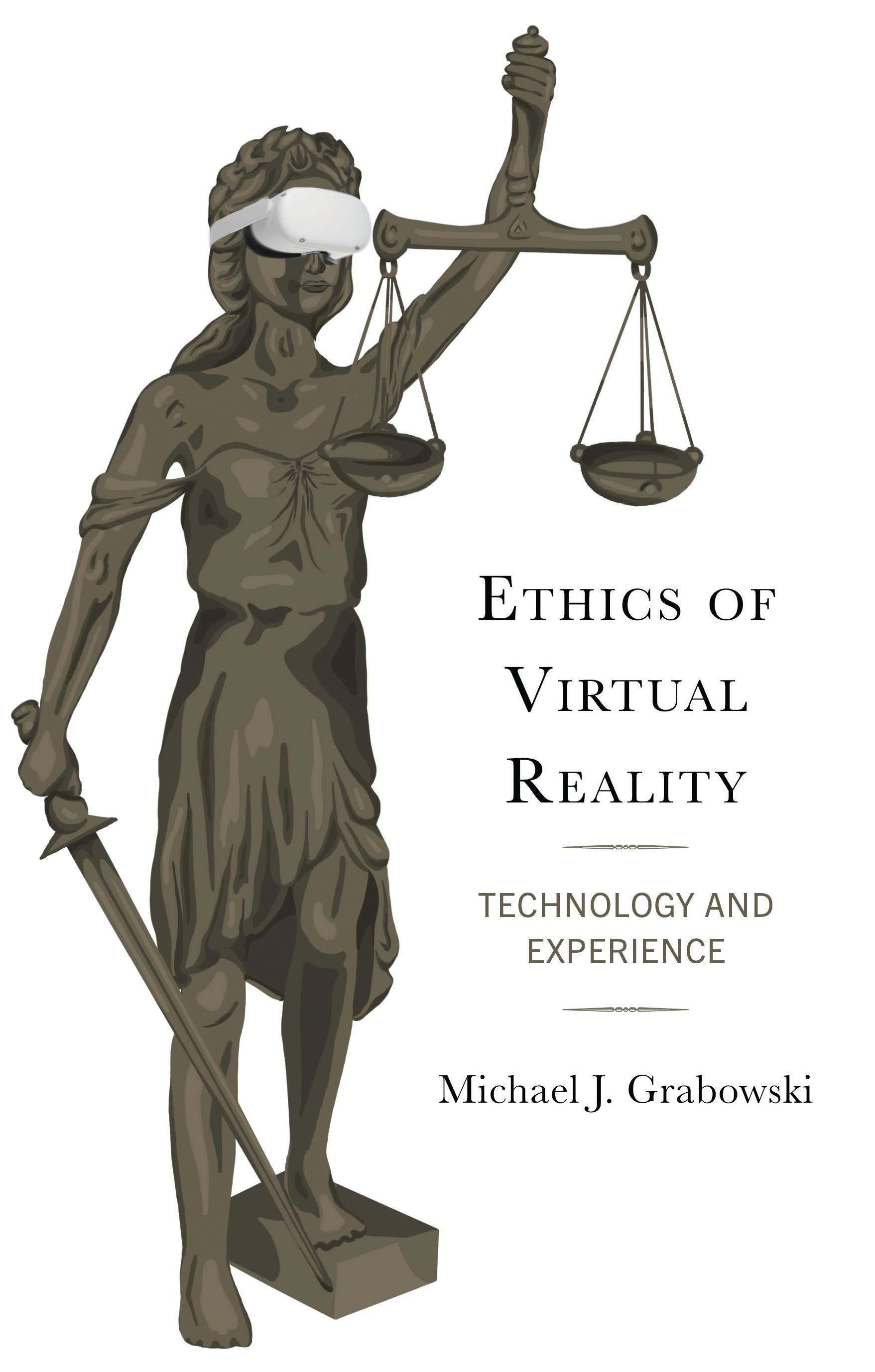
In this book, Michael Grabowski draws on established theories of ethics to consider critical questions surrounding the growing adoption of virtual reality (VR) technologies. These questions include who should control and have access to VR, its impact on privacy, its potential for misrepresentation and bias, and how to provide a platform for free expression while mitigating harassment and abuse.
Grabowski examines use cases of other digital technologies, including social media and artificial intelligence, to examine who is helped and harmed by the widespread implementation of VR and how it might transform existing institutions, social relationships, and communication. Finally, Grabowski forecasts the possible futures of VR and what limits, if any, should be placed on representing the real world or imagining new ones. Scholars of media studies, technology studies, communication, and ethics will find this book of particular interest.
Grabowski examines use cases of other digital technologies, including social media and artificial intelligence, to examine who is helped and harmed by the widespread implementation of VR and how it might transform existing institutions, social relationships, and communication. Finally, Grabowski forecasts the possible futures of VR and what limits, if any, should be placed on representing the real world or imagining new ones. Scholars of media studies, technology studies, communication, and ethics will find this book of particular interest.
Betal nemt med kort, Klarna, Apple Pay eller Google Pay. Ikke tilfreds? Du har altid 14 dages fortrydelsesret. Læs mere i vores vilkår. Har du spørgsmål, så send os en mail på hello@memmo.org.
Memmo gør det nemmere at studere – uanset hvor du er i verden. Hos os samler du dine kursusbøger og smarte studieværktøjer ét sted: resuméer, quizzer, podcasts og flashcards. Og så er der Ted, din studieven, der svarer på alt, du undrer dig over. Over 50 000 studerende studerer allerede her – bygget til at hjælpe dig med at lære hurtigere og stresse mindre.