
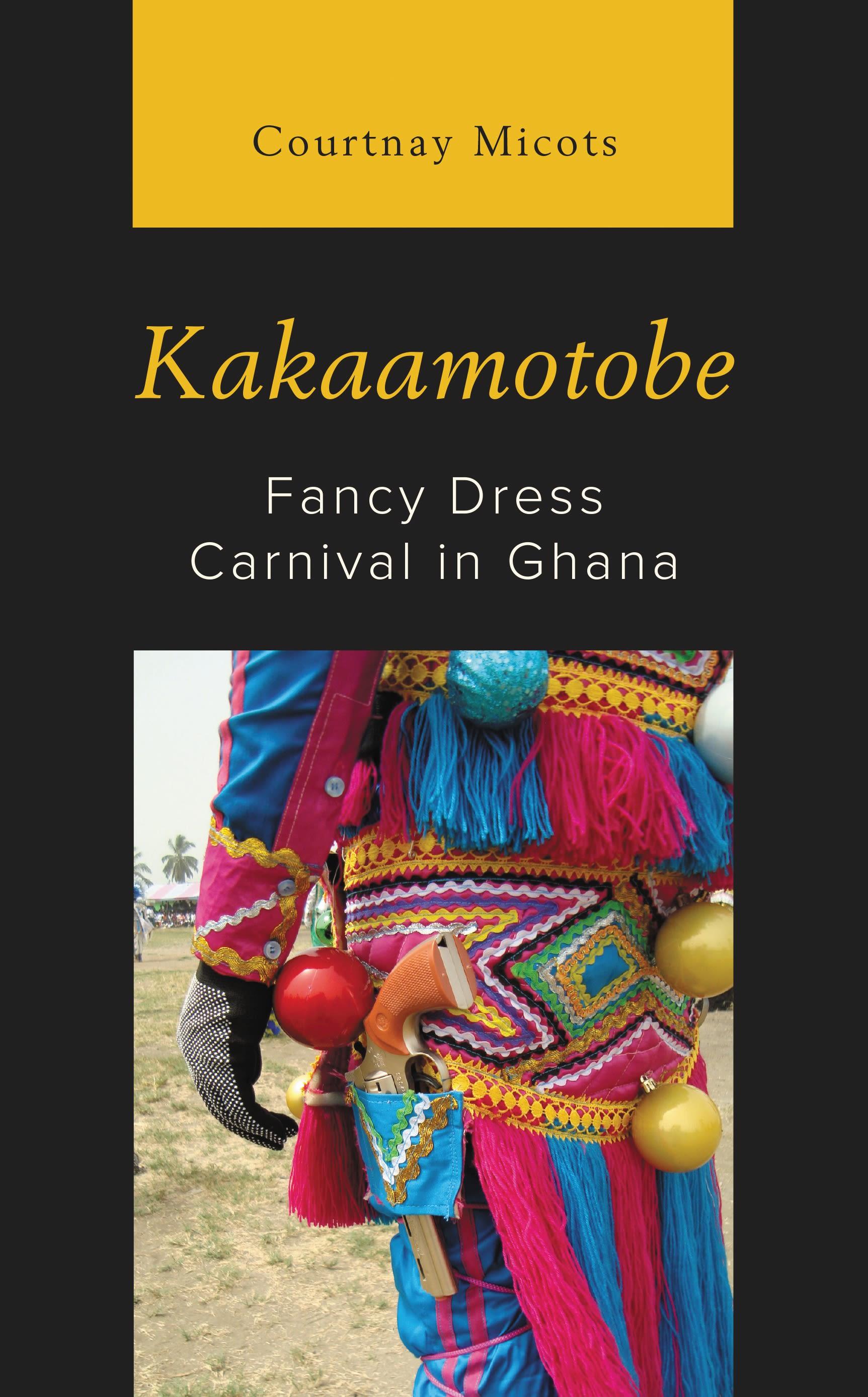
Kakaamotobe, meaning to scare, is known across southern Ghana, West Africa, as Fancy Dress performance. Masqueraders dress in colorful costumes and wear fancy and fierce masks; they dance energetically to drums or brass band music through the main streets of town during holidays, especially during Christmastime. Competitions held in two towns are intense annual events. This lively secular masquerade is a carnival form that has been practiced for well over a century primarily by coastal Fante people, and many additional ethnicities participate today. Kakaamotobe: Fancy Dress Carnival in Ghana explores the fascinating history, aesthetics, performance, and underlying messages of this masquerade with ties to other carnivalesque practices in the Black Atlantic. While Fancy Dress may engage with global cultures through some of its aesthetics, the practice is profoundly African. The utilization of elaborate costumes, masks, and brass bands expresses not a desire to imitate outside cultures, but rather the impulse of youth to adapt traditional culture to the contemporary environment. Courtnay Micots argues that the outward impression of folly belies the more serious refashioning of power, identity, and modernity in the community.
Betal nemt med kort, Klarna, Apple Pay eller Google Pay. Ikke tilfreds? Du har altid 14 dages fortrydelsesret. Læs mere i vores vilkår. Har du spørgsmål, så send os en mail på hello@memmo.org.
Memmo gør det nemmere at studere – uanset hvor du er i verden. Hos os samler du dine kursusbøger og smarte studieværktøjer ét sted: resuméer, quizzer, podcasts og flashcards. Og så er der Ted, din studieven, der svarer på alt, du undrer dig over. Over 50 000 studerende studerer allerede her – bygget til at hjælpe dig med at lære hurtigere og stresse mindre.