
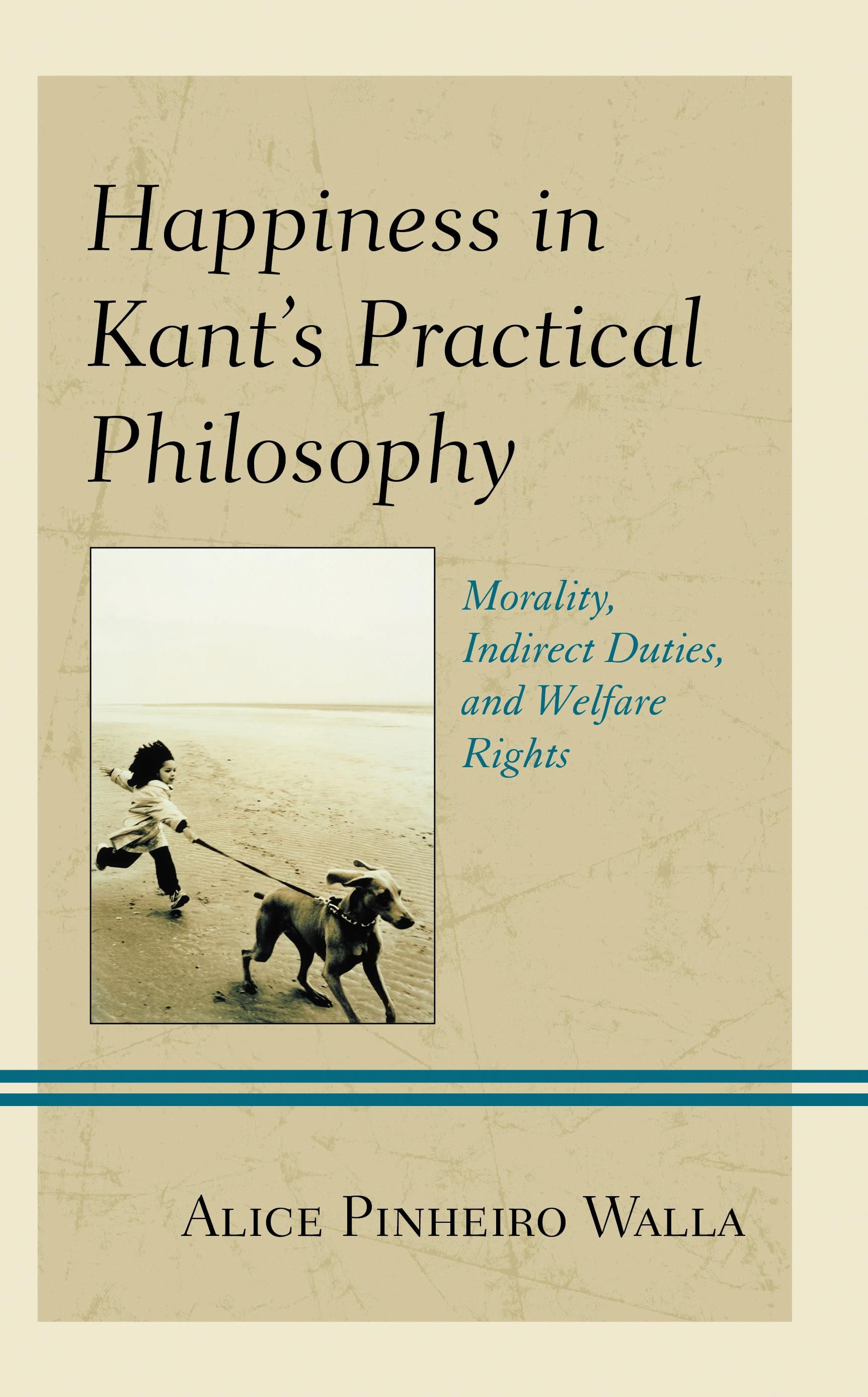
Happiness in Kant's Practical Philosophy: Morality, Indirect Duties, and Welfare Rights examines the role and normative implications of Kant's understanding of happiness for his moral, political, and legal philosophy. Kant's underlying assumptions about happiness are rarely overtly discussed or given much detail in his works. By bringing these assumptions to the fore, Alice Pinheiro Walla sheds light on some puzzling claims and on the scattered, sometimes contradictory remarks Kant makes about happiness. The book shows that happiness shapes or indirectly influences Kant's methodology and many of his conclusions, including his views on the nature of practical rationality, meta-ethics, the role of the state, and of political justification. The challenge with happiness is that it is impossible to know for certain what will make us happy, and what we take to be happiness changes over our lifetime. The book argues that Kant offers a distinctive strategy for dealing with this indeterminacy of happiness, one rooted in understanding our duties to ourselves and others. Happiness in Kant's Practical Philosophy provides a map of the areas in which the concept of happiness or considerations about the happiness of individuals appear in Kant's practical works and analyses the way they relate to central themes of his practical theory.
Betal nemt med kort, Klarna, Apple Pay eller Google Pay. Ikke tilfreds? Du har altid 14 dages fortrydelsesret. Læs mere i vores vilkår. Har du spørgsmål, så send os en mail på hello@memmo.org.
Memmo gør det nemmere at studere – uanset hvor du er i verden. Hos os samler du dine kursusbøger og smarte studieværktøjer ét sted: resuméer, quizzer, podcasts og flashcards. Og så er der Ted, din studieven, der svarer på alt, du undrer dig over. Over 50 000 studerende studerer allerede her – bygget til at hjælpe dig med at lære hurtigere og stresse mindre.