
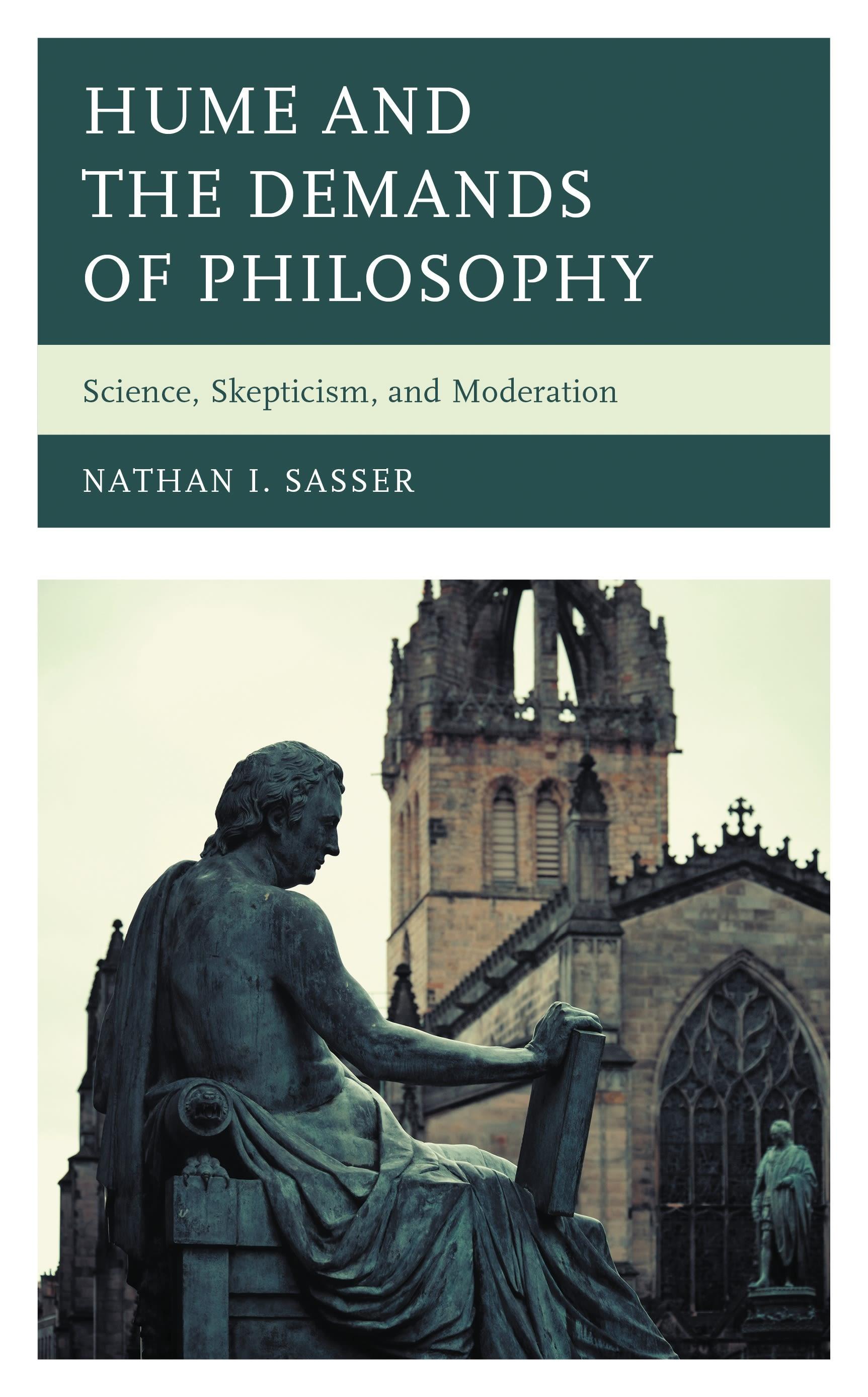
Hume and the Demands of Philosophy: Science, Skepticism, and Moderation offers a comprehensive interpretation of the relationship between Hume’s scientific project and his skepticism. Nathan I. Sasser argues that Hume is a radical epistemic skeptic who has purely practical reasons for retaining the beliefs that are essential for ordinary life and scientific research. On Sasser’s reading, the key to Hume’s epistemology is his conception of philosophy as a normative method of inquiry governing the special sciences. Philosophy approves of the mental faculties that produce reasoning and sensory beliefs. But sensory beliefs and the products of reason themselves face insuperable rational defeater arguments, and because they do, philosophy demands that we suspend these beliefs. Hume’s solution to this skeptical dilemma is to point out the fatal practical consequences of doing so. He advises us not to submit to the demands of philosophy when doing so is neither agreeable nor useful to ourselves or others. Hume’s moderate approach to philosophy recognizes that if the human mind is not created by a beneficent deity, then we must learn to live with the divergence between the epistemic demands of philosophy and the practical demands of life.
Betal nemt med kort, Klarna, Apple Pay eller Google Pay. Ikke tilfreds? Du har altid 14 dages fortrydelsesret. Læs mere i vores vilkår. Har du spørgsmål, så send os en mail på hello@memmo.org.
Memmo gør det nemmere at studere – uanset hvor du er i verden. Hos os samler du dine kursusbøger og smarte studieværktøjer ét sted: resuméer, quizzer, podcasts og flashcards. Og så er der Ted, din studieven, der svarer på alt, du undrer dig over. Over 50 000 studerende studerer allerede her – bygget til at hjælpe dig med at lære hurtigere og stresse mindre.