
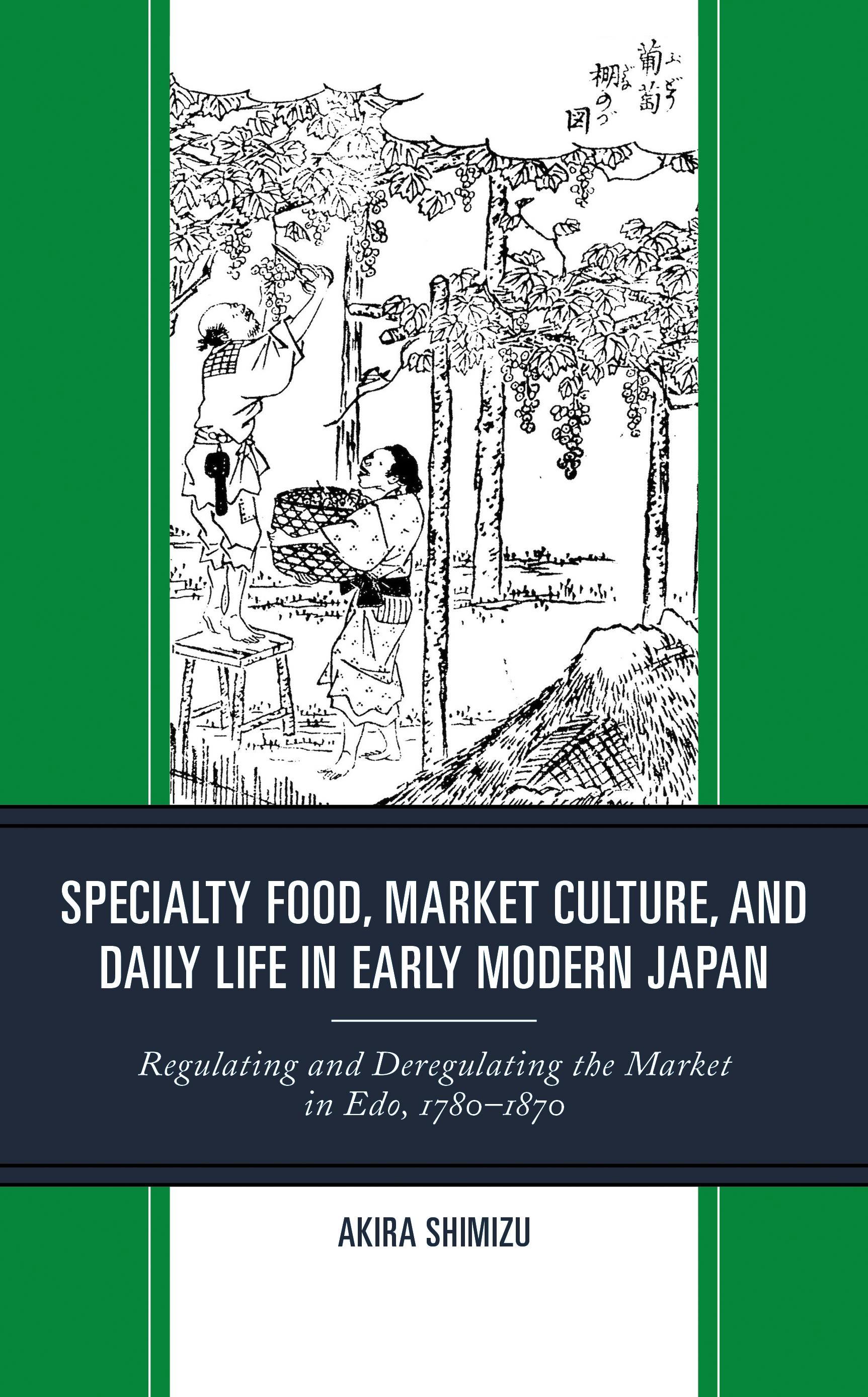
This study is an unique approach to social and cultural history of Japan through the scope of food and food ways. In this book-length study of food markets in the early modern Japanese capital of Edo, Akira Shimizu draws a fascinating picture of early modern Japanese society where specialty foods—seasonal, regional, and hard-to-find delicacies that satisfied the palate of nation’s highest political authority, the shogun—served as a powerful nexus that connected different social groups. In the course of their daily lives, peasants, fisherfolks, and merchants, who made specialty food available at the market, were in constant negotiation with powerful wholesalers and government authorities in charge of procuring specialty foods of the highest qualities for the shogun’s Edo Castle. Utilizing a number of previously unused archival materials that reveals the lives of those at the bottom of the society, the book traces the production, supply, and handling of specialty foods and shows how ordinary people were empowered to assume control over the distribution of specialty food, eventually affecting their procurement for the shogunal kitchen. In doing so, they disrupted the existing market order on the shogunal requisition, and led to the reconfiguration of market relations.
Betal nemt med kort, Klarna, Apple Pay eller Google Pay. Ikke tilfreds? Du har altid 14 dages fortrydelsesret. Læs mere i vores vilkår. Har du spørgsmål, så send os en mail på hello@memmo.org.
Memmo gør det nemmere at studere – uanset hvor du er i verden. Hos os samler du dine kursusbøger og smarte studieværktøjer ét sted: resuméer, quizzer, podcasts og flashcards. Og så er der Ted, din studieven, der svarer på alt, du undrer dig over. Over 50 000 studerende studerer allerede her – bygget til at hjælpe dig med at lære hurtigere og stresse mindre.