
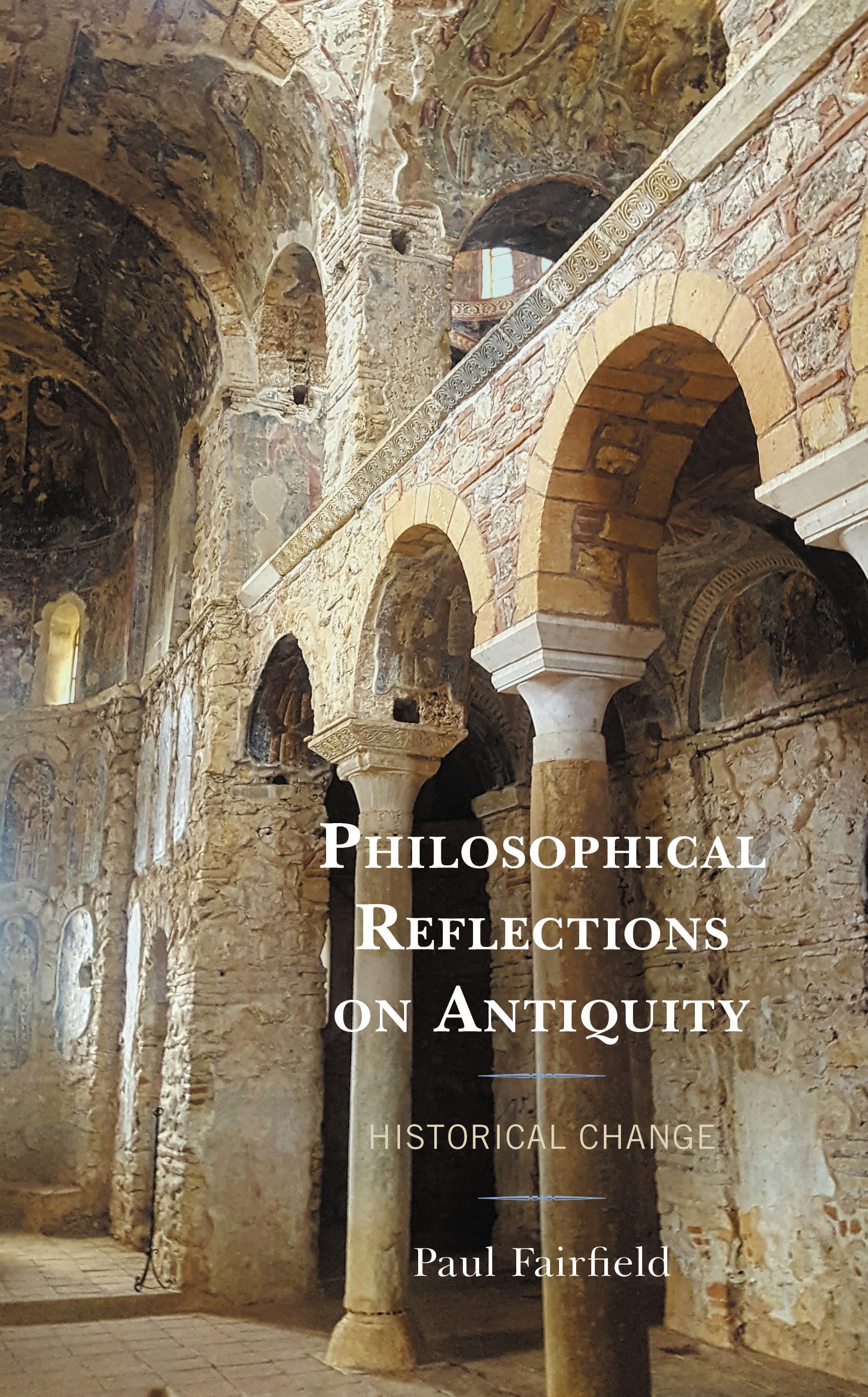
Philosophical Reflections on Antiquity: Historical Change addresses the question of whether there is a logic of historical change, and whether the collapse of teleology should deter us from inquiring anew whether any recurring patterns and themes show themselves amid the complexity of historical life. Paul Fairfield argues that if any conception of universal history remains possible, it is one that rejects teleology and causal laws while identifying thematic tendencies that afford some semblance of unity, including the enduring phenomena that are interlocution, the struggle for predominance, and the endless back and forth that play out between them. This book examines the transitional periods of archaic Greece and late antiquity, the ostensible birth and death of the ancient west. Fairfield argues that an interpretation of the social, political, and intellectual history of these important turning points brings to light some philosophical understanding of the dynamics of change itself, observing that the transition from archaic to classical Greece was no miracle, while the end of the Roman era can no longer be conceived as a story of decline and fall. Rather, Fairfield posits, these were not complete breaks, but relative beginnings and endings in narratives that are ongoing. Scholars of philosophy, history, and anthropology will find this book particularly useful.
Betal nemt med kort, Klarna, Apple Pay eller Google Pay. Ikke tilfreds? Du har altid 14 dages fortrydelsesret. Læs mere i vores vilkår. Har du spørgsmål, så send os en mail på hello@memmo.org.
Memmo gør det nemmere at studere – uanset hvor du er i verden. Hos os samler du dine kursusbøger og smarte studieværktøjer ét sted: resuméer, quizzer, podcasts og flashcards. Og så er der Ted, din studieven, der svarer på alt, du undrer dig over. Over 50 000 studerende studerer allerede her – bygget til at hjælpe dig med at lære hurtigere og stresse mindre.