
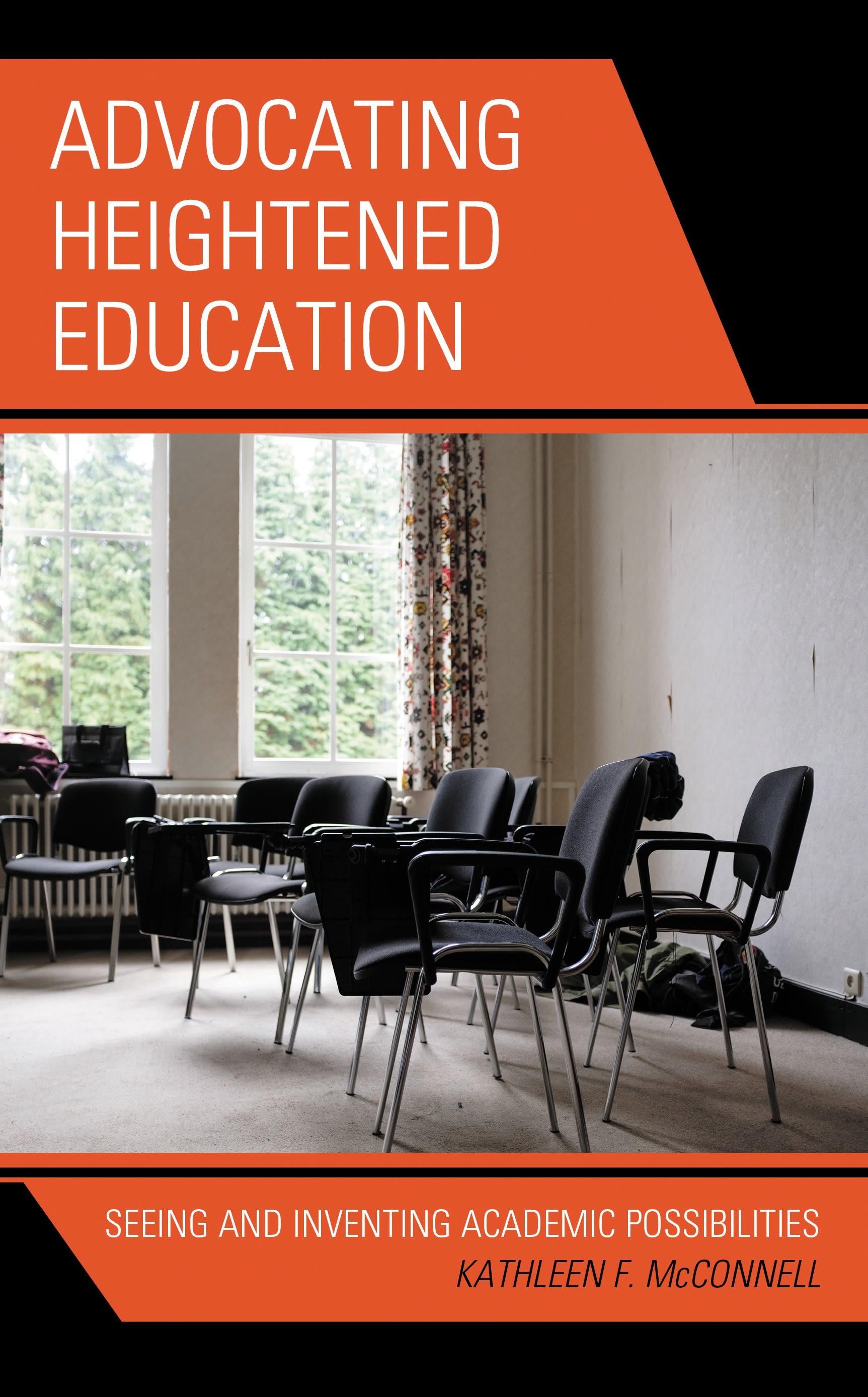
Colleges and universities face unprecedented pressure to streamline and reduce their infrastructure. A new generation of reformers, frustrated by bureaucratic obstacles and rising costs, dream of education without schools. Those reforms, if realized, promise to render education indistinguishable from other social spheres.
Advocating Heightened Education mobilizes situated theories of learning to advocate the labor and expense that goes into maintaining campuses. Higher education’s bulky and incommensurable institutions—from the community colleges and Ivy Leagues to the regional public universities and small liberal arts campuses—serve a critical modality. They ensure that educational forms remain visible and available for critique. Their diversity of form retains the possibility of divergent and transformative educational futures.
This ethnographic and archival study of two alternative campuses, The Evergreen State College and California State University, Monterey Bay, illustrates how educators advocate their work by heightening its visibility and by modeling appreciation for situated teaching and inquiry. It provides examples of those advocacy techniques with stories of professional life and close readings of historical documents that include institutional and legislative reports, facilities memoranda, and course descriptions. These materials offer a vibrant counter-narrative to reform movements that seek to standardize the college experience. Scholars of higher education, pedagogy, and communication will find this book particularly interesting.
Advocating Heightened Education mobilizes situated theories of learning to advocate the labor and expense that goes into maintaining campuses. Higher education’s bulky and incommensurable institutions—from the community colleges and Ivy Leagues to the regional public universities and small liberal arts campuses—serve a critical modality. They ensure that educational forms remain visible and available for critique. Their diversity of form retains the possibility of divergent and transformative educational futures.
This ethnographic and archival study of two alternative campuses, The Evergreen State College and California State University, Monterey Bay, illustrates how educators advocate their work by heightening its visibility and by modeling appreciation for situated teaching and inquiry. It provides examples of those advocacy techniques with stories of professional life and close readings of historical documents that include institutional and legislative reports, facilities memoranda, and course descriptions. These materials offer a vibrant counter-narrative to reform movements that seek to standardize the college experience. Scholars of higher education, pedagogy, and communication will find this book particularly interesting.
Betal nemt med kort, Klarna, Apple Pay eller Google Pay. Ikke tilfreds? Du har altid 14 dages fortrydelsesret. Læs mere i vores vilkår. Har du spørgsmål, så send os en mail på hello@memmo.org.
Memmo gør det nemmere at studere – uanset hvor du er i verden. Hos os samler du dine kursusbøger og smarte studieværktøjer ét sted: resuméer, quizzer, podcasts og flashcards. Og så er der Ted, din studieven, der svarer på alt, du undrer dig over. Over 50 000 studerende studerer allerede her – bygget til at hjælpe dig med at lære hurtigere og stresse mindre.