
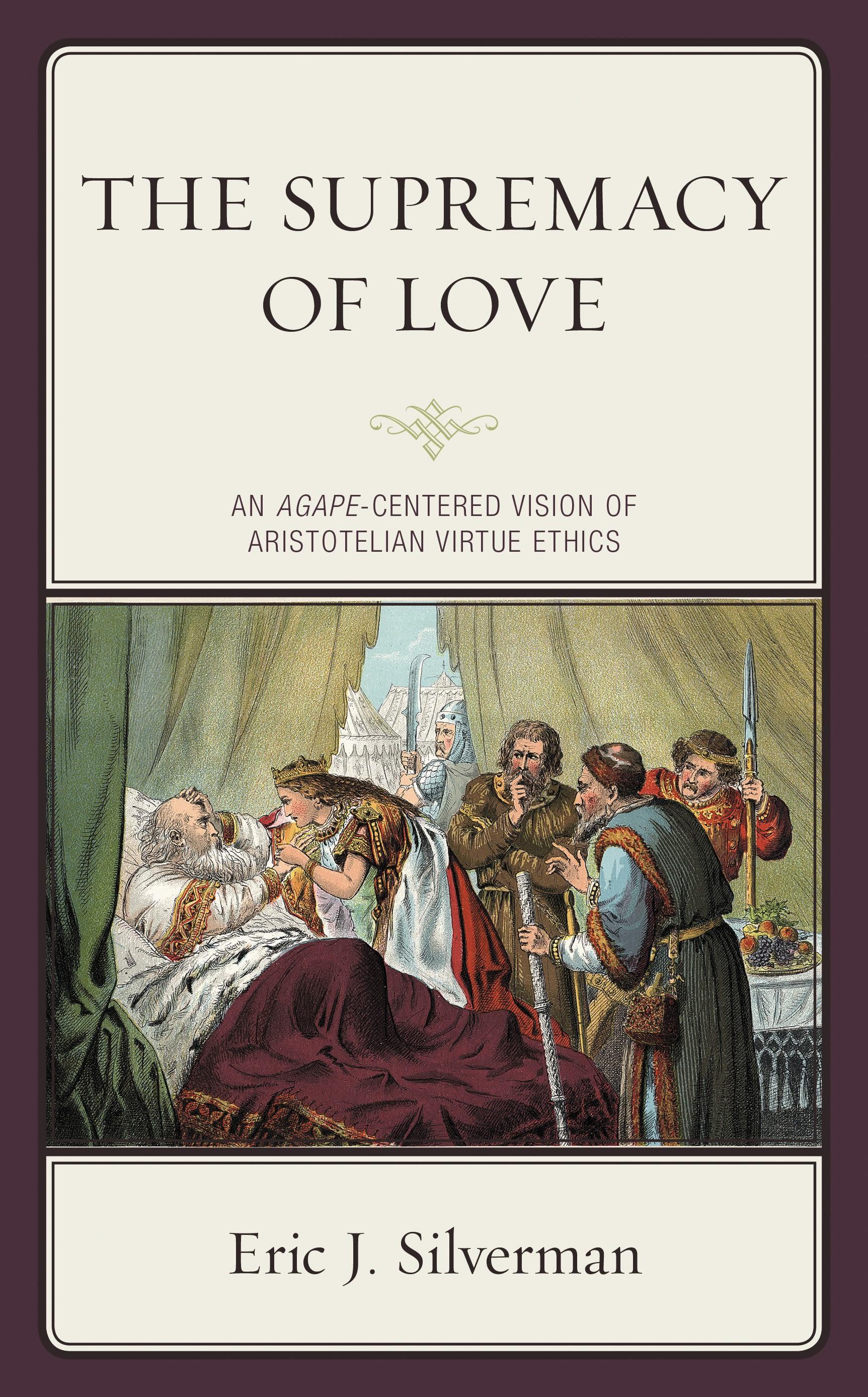
Thirty-five years ago Alasdair MacIntyre’s After Virtue established virtue ethics as a major challenger to competing visions of morality, but there is still considerable disagreement concerning which version of virtue ethics provides the best approach. The Supremacy of Love describes and advocates an agape-centered vision of Aristotelian virtue ethics that portrays love as the most important moral virtue, and the goals of love as a partial constituent of every genuine virtue. This structural improvement to Aristotelian virtue ethics—found originally in the ethics of Thomas Aquinas—enables this account to address several controversial topics in contemporary virtue ethics, including why the virtues cannot be used badly, in what sense is there a unity between the virtues, how the virtues benefit the virtuous person, and how virtues provide action guidance. Eric J. Silverman demonstrates how and why a distinctly love-centered approach to virtue ethics should make the view widely attractive in comparison to alternative accounts of virtue ethics, duty based deontological theories, as well as results-based consequentialist views.
Betal nemt med kort, Klarna, Apple Pay eller Google Pay. Ikke tilfreds? Du har altid 14 dages fortrydelsesret. Læs mere i vores vilkår. Har du spørgsmål, så send os en mail på hello@memmo.org.
Memmo gør det nemmere at studere – uanset hvor du er i verden. Hos os samler du dine kursusbøger og smarte studieværktøjer ét sted: resuméer, quizzer, podcasts og flashcards. Og så er der Ted, din studieven, der svarer på alt, du undrer dig over. Over 50 000 studerende studerer allerede her – bygget til at hjælpe dig med at lære hurtigere og stresse mindre.