
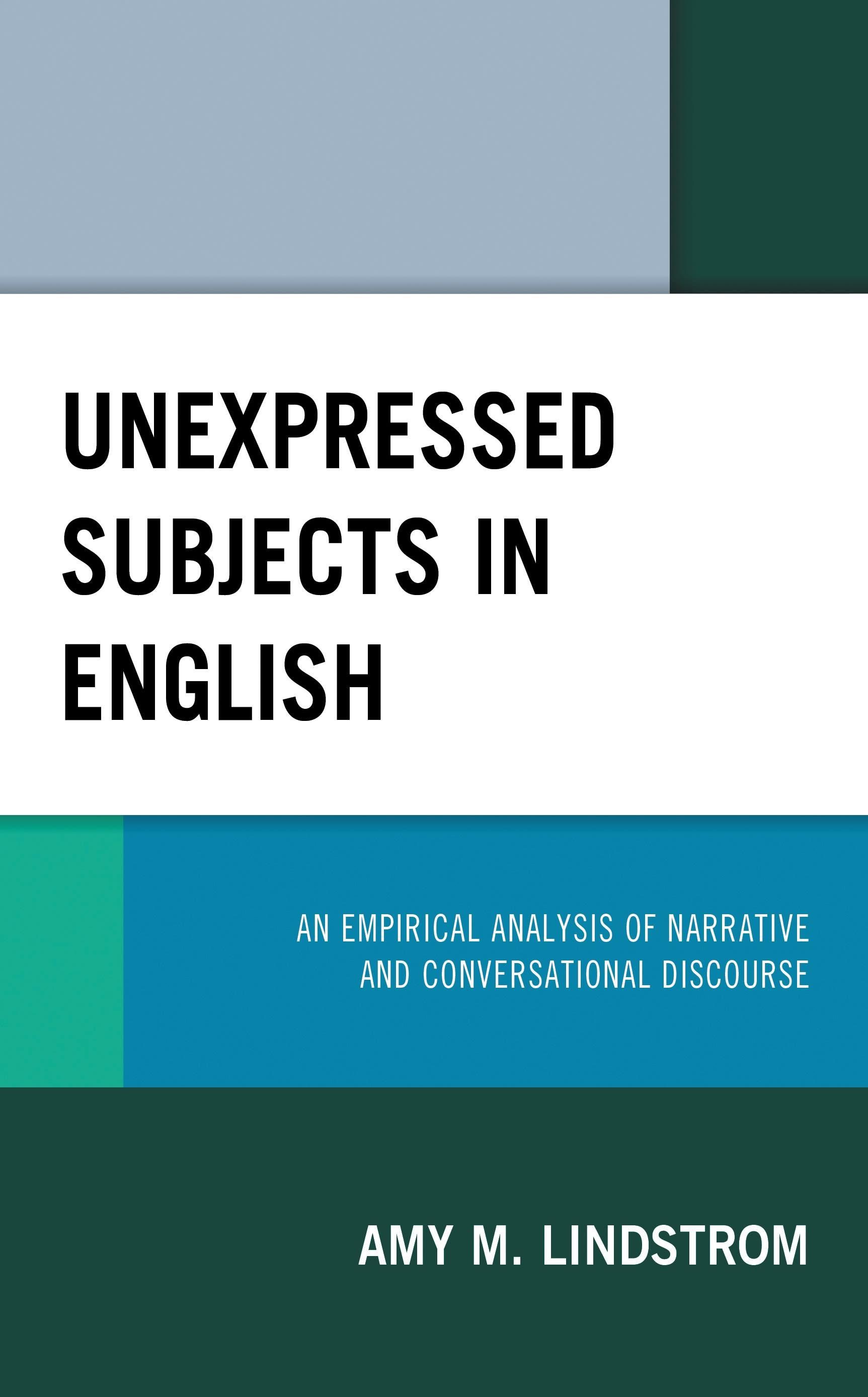
Unexpressed Subjects in English: An Empirical Analysis of Narrative and Conversational Discourse challenges previous assumptions of what is grammatically possible in English through an examination of contexts in which speakers omit subjects, demonstrating how language structure is influenced by communicative needs.
Through corpus-based analysis of both interactive conversations and monologic narratives, Amy M. Lindstrom reveals how the discourse/pragmatic factors of accessibility and chronological ordering, the prosodic effect of linking, and the mechanical effect of priming intersect to provide a rigorous account of subject (un)expression in spoken American English. Higher degrees of linking, cohesion, and connection lead to more unexpressed subjects. Lindstrom also analyzes frequent constructions with unexpressed subjects vis-à-vis paths of grammaticalization. The author presents a measurement of discourse connectedness that shows how the intersection of prosody and pragmatics illustrates the powerful effect of spontaneous discourse in shaping grammar. This study adds to our understanding of language and cognition by contributing to our knowledge of the conceptualization, categorization, and representation of experience and memory.
Through corpus-based analysis of both interactive conversations and monologic narratives, Amy M. Lindstrom reveals how the discourse/pragmatic factors of accessibility and chronological ordering, the prosodic effect of linking, and the mechanical effect of priming intersect to provide a rigorous account of subject (un)expression in spoken American English. Higher degrees of linking, cohesion, and connection lead to more unexpressed subjects. Lindstrom also analyzes frequent constructions with unexpressed subjects vis-à-vis paths of grammaticalization. The author presents a measurement of discourse connectedness that shows how the intersection of prosody and pragmatics illustrates the powerful effect of spontaneous discourse in shaping grammar. This study adds to our understanding of language and cognition by contributing to our knowledge of the conceptualization, categorization, and representation of experience and memory.
Betal nemt med kort, Klarna, Apple Pay eller Google Pay. Ikke tilfreds? Du har altid 14 dages fortrydelsesret. Læs mere i vores vilkår. Har du spørgsmål, så send os en mail på hello@memmo.org.
Memmo gør det nemmere at studere – uanset hvor du er i verden. Hos os samler du dine kursusbøger og smarte studieværktøjer ét sted: resuméer, quizzer, podcasts og flashcards. Og så er der Ted, din studieven, der svarer på alt, du undrer dig over. Over 50 000 studerende studerer allerede her – bygget til at hjælpe dig med at lære hurtigere og stresse mindre.