
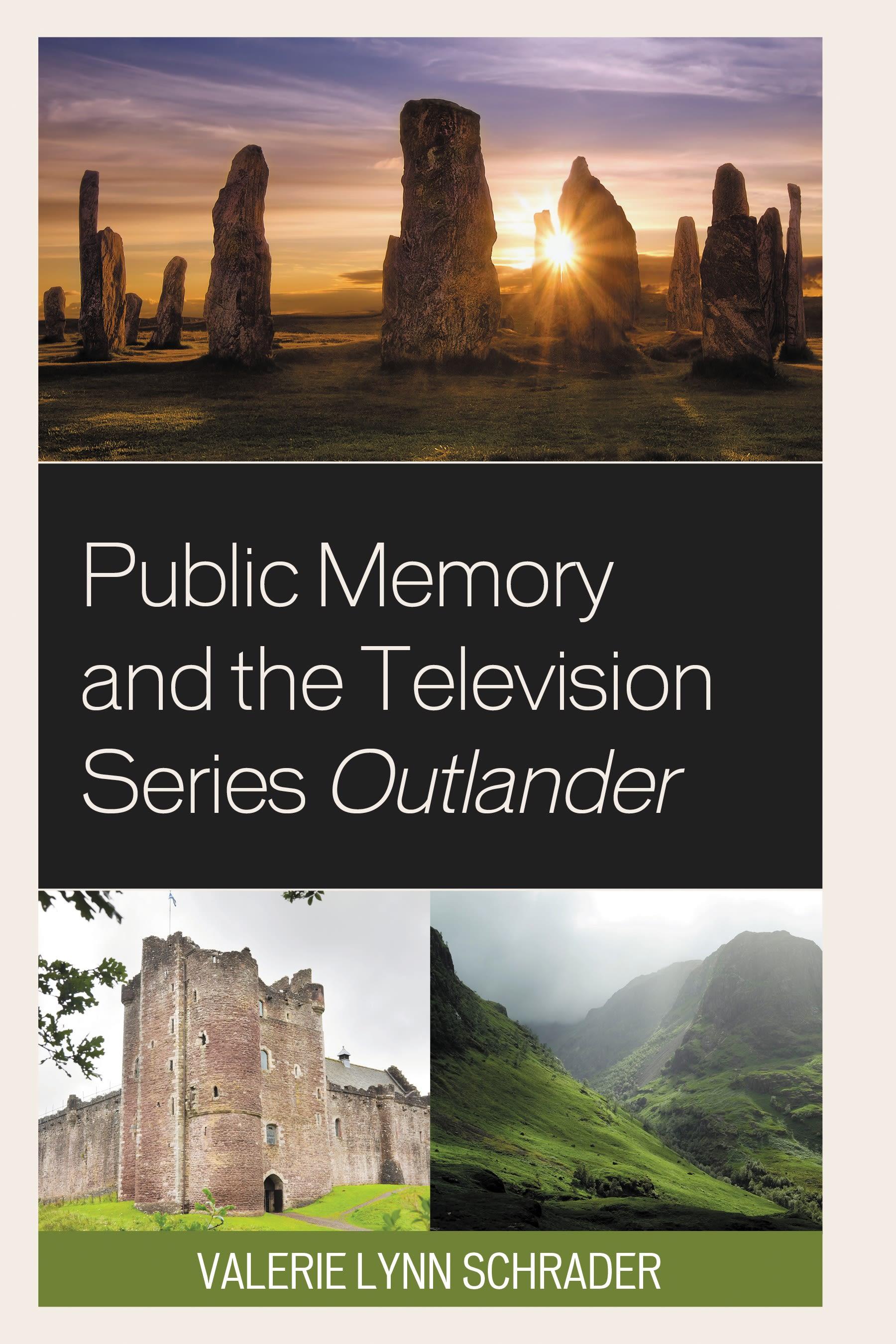
Using rhetorical criticism as a research method, Public Memory and the Television Series Outlander examines how public memory is created in the first four seasons of the popular television show Outlander. In this book, Valerie Lynn Schrader discusses the connections between documented history and the series, noting where Outlander's depiction of events aligns with documented history and where it does not, as well as how public memory is created through the use of music, language, directorial and performance choices, and mise-en-scéne elements like filming location, props, and costumes. Schrader also explores the impact that Outlander has had on Scottish tourism (known as the “Outlander effect”) and reflects on whether other filming locations or depicted locations may experience a similar effect as Outlander’s settings move from Scotland to other areas of the world. Furthermore, Schrader suggests that the creation of public memory through the television series encourages audiences to learn about history and reflect on current issues that are brought to light through that public memory.
Betal nemt med kort, Klarna, Apple Pay eller Google Pay. Ikke tilfreds? Du har altid 14 dages fortrydelsesret. Læs mere i vores vilkår. Har du spørgsmål, så send os en mail på hello@memmo.org.
Memmo gør det nemmere at studere – uanset hvor du er i verden. Hos os samler du dine kursusbøger og smarte studieværktøjer ét sted: resuméer, quizzer, podcasts og flashcards. Og så er der Ted, din studieven, der svarer på alt, du undrer dig over. Over 50 000 studerende studerer allerede her – bygget til at hjælpe dig med at lære hurtigere og stresse mindre.