
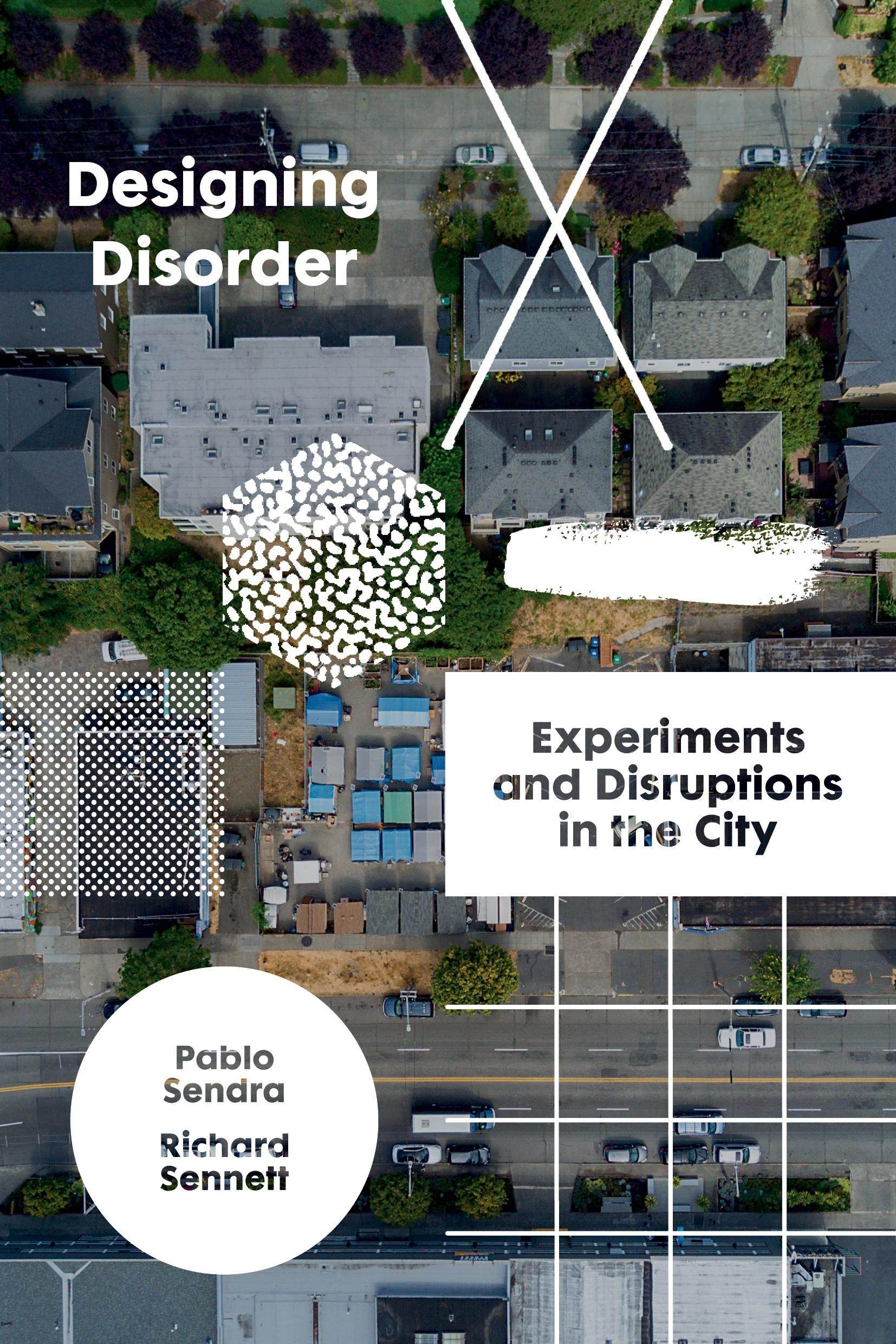
In 1970, Richard Sennett published the groundbreaking The Uses of Disorder, arguing that the ideal of a planned and ordered city was flawed. Fifty years later, Sennett returns to these still fertile ideas and, alongside campaigner and architect Pablo Sendra, sets out an agenda for the design and ethics of the Open City.
The public spaces of our cities are under siege from planners, privatisation and increased surveillance. Our streets are becoming ever more lifeless and ordered. What is to be done? Can disorder be designed? In this provocative essay Sendra and Sennett propose a reorganisation of how we think and plan the social life of our cities. 'Infrastructures of disorder' combine architecture, politics, urban planning and activism in order to develop places that nurture rather than stifle, bring together rather than divide up, remain open to change rather than closed off.
The public spaces of our cities are under siege from planners, privatisation and increased surveillance. Our streets are becoming ever more lifeless and ordered. What is to be done? Can disorder be designed? In this provocative essay Sendra and Sennett propose a reorganisation of how we think and plan the social life of our cities. 'Infrastructures of disorder' combine architecture, politics, urban planning and activism in order to develop places that nurture rather than stifle, bring together rather than divide up, remain open to change rather than closed off.
Betal nemt med kort, Klarna, Apple Pay eller Google Pay. Ikke tilfreds? Du har altid 14 dages fortrydelsesret. Læs mere i vores vilkår. Har du spørgsmål, så send os en mail på hello@memmo.org.
Memmo gør det nemmere at studere – uanset hvor du er i verden. Hos os samler du dine kursusbøger og smarte studieværktøjer ét sted: resuméer, quizzer, podcasts og flashcards. Og så er der Ted, din studieven, der svarer på alt, du undrer dig over. Over 50 000 studerende studerer allerede her – bygget til at hjælpe dig med at lære hurtigere og stresse mindre.
Du kan måske også lide
Køb bogen0