
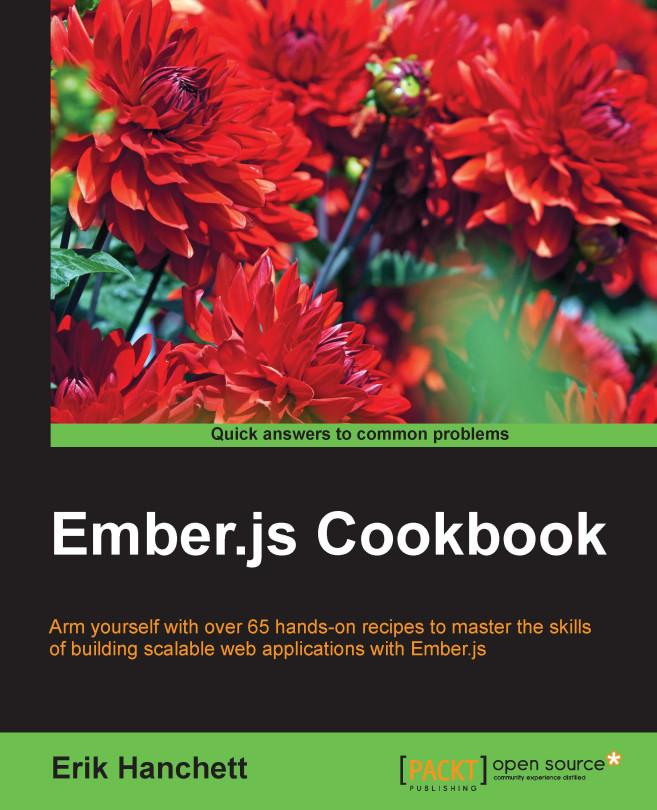
Ember.js is an open source JavaScript framework that will make you more productive. It uses common idioms and practices, making it simple to create amazing single-page applications. It also lets you create code in a modular way using the latest JavaScript features. Not only that, it has a great set of APIs to get any task done. The Ember.js community is welcoming newcomers and is ready to help you when needed.
This book provides in-depth explanations on how to use the Ember.js framework to take you from beginner to expert. You’ll start with some basic topics and by the end of the book, you’ll know everything you need to know to build a fully operational Ember application.
We’ll begin by explaining key points on how to use the Ember.js framework and the associated tools. You’ll learn how to effectively use Ember CLI and how to create and deploy your application. We’ll take a close look at the Ember object model and templates by examining bindings and observers. We’ll then move onto Ember components, models, and Ember Data. We’ll show you examples on how to connect to RESTful databases. Next we’ll get to grips with testing with integration and acceptance tests using QUnit. We will conclude by covering authentication, services, and Ember add-ons. We’ll explore advanced topics such as services and initializers, and how to use them together to build real-time applications.
Betal nemt med kort, Klarna, Apple Pay eller Google Pay. Ikke tilfreds? Du har altid 14 dages fortrydelsesret. Læs mere i vores vilkår. Har du spørgsmål, så send os en mail på hello@memmo.org.
Memmo gør det nemmere at studere – uanset hvor du er i verden. Hos os samler du dine kursusbøger og smarte studieværktøjer ét sted: resuméer, quizzer, podcasts og flashcards. Og så er der Ted, din studieven, der svarer på alt, du undrer dig over. Over 50 000 studerende studerer allerede her – bygget til at hjælpe dig med at lære hurtigere og stresse mindre.