
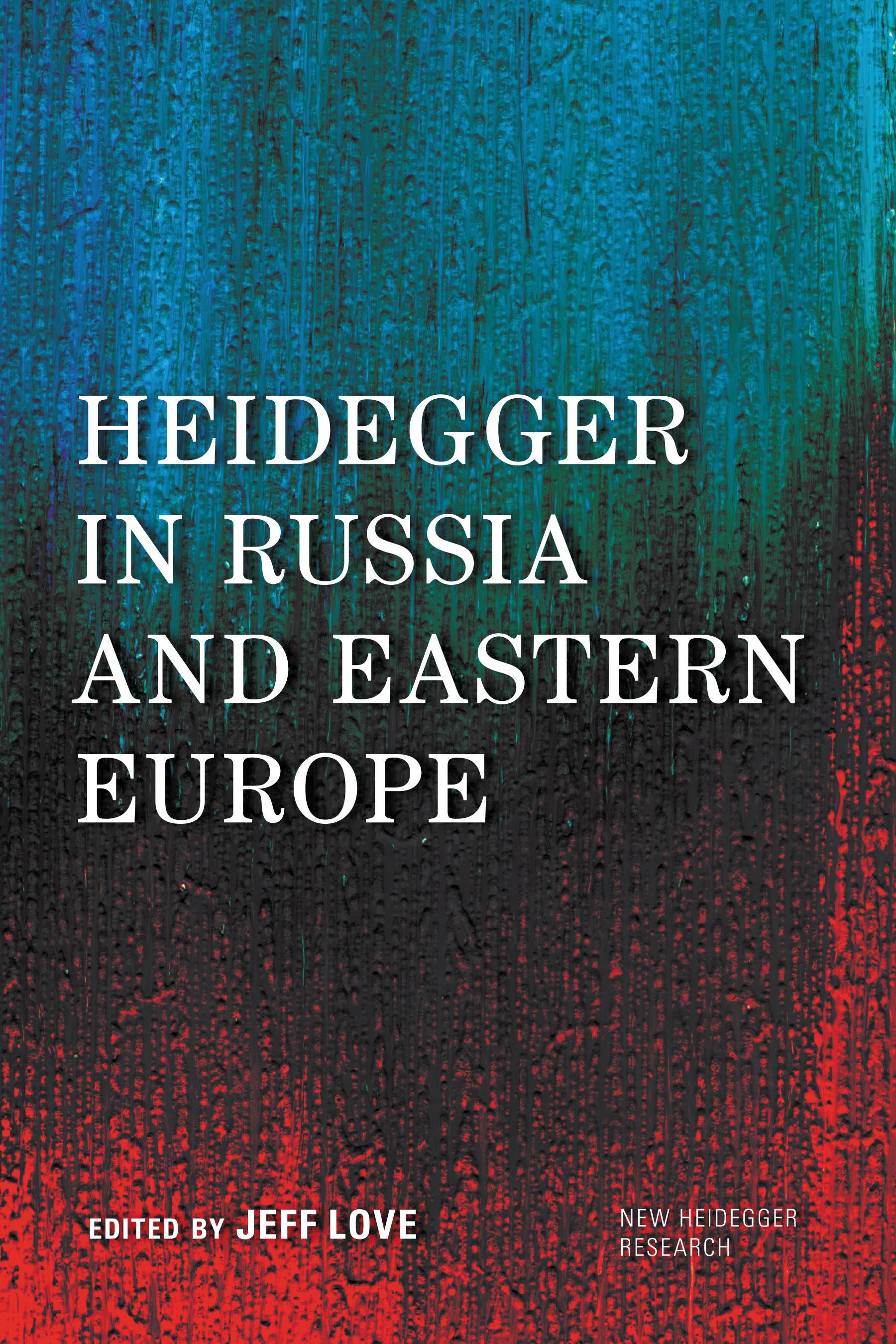
Heidegger’s influence in the twentieth century probably outstrips that of any other philosopher, at least in the so-called Continental tradition. The 'revolution' Heidegger brought about with his compelling readings of the broader philosophical tradition transformed German philosophy and spread quickly to most of Europe, the United States and Japan. This volume examines Heidegger’s influence in a region where his reception has had a remarkable and largely hidden history: Eastern Europe and Russia.
The book begins by addressing two important literary influences on Heidegger: Dostoevsky and Tolstoy. It goes on to examine Heidegger’s philosophical influence, and features three crucial figures in the reception of Heidegger’s thought in Eastern Europe and Russia: Vladimir Bibikhin, Krzysztof Michalski, and Jan Patocka. Finally the volume deals with an often vexed issue in current treatments of Heidegger: the importance of Heidegger’s philosophy for politics. The book includes essays by an international team of contributors, including leading representatives of Heideggerian thought in Russia today. Heidegger’s thought plays a key role in debates over Russian identity and the geopolitical role Russia has to play in the world. The volume surveys the complicated landscape of post-Soviet philosophy, and how the rise of widely differing appropriations of Heidegger exploit familiar fault lines in the Russian reception of Western thinkers that date back to the first stirrings of a distinctively Russian philosophical tradition.
The book begins by addressing two important literary influences on Heidegger: Dostoevsky and Tolstoy. It goes on to examine Heidegger’s philosophical influence, and features three crucial figures in the reception of Heidegger’s thought in Eastern Europe and Russia: Vladimir Bibikhin, Krzysztof Michalski, and Jan Patocka. Finally the volume deals with an often vexed issue in current treatments of Heidegger: the importance of Heidegger’s philosophy for politics. The book includes essays by an international team of contributors, including leading representatives of Heideggerian thought in Russia today. Heidegger’s thought plays a key role in debates over Russian identity and the geopolitical role Russia has to play in the world. The volume surveys the complicated landscape of post-Soviet philosophy, and how the rise of widely differing appropriations of Heidegger exploit familiar fault lines in the Russian reception of Western thinkers that date back to the first stirrings of a distinctively Russian philosophical tradition.
Betal nemt med kort, Klarna, Apple Pay eller Google Pay. Ikke tilfreds? Du har altid 14 dages fortrydelsesret. Læs mere i vores vilkår. Har du spørgsmål, så send os en mail på hello@memmo.org.
Memmo gør det nemmere at studere – uanset hvor du er i verden. Hos os samler du dine kursusbøger og smarte studieværktøjer ét sted: resuméer, quizzer, podcasts og flashcards. Og så er der Ted, din studieven, der svarer på alt, du undrer dig over. Over 50 000 studerende studerer allerede her – bygget til at hjælpe dig med at lære hurtigere og stresse mindre.