
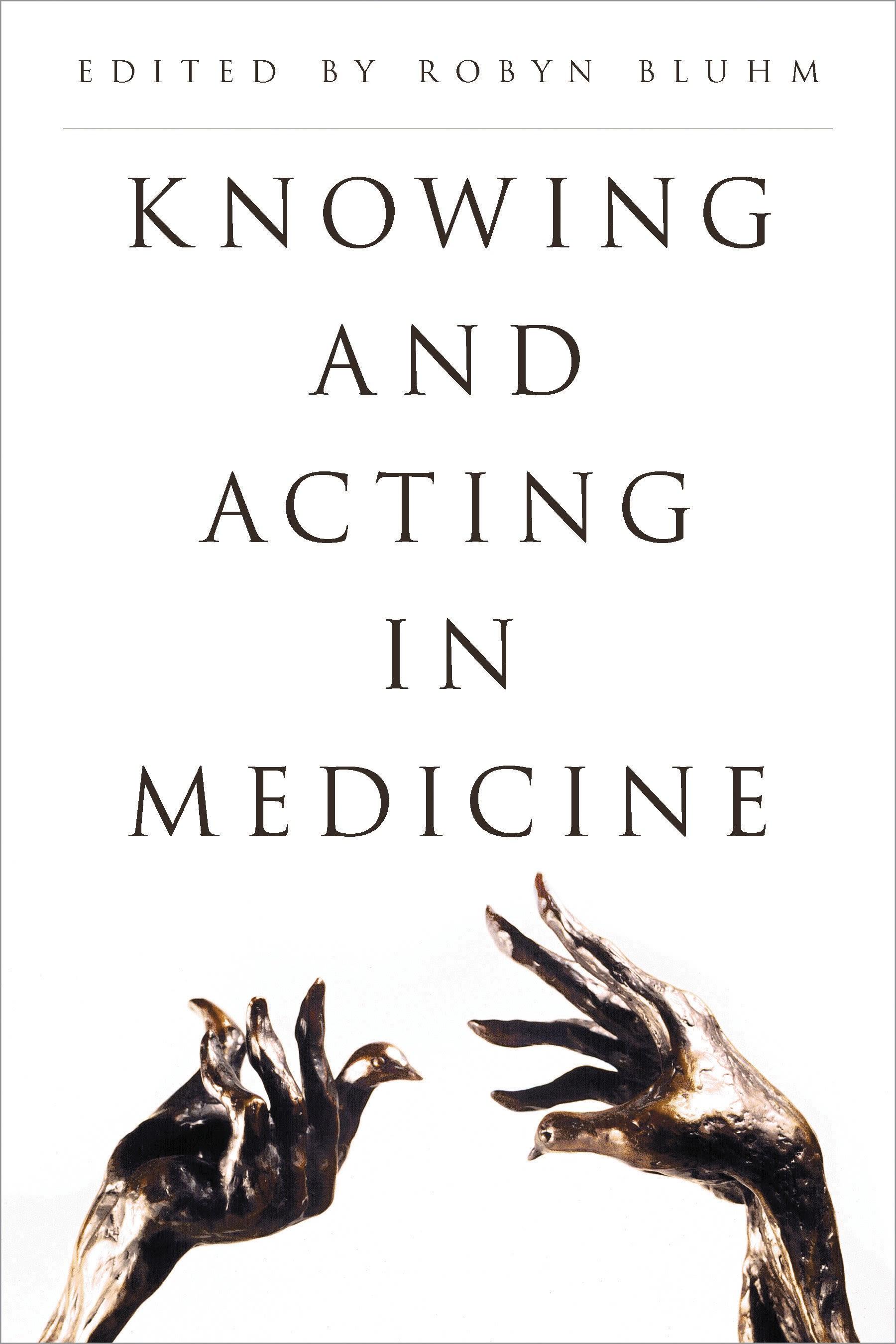
What roles do different kinds of knowledge play in medicine? What roles should they play? What standards (epistemic, ethical, practical) should be met before knowledge is used to develop policy or practice? Medical decision-making, whether in the clinic or at the policy level, can have serious and far-reaching consequences. It is therefore important to base decisions on the best available knowledge. Yet deciding what should count as the best available knowledge is not easy. This important book addresses philosophical questions about what kinds of knowledge should be taken into account, and how knowledge should inform practice and policy.
The chapters in this volume examine the relationship between knowledge and action in medical research, practice, and policy. “Knowledge” is broadly construed to include knowledge from clinical, laboratory, or social science research, and from the clinical encounter, as well as broader background assumptions prevalent in society that inform both the kinds of knowledge that are taken to be relevant to medicine and how that knowledge is interpreted in decision-making. Such knowledge may be relevant not only to clinical decision-making with regard to the care of individual patients, but also to the practice of scientific research, the development of policy and practice guidelines, and decisions made by patients or by patient advocacy groups.
The chapters in this volume examine the relationship between knowledge and action in medical research, practice, and policy. “Knowledge” is broadly construed to include knowledge from clinical, laboratory, or social science research, and from the clinical encounter, as well as broader background assumptions prevalent in society that inform both the kinds of knowledge that are taken to be relevant to medicine and how that knowledge is interpreted in decision-making. Such knowledge may be relevant not only to clinical decision-making with regard to the care of individual patients, but also to the practice of scientific research, the development of policy and practice guidelines, and decisions made by patients or by patient advocacy groups.
Betal nemt med kort, Klarna, Apple Pay eller Google Pay. Ikke tilfreds? Du har altid 14 dages fortrydelsesret. Læs mere i vores vilkår. Har du spørgsmål, så send os en mail på hello@memmo.org.
Memmo gør det nemmere at studere – uanset hvor du er i verden. Hos os samler du dine kursusbøger og smarte studieværktøjer ét sted: resuméer, quizzer, podcasts og flashcards. Og så er der Ted, din studieven, der svarer på alt, du undrer dig over. Over 50 000 studerende studerer allerede her – bygget til at hjælpe dig med at lære hurtigere og stresse mindre.