
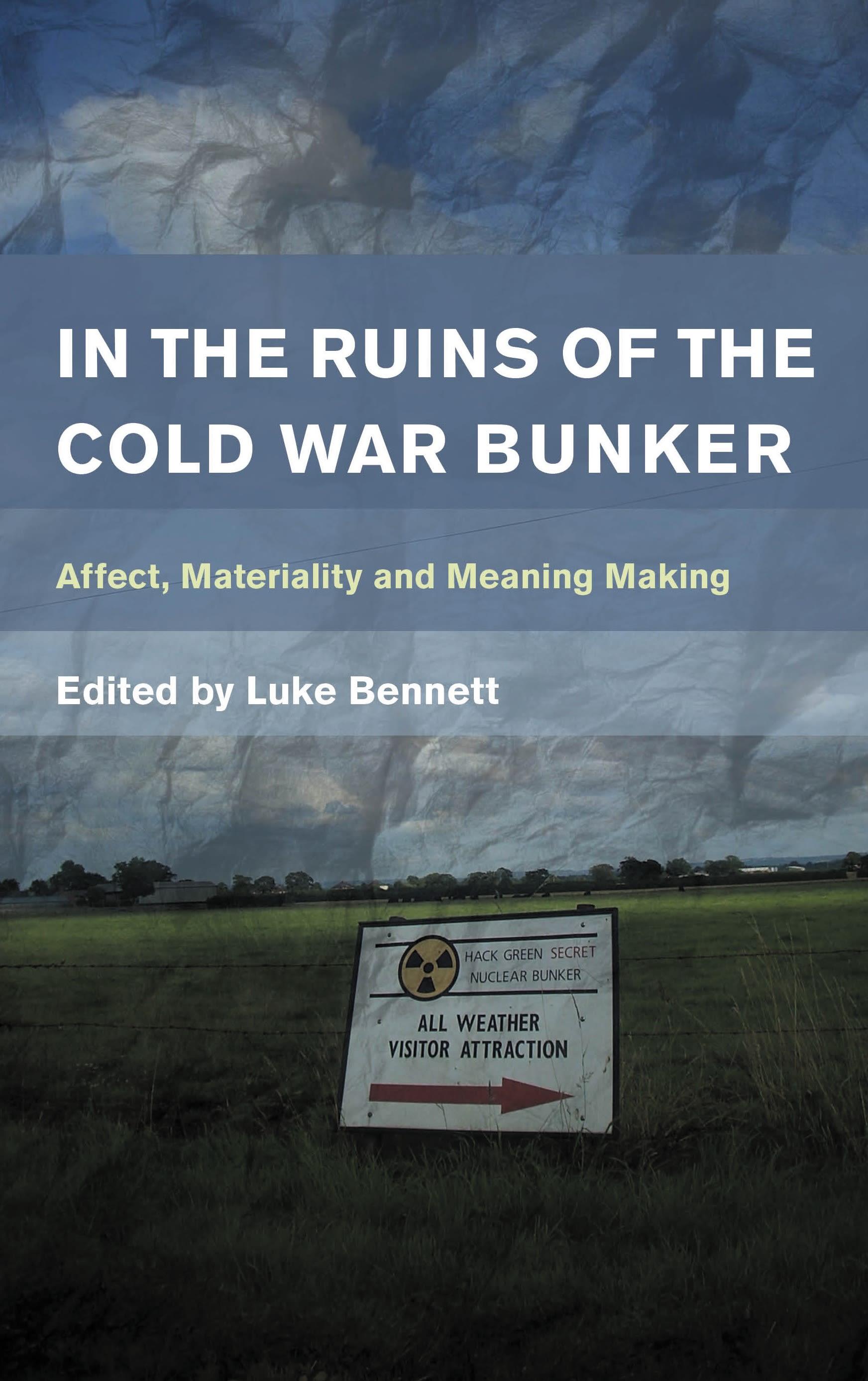
During the Cold War military and civil defence bunkers were an evocative materialisation of deadly military stand-off. They were also a symbol of a deeply affective, pervasive anxiety about the prospect of world-destroying nuclear war. But following the sudden fall of the Berlin Wall in 1989 these sites were swiftly abandoned, and exposed to both material and semantic ruination.
This volume investigates the uses and meanings now projected onto these seeming blank, derelict spaces. It explores how engagements with bunker ruins provide fertile ground for the study of improvised meaning making, place-attachment, hobby practices, social materiality and trauma studies. With its commentators ranging across the arts and humanities and the social sciences, this multi-disciplinary collection sets a concern with the phenomenological qualities of these places as contemporary ruins – and of their strange affective affordances – alongside scholarship examining how these places embody, and/or otherwise connect with their Cold War originations and purpose both materially and through memory and trauma.
Each contribution reflexively considers the process of engaging with these places – and whether via the archive or direct sensory immersion. In doing so the book broadens the bunker’s contemporary signification and contributes to theoretically informed analysis of ruination, place attachment, meaning making, and material culture.
This volume investigates the uses and meanings now projected onto these seeming blank, derelict spaces. It explores how engagements with bunker ruins provide fertile ground for the study of improvised meaning making, place-attachment, hobby practices, social materiality and trauma studies. With its commentators ranging across the arts and humanities and the social sciences, this multi-disciplinary collection sets a concern with the phenomenological qualities of these places as contemporary ruins – and of their strange affective affordances – alongside scholarship examining how these places embody, and/or otherwise connect with their Cold War originations and purpose both materially and through memory and trauma.
Each contribution reflexively considers the process of engaging with these places – and whether via the archive or direct sensory immersion. In doing so the book broadens the bunker’s contemporary signification and contributes to theoretically informed analysis of ruination, place attachment, meaning making, and material culture.
Betal nemt med kort, Klarna, Apple Pay eller Google Pay. Ikke tilfreds? Du har altid 14 dages fortrydelsesret. Læs mere i vores vilkår. Har du spørgsmål, så send os en mail på hello@memmo.org.
Memmo gør det nemmere at studere – uanset hvor du er i verden. Hos os samler du dine kursusbøger og smarte studieværktøjer ét sted: resuméer, quizzer, podcasts og flashcards. Og så er der Ted, din studieven, der svarer på alt, du undrer dig over. Over 50 000 studerende studerer allerede her – bygget til at hjælpe dig med at lære hurtigere og stresse mindre.