
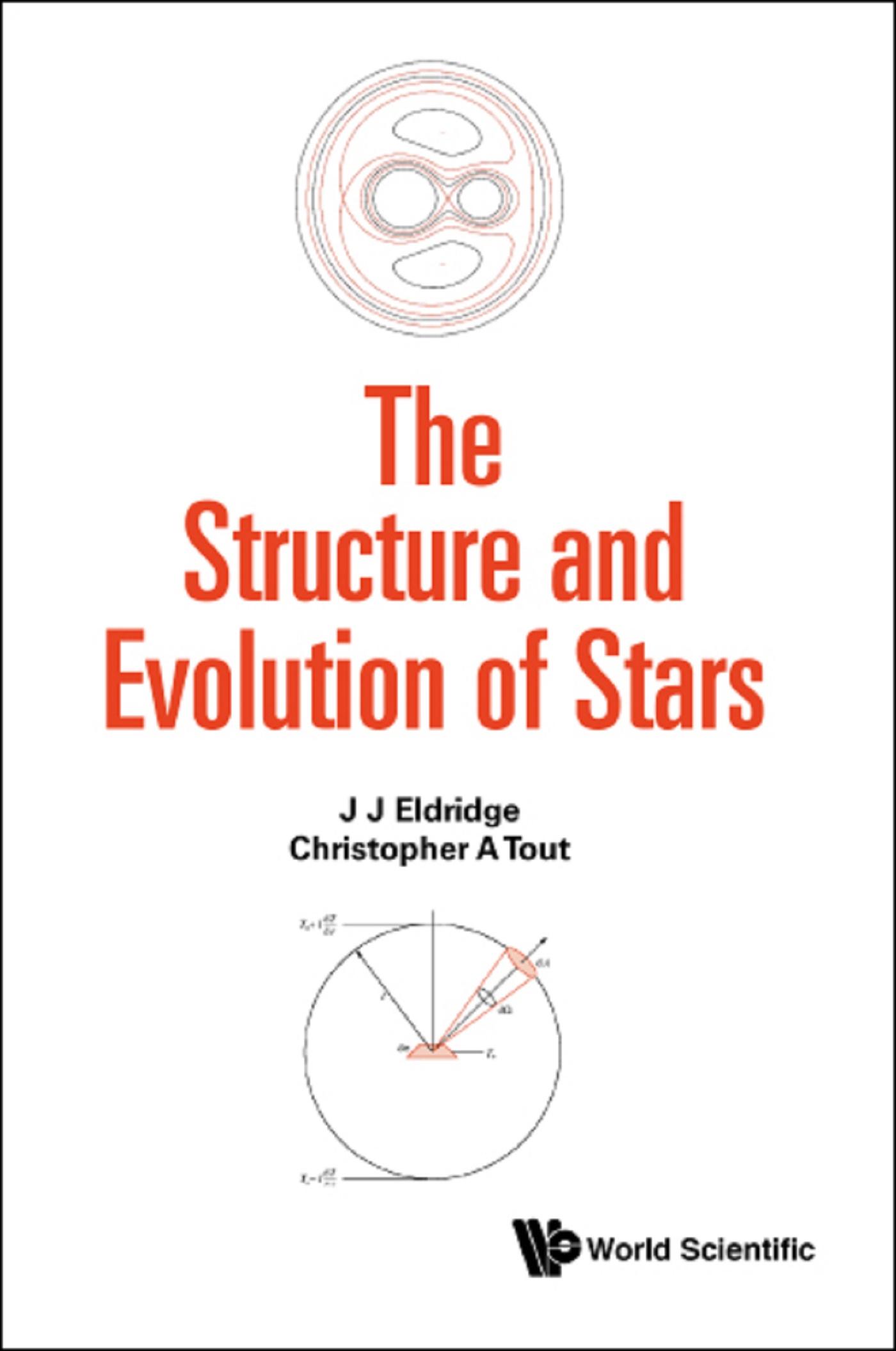
Stars are the fundamental observable constituents of the Universe. They are the first objects we see in the night sky, they dominate the light produced in our own and other galaxies, and nucleosynthesis in stars produces all the elements heavier than helium. A knowledge of stars and their evolution is vital to understand other astrophysical objects from accreting black holes and galaxies to the Universe itself.The structure of a star can be described mathematically by differential equations derived from the principles of hydrodynamics, electromagnetic theory, thermodynamics, quantum mechanics, atomic and nuclear physics. The basic equations of a spherical star are derived in detail at an accessible level. The topics discussed include modes of energy transport, the equation of state, the physics of the opacity sources and the nuclear reactions. Attention is also given to the virial theorem, polytropic gas spheres and homology principles and the procedure for numerical solution of the equations is outlined. This book tracks the evolution of stars from their main-sequence evolution through the exhaustion of various nuclear fuels to the end points of evolution and also introduces the topic of interacting binary stars. The aim is to take the reader from the essential underlying physical principles to the doors to current research on stellar interiors.
Betal nemt med kort, Klarna, Apple Pay eller Google Pay. Ikke tilfreds? Du har altid 14 dages fortrydelsesret. Læs mere i vores vilkår. Har du spørgsmål, så send os en mail på hello@memmo.org.
Memmo gør det nemmere at studere – uanset hvor du er i verden. Hos os samler du dine kursusbøger og smarte studieværktøjer ét sted: resuméer, quizzer, podcasts og flashcards. Og så er der Ted, din studieven, der svarer på alt, du undrer dig over. Over 50 000 studerende studerer allerede her – bygget til at hjælpe dig med at lære hurtigere og stresse mindre.
Du kan måske også lide
Køb bogen0