
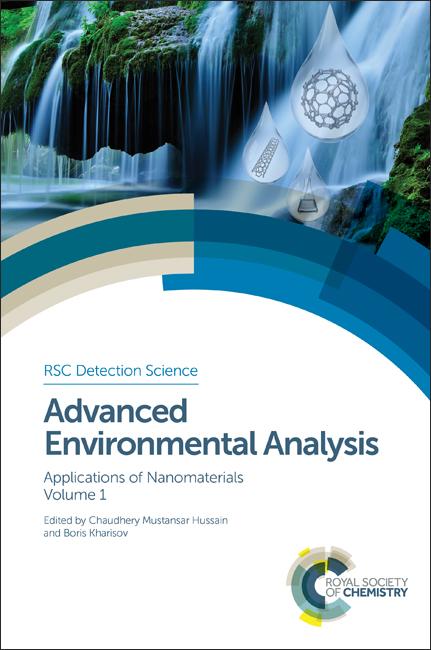
Environmental analysis techniques have advanced due to the use of nanotechnologies in improving the detection sensitivity and miniaturization of the devices in analytical procedures. These allow for developments such as increases in analyte concentration, the removal of interfering species and improvements in the detection limits. Bridging a gap in the literature, this book uniquely brings together state-of-the-art research in the applications of novel nanomaterials to each of the classical components of environmental analysis, namely sample preparation and extraction, separation and identification by spectroscopic techniques. Special attention is paid to those approaches that are considered greener and reduce the cost of the analysis process both in terms of chemicals and time consumption.
Advanced undergraduates, graduates and researchers at the forefront of environmental science and engineering will find this book a good source of information. It will also help regulators, decision makers, surveillance agencies and the organizations assessing the impact of pollutants on the environment.
Betal nemt med kort, Klarna, Apple Pay eller Google Pay. Ikke tilfreds? Du har altid 14 dages fortrydelsesret. Læs mere i vores vilkår. Har du spørgsmål, så send os en mail på hello@memmo.org.
Memmo gør det nemmere at studere – uanset hvor du er i verden. Hos os samler du dine kursusbøger og smarte studieværktøjer ét sted: resuméer, quizzer, podcasts og flashcards. Og så er der Ted, din studieven, der svarer på alt, du undrer dig over. Over 50 000 studerende studerer allerede her – bygget til at hjælpe dig med at lære hurtigere og stresse mindre.