
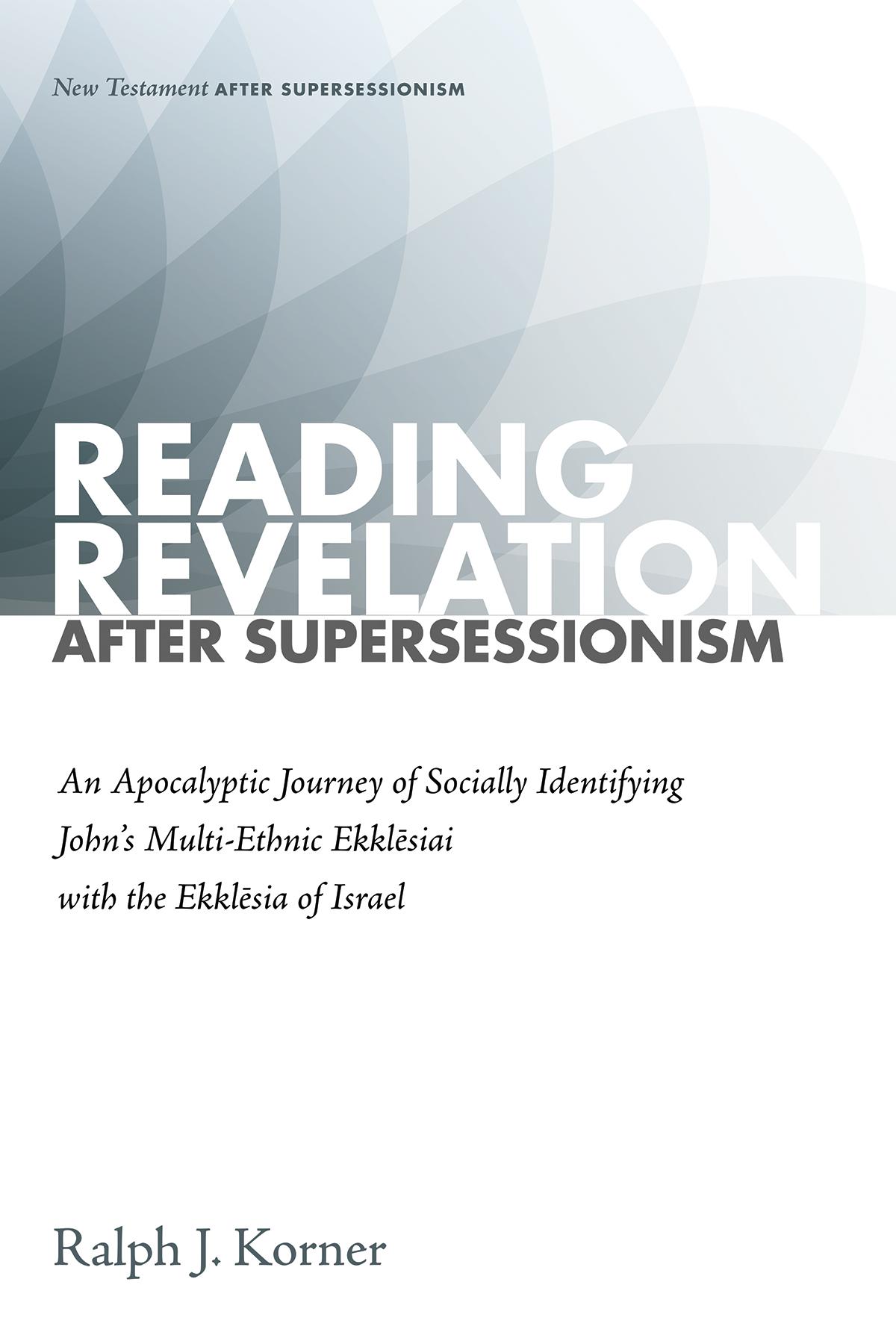
In this volume, Ralph Korner argues that John's extensive social identification with Judaism(s), Jewishness, and Jewish institutions does not reflect a literary program of replacing Israel with the ekklēsiai ("churches"/"assemblies"), that is the Jewish and non-Jewish followers of Jesus as Israel's Messiah. Rather, John is emplacing his Christ-followers further within Israel, without thereby superseding Israel as a national identity for ethnic Jews who do not follow Jesus as the Christos.
There are three primary roads travelled in this investigative journey. First, Korner explores ways in which a Jewish heritage is intrinsic to the literary structure, genre, eschatology, symbolism, and theological motifs of the Apocalypse. Second, he challenges the linear chronology of (generally) supersessionist dispensational readings of Revelation's visionary content by arguing for a reiterative/repetitive structure based on certain literary devices that also provide structure for visions within Jewish apocalypses and Hebrew prophecies. Third, he incorporates the most recent research on ekklēsia usage, especially in Asia Minor, to assess how John's ekklēsia associations might have been (non-supersessionally) perceived, especially by Jews in Roman Asia.
Betal nemt med kort, Klarna, Apple Pay eller Google Pay. Ikke tilfreds? Du har altid 14 dages fortrydelsesret. Læs mere i vores vilkår. Har du spørgsmål, så send os en mail på hello@memmo.org.
Memmo gør det nemmere at studere – uanset hvor du er i verden. Hos os samler du dine kursusbøger og smarte studieværktøjer ét sted: resuméer, quizzer, podcasts og flashcards. Og så er der Ted, din studieven, der svarer på alt, du undrer dig over. Over 50 000 studerende studerer allerede her – bygget til at hjælpe dig med at lære hurtigere og stresse mindre.
Du kan måske også lide
Køb bogen0