
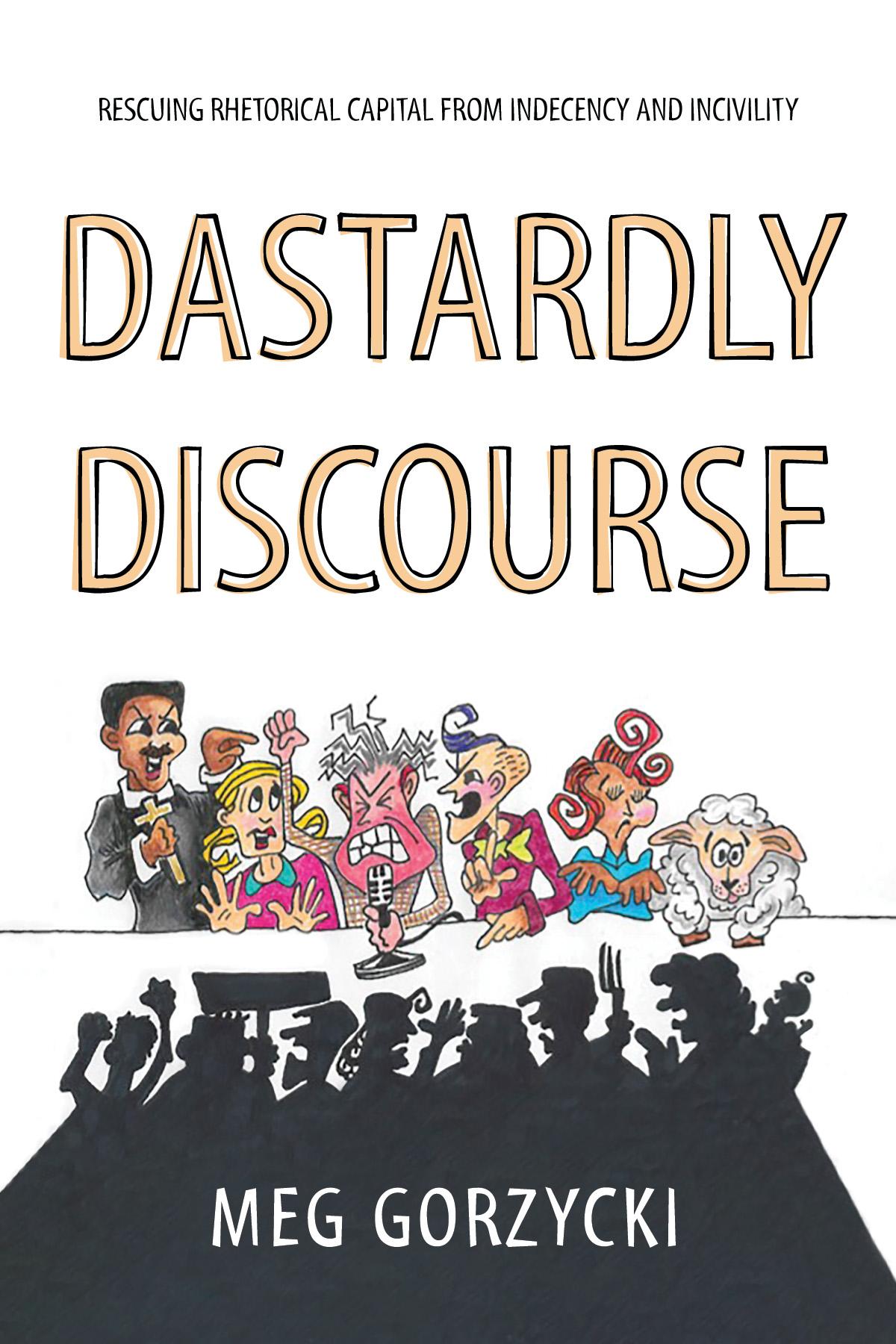
Screaming at the television, compulsively firing off tart little tweets, and blogging until we are blue; these signal that we are feeling the effects of dastardly discourse. We live in a world where people feel entitled to use words to hurt, exploit, and publicly degrade humanity. We daily consume rhetoric that makes a mockery of decency and civility. Leaders of key social institutions, including government, news media, and religious organizations, who are supposed to be role models of reasoned and compassionate communication are often the ones with the loudest lies and the hardest hate.
We can change the channel. We can unplug. We can even encourage others to do the same. We may not do so, however, until we grasp what is fundamentally at risk in our current norms of communication. Nasty words are just the tip of the dastardly discourse iceberg. What lies beneath is a steady flow of propaganda that aims to control our personal narratives. This book is about that propaganda, the importance of owning our own narratives, and improving our own rhetorical capital--the ability to analyze and evaluate information--for the sake of sustaining human dignity, decency, and civility.
Betal nemt med kort, Klarna, Apple Pay eller Google Pay. Ikke tilfreds? Du har altid 14 dages fortrydelsesret. Læs mere i vores vilkår. Har du spørgsmål, så send os en mail på hello@memmo.org.
Memmo gør det nemmere at studere – uanset hvor du er i verden. Hos os samler du dine kursusbøger og smarte studieværktøjer ét sted: resuméer, quizzer, podcasts og flashcards. Og så er der Ted, din studieven, der svarer på alt, du undrer dig over. Over 50 000 studerende studerer allerede her – bygget til at hjælpe dig med at lære hurtigere og stresse mindre.
Du kan måske også lide
Køb bogen0