
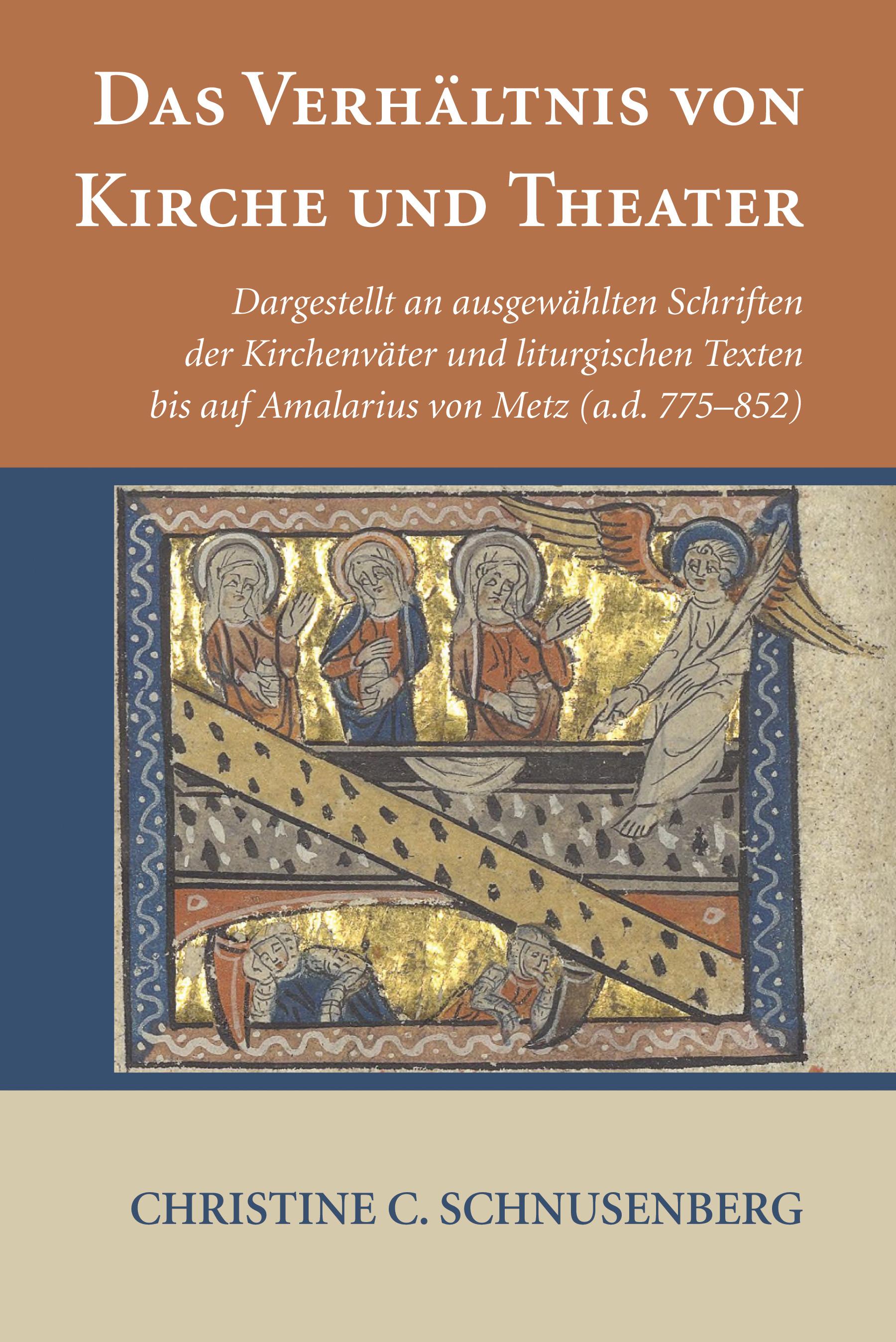
This work has grown out of the question regarding the negative relationship of the Church Fathers toward the Roman theatre and the apparent subsequent theatre vacuum of over 400 years (ca. 530 AD to 930 AD). This is considered to be the time which lies between the end of the Roman theatre and the appearance of the quem quaeritis tropes. This work moves between these two poles: on the one hand, between the polemics against the pagan Roman theatre which the Church Fathers described as a theatrum daemonicum and on the other hand, the appearances of dramatic-liturgical configurations in the Christian Church. This work attempts to connect these two opposite poles instead of separating them. This study begins with an examination of documents dealing with the patristic polemic. This is followed by an examination in chronological sequence of the development of the liturgical dramatic manifestations from Jerusalem to Amalarius of Metz. It also examines the allegorical method connected with this development. In conclusion the argument is maintained that aside the theatrum daemonicum, a theatrum infictitium et sapirituale is beginning to develop.
Betal nemt med kort, Klarna, Apple Pay eller Google Pay. Ikke tilfreds? Du har altid 14 dages fortrydelsesret. Læs mere i vores vilkår. Har du spørgsmål, så send os en mail på hello@memmo.org.
Memmo gør det nemmere at studere – uanset hvor du er i verden. Hos os samler du dine kursusbøger og smarte studieværktøjer ét sted: resuméer, quizzer, podcasts og flashcards. Og så er der Ted, din studieven, der svarer på alt, du undrer dig over. Over 50 000 studerende studerer allerede her – bygget til at hjælpe dig med at lære hurtigere og stresse mindre.
Du kan måske også lide
Køb bogen0