
“Let us not be led astray: they say ‘judge not’ and yet they condemn to hell whoever stands in their way.”
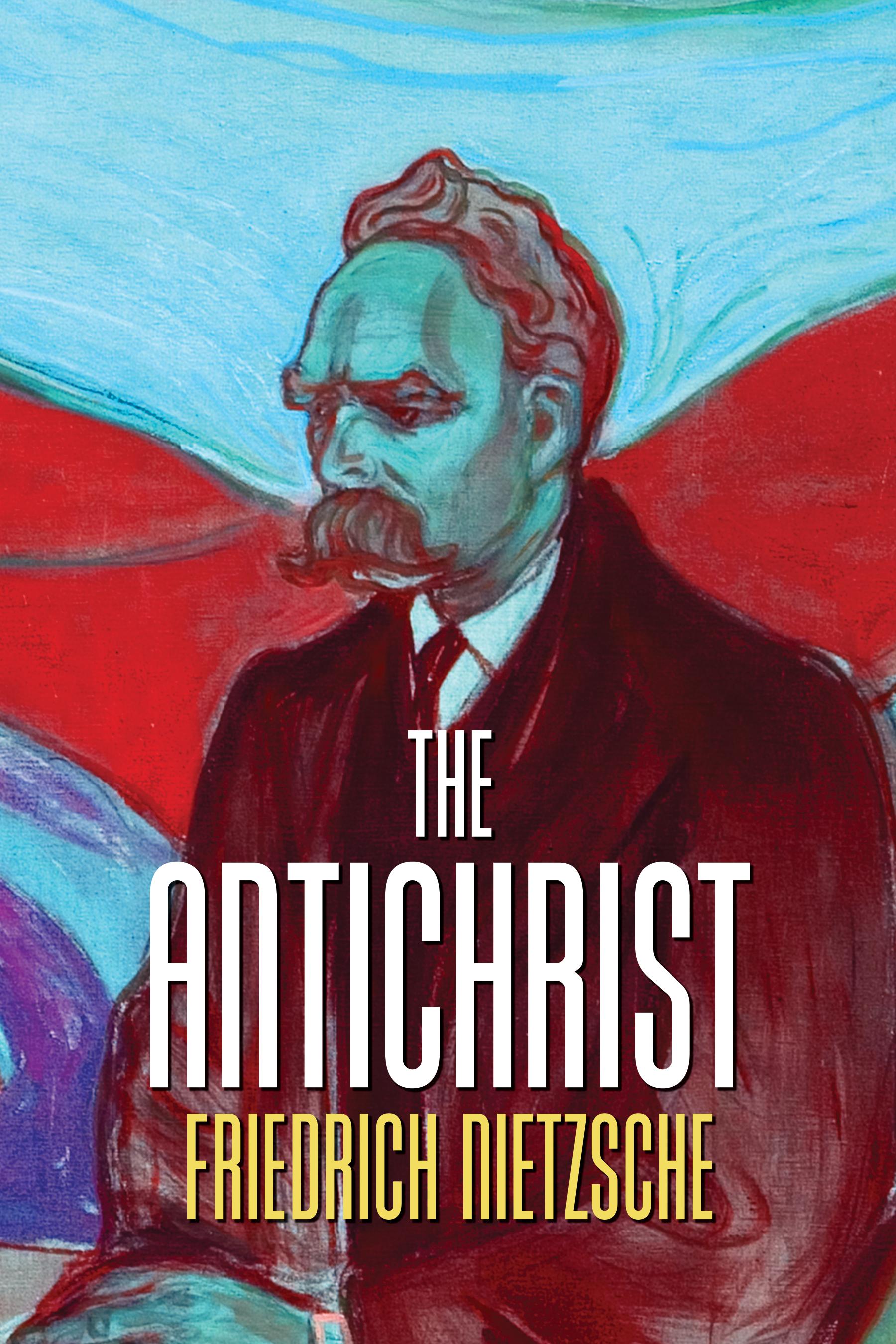
The Antichrist by the philosopher Friedrich Nietzsche, was originally published in 1895. In it, Nietzsche expresses his dissatisfaction with modernity, listing his dislike of “lazy peace”, “cowardly compromise”, “tolerance” and “resignation”. Mankind, according to Nietzsche, is corrupt and its highest values are depraved because nihilistic values dominate under the holiest names. He asserts that "all the values in which mankind at present summarizes its highest desiderata are decadence values". Mankind is depraved because it has lost its instincts and prefers what is harmful to it.
Nietzsche puts forth a provocative critique of Christianity and its moral teachings as he argues that mankind, out of fear, has bred a weak, sick type of human. He blames Christianity for demonizing strong, higher humans. He feels that Christian values are life-denying and impede human progress and advocates instead for a philosophy that affirms life and individual autonomy.
Nietzsche introduces his concept of “will to power using its relation to define the notions of good, bad, and happiness. Good is whatever augments the feeling of power, the will to power and power itself, in man. Evil is whatever springs from weakness. Happiness is the feeling that power increases…that resistance is overcome.
Nietzsche claims to have written the book for a very limited readership who must be honest in intellectual matters in order to understand the book. They must be strong enough to endure Nietzsche’s seriousness and passion.
The Antichrist by the philosopher Friedrich Nietzsche, was originally published in 1895. In it, Nietzsche expresses his dissatisfaction with modernity, listing his dislike of “lazy peace”, “cowardly compromise”, “tolerance” and “resignation”. Mankind, according to Nietzsche, is corrupt and its highest values are depraved because nihilistic values dominate under the holiest names. He asserts that "all the values in which mankind at present summarizes its highest desiderata are decadence values". Mankind is depraved because it has lost its instincts and prefers what is harmful to it.
Nietzsche puts forth a provocative critique of Christianity and its moral teachings as he argues that mankind, out of fear, has bred a weak, sick type of human. He blames Christianity for demonizing strong, higher humans. He feels that Christian values are life-denying and impede human progress and advocates instead for a philosophy that affirms life and individual autonomy.
Nietzsche introduces his concept of “will to power using its relation to define the notions of good, bad, and happiness. Good is whatever augments the feeling of power, the will to power and power itself, in man. Evil is whatever springs from weakness. Happiness is the feeling that power increases…that resistance is overcome.
Nietzsche claims to have written the book for a very limited readership who must be honest in intellectual matters in order to understand the book. They must be strong enough to endure Nietzsche’s seriousness and passion.
Betal nemt med kort, Klarna, Apple Pay eller Google Pay. Ikke tilfreds? Du har altid 14 dages fortrydelsesret. Læs mere i vores vilkår. Har du spørgsmål, så send os en mail på hello@memmo.org.
Memmo gør det nemmere at studere – uanset hvor du er i verden. Hos os samler du dine kursusbøger og smarte studieværktøjer ét sted: resuméer, quizzer, podcasts og flashcards. Og så er der Ted, din studieven, der svarer på alt, du undrer dig over. Over 50 000 studerende studerer allerede her – bygget til at hjælpe dig med at lære hurtigere og stresse mindre.
Du kan måske også lide
Køb bogen0