
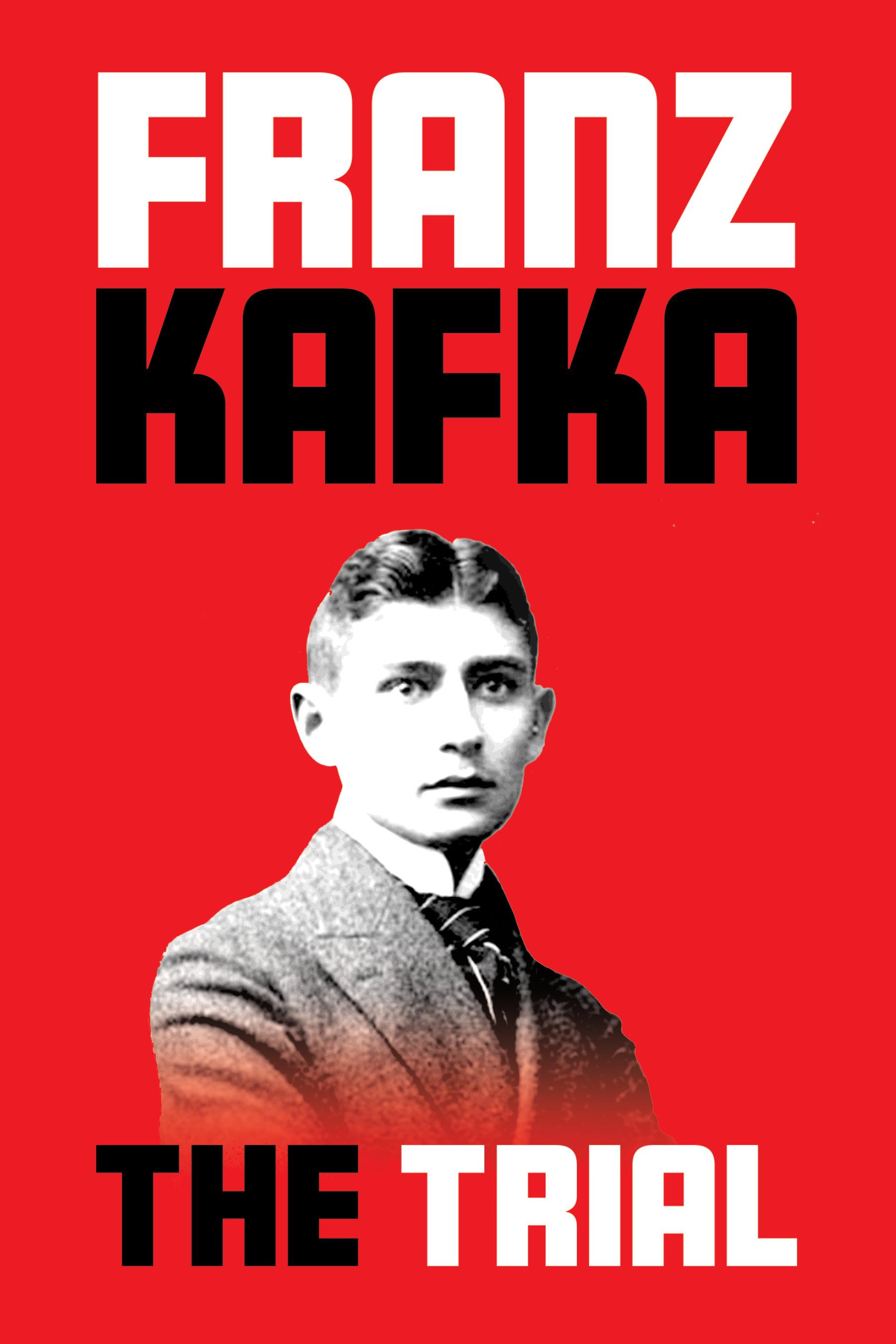
"Someone must have been telling tales about Josef K. for one morning, without having done anything wrong, he was arrested.'
From this gripping first sentence, The Trial, by Franz Kafka, is a darkly humorous, somewhat terrifying narrative of an ordeal faced by Josephy K., a bank clerk, who wakes up one day to find himself arrested and prosecuted by a remote, inaccessible authority who accuses him of a crime he did not commit. In a maze of nonsensical rules and bureaucratic roadblocks Joseph K.’s entrapment is based on an undisclosed charge and the nature of his crime is never revealed to him nor to the reader.
Once arrested, he is released, but must report to court on a regular basis--an event that proves maddening, as nothing is ever resolved. His trial is conducted in a mysterious court, outwardly co-operative, but capable of horrific violence. As Josef K. gradually succumbs to the psychological pressure, he consults various advisers but cannot escape his fate. He finds himself in an excruciating downward spiral.
Was there some way out that he failed to see? Is this study of political power a pessimistic religious parable, or is it a crime novel where the accused man is himself the problem?
This engrossing parable about the human condition is one of Kafka’s best known works. This ordinary man’s ordeals raise provocative, ever-relevant issues related to guilt, responsibility, freedom, the role of government and the nature of justice. Kafka offers no solutions, but provokes his readers to arrive at meanings of their own.
From this gripping first sentence, The Trial, by Franz Kafka, is a darkly humorous, somewhat terrifying narrative of an ordeal faced by Josephy K., a bank clerk, who wakes up one day to find himself arrested and prosecuted by a remote, inaccessible authority who accuses him of a crime he did not commit. In a maze of nonsensical rules and bureaucratic roadblocks Joseph K.’s entrapment is based on an undisclosed charge and the nature of his crime is never revealed to him nor to the reader.
Once arrested, he is released, but must report to court on a regular basis--an event that proves maddening, as nothing is ever resolved. His trial is conducted in a mysterious court, outwardly co-operative, but capable of horrific violence. As Josef K. gradually succumbs to the psychological pressure, he consults various advisers but cannot escape his fate. He finds himself in an excruciating downward spiral.
Was there some way out that he failed to see? Is this study of political power a pessimistic religious parable, or is it a crime novel where the accused man is himself the problem?
This engrossing parable about the human condition is one of Kafka’s best known works. This ordinary man’s ordeals raise provocative, ever-relevant issues related to guilt, responsibility, freedom, the role of government and the nature of justice. Kafka offers no solutions, but provokes his readers to arrive at meanings of their own.
Betal nemt med kort, Klarna, Apple Pay eller Google Pay. Ikke tilfreds? Du har altid 14 dages fortrydelsesret. Læs mere i vores vilkår. Har du spørgsmål, så send os en mail på hello@memmo.org.
Memmo gør det nemmere at studere – uanset hvor du er i verden. Hos os samler du dine kursusbøger og smarte studieværktøjer ét sted: resuméer, quizzer, podcasts og flashcards. Og så er der Ted, din studieven, der svarer på alt, du undrer dig over. Over 50 000 studerende studerer allerede her – bygget til at hjælpe dig med at lære hurtigere og stresse mindre.
Du kan måske også lide
Køb bogen0